






Overview of Vendor ACH Authorization Forms
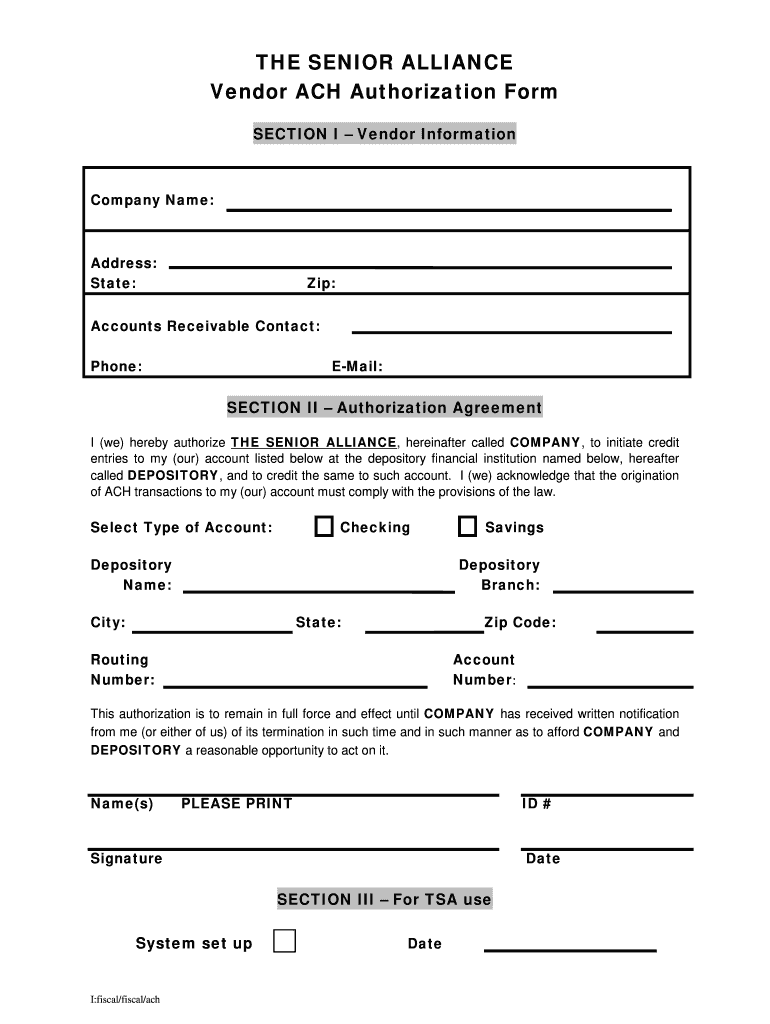
A Vendor ACH Authorization Form is a critical document used to authorize businesses to initiate automatic credit entries directly to a vendor's bank account. This form is essential for maintaining efficient payment processes and ensuring a clear record of agreements between parties. Understanding its components and requirements can enhance compliance and operational efficiency across various industries.
Key Components of the Vendor ACH Authorization Form
The primary sections of a typical vendor ACH authorization form include the following:
-
Vendor Information: This section captures essential details about the vendor, such as the company name, address, phone number, and contact person. Accurate vendor information is crucial for successful transactions and correspondence.
-
Bank Account Details: Vendors must provide their bank account information, including the bank name, account number, routing number, and type of account (checking or savings). This information is vital for processing ACH payments correctly.
-
Authorization Statement: The form typically contains an authorization clause that allows the vendor to grant permission for ACH transactions. This section protects both the vendor and the company by ensuring that both parties formally agree to the payment method.
-
Signature Section: A designated area for the vendor's authorized representative to sign and date the form is necessary for legality and record-keeping. This signature validates the submitted information and signifies agreement to the terms.
Understanding the Benefits of ACH Payments for Vendors
Using ACH payments through the vendor authorization form has several advantages:
-
Cost-Effective Transactions: ACH transfers generally have lower fees compared to traditional wire transfers and checks, making them a more economical option for both vendors and companies.
-
Faster Payment Processing: ACH transactions can be processed quickly, with funds often available in the vendor’s account within one to two business days after initiation.
-
Increased Security: Electronic transactions reduce the likelihood of theft or fraud associated with paper checks. The use of secure encryption and validation further enhances security measures.
-
Streamlined Record-Keeping: ACH payments create an electronic trail that simplifies bookkeeping and auditing processes for both vendors and businesses.
Steps to Complete the Vendor ACH Authorization Form
Completing the vendor ACH authorization form involves specific steps:
-
Gather Required Information:
- Collect all necessary details about the vendor, including legal name and address.
- Obtain the vendor's bank account details for accurate processing.
-
Fill Out the Form:
- Input accurate information in each required field, ensuring there are no errors that could delay payment.
-
Review the Authorization Statement:
- Carefully read the authorization language, confirming that both parties understand and agree to the ACH transactions.
-
Sign and Date the Form:
- Secure the signature of an authorized representative from the vendor's side to confirm permission for the ACH transactions. Include the date to validate the transaction's relevance.
-
Submit the Form:
- Deliver the completed form to the appropriate department within your organization for processing.
Compliance and Legal Considerations
To ensure compliance with legal standards when using a vendor ACH authorization form:
-
Familiarize yourself with the Electronic Funds Transfer Act (EFTA) and any federal regulations governing ACH transactions to safeguard both parties' rights and responsibilities.
-
Maintain thorough records of all signed authorization forms, as they serve as legal documents in case of any disputes regarding payments.
-
Consider implementing internal controls to regularly review ACH transactions, ensuring they align with agreed-upon terms between vendors and your organization.
Common Challenges in Using Vendor ACH Authorization Forms
When managing ACH payments through vendor authorization forms, several challenges may arise:
-
Incorrect Bank Information: A common issue is providing incorrect account or routing numbers, which can result in failed transactions. Verifying this information is essential before submitting.
-
Lack of Up-to-Date Forms: Organizations should ensure that they use the most current version of vendor ACH authorization forms, as outdated templates may lead to compliance issues.
-
Discrepancies in Authorization: Ensure that all signatories are authorized to approve ACH payments. Failure to do so can lead to unauthorized transactions or disputes.
-
Security Risks: Protecting the sensitive information included in ACH forms is critical. Employ secure systems for storing and transmitting these forms to prevent data breaches.
By understanding the intricacies of vendor ACH authorization forms, organizations can streamline their payment processes, enhance security, and maintain compliance with relevant regulations.