




01. Edit your funeral receipt online
Type text, add images, blackout confidential details, add comments, highlights and more.

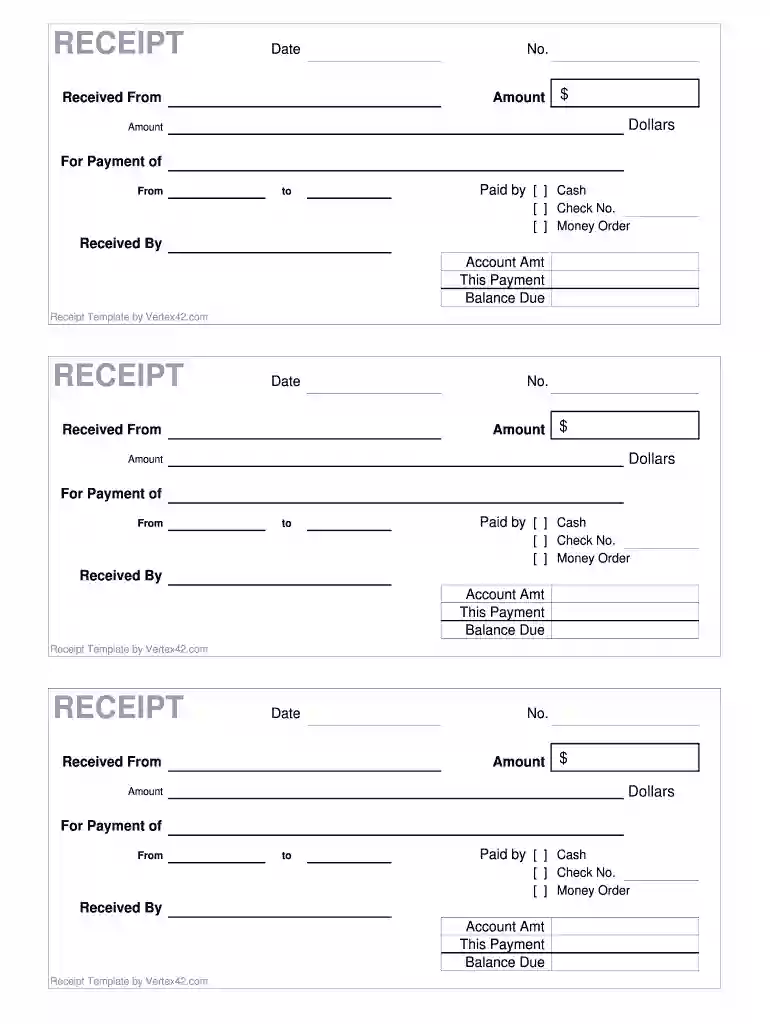
Type text, add images, blackout confidential details, add comments, highlights and more.

Draw your signature, type it, upload its image, or use your mobile device as a signature pad.

Send money receipt sample via email, link, or fax. You can also download it, export it or print it out.
A funeral invoice template is a structured document designed for funeral homes and service providers to itemize and detail the services rendered during funeral arrangements. This template serves several purposes, including the formal billing of the family of the deceased, providing transparency about the costs incurred, and ensuring statutory compliance with local and state regulations.
Using a funeral invoice template involves several steps to ensure that it meets both the needs of the funeral service provider and the expectations of the bereaved family.
A funeral invoice template should encompass specific elements to fulfill legal, professional, and client needs effectively.
Providing enough detail ensures families are fully aware of what they are paying for, preventing disputes and fostering trust. Each entry in the itemized list should be explicit about what the service entails, allowing families to comprehend the full context of their charges.
Funeral homes must adhere to specific legal guidelines when issuing invoices for services rendered. Understanding these legal considerations can protect providers from potential liabilities.
Failing to adhere to these regulations can result in penalties, including fines or loss of the ability to operate as a funeral service provider. Legal disputes can arise from lack of transparency or if families feel misled about funeral costs.
Understanding practical examples can illustrate how a funeral invoice template is effectively utilized in real-world scenarios.
In a traditional funeral setting, a funeral invoice might include services such as:
Each of these services would be listed with corresponding prices, allowing the family to understand their total costs clearly.
A direct cremation service invoice may focus primarily on:
This scenario exemplifies how the invoice can vary based on the type of service rendered, highlighting how different components are tailored to meet client needs.
In the case of pre-need funeral arrangements, the invoice might serve as a confirmation of services reserved and costs agreed upon. This is beneficial for families to have clarity on future plans and associated expenses.
By providing specific examples, funeral service providers can ensure that their invoices are relevant and reflective of the actual services provided, fostering transparent communication with clients.
We've got more versions of the funeral receipt form. Select the right funeral receipt version from the list and start editing it straight away!
| Versions | Form popularity | Fillable & printable |
|---|---|---|
| 2009 | 3.9 Satisfied (29 Votes) |
Yes, and it’s really straightforward! DocHub is a web-based PDF editor with advanced document management capabilities that allow you quickly adjust your forms, complete empty fields and drop new ones for other people to fill out, and create eSignatures in several ways. Add your cash receipt template, give information as requested, and decide how you want to eSign your template - by typing your name, drawing your signature, uploading its image, or using a QR code.
Apart from a comprehensive toolset for editing PDFs on mobile devices, DocHub enables you to sign your funeral home receipt along the way. Open our editor in your browser, make changes using DocHub’s toolset, and finish your editing by eSigning the completed form.
At DocHub, your data security is our priority. We follow HIPAA, SOC2, GDPR, and other standards, so you can work on your documents with confidence.
1. Check all that apply: □ I am applying for death benefits and, if applicable, funeral expenses (check one of the boxes below) and proceed to sectionRead more
by RH Walker 1928 Document: Bill listing services provided by Holmes Funeral Director R.H. Walker, Manager, Jacksonville, Florida, for the late Mary Graham. January 16, 1928.


