Understanding Articles of Incorporation in California
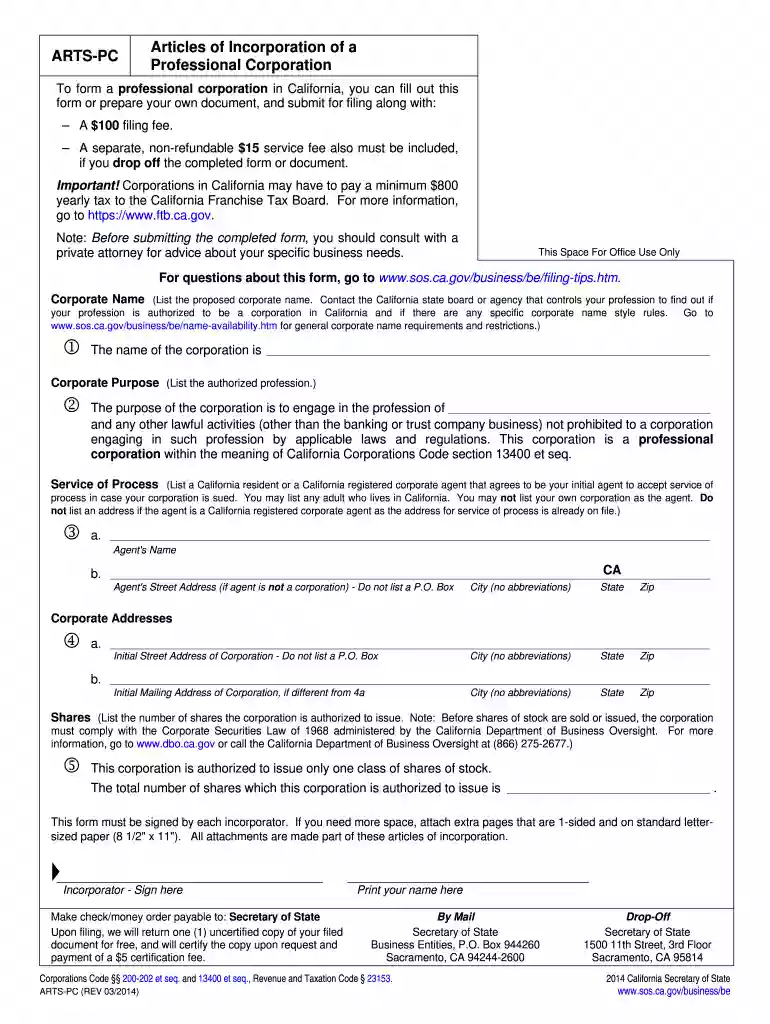
Articles of Incorporation serve as a foundational legal document required for forming a corporation in California. This document outlines essential details about the corporation, including its name, purpose, and the information of its registered agent. The content must be precise and comply with specific legal requirements to ensure proper registration and functionality of the corporation.
Key Components of Articles of Incorporation
The Articles of Incorporation must include several critical components, which are essential for compliance with California state law:
- Corporate Name: The name must be unique and clearly indicate that the entity is a corporation by including identifiers such as "Corporation," "Incorporated," or abbreviations like "Inc." or "Corp."
- Purpose Statement: This section describes the business purpose of the corporation. It can be broad, stating that the corporation may engage in any lawful activity permitted under the California Corporations Code.
- Registered Agent Information: The registered agent is an individual or entity responsible for receiving legal papers on behalf of the corporation. This information must be accurate and up to date.
- Address of the Corporation: This includes the physical address where the corporation is based. A mailing address can also be included if different from the physical address.
- Share Issuance: This section discusses the total number of shares the corporation is authorized to issue, which must align with any corporate bylaws.
Steps to File Articles of Incorporation in California
Filing Articles of Incorporation is a straightforward process, typically involving the following steps:
- Complete the Form: Gather all required information and fill out the Articles of Incorporation form, which can be obtained as a PDF from the California Secretary of State's website or other legal repositories.
- File with the Secretary of State: Submit the completed documents, either online or through mail, along with the required filing fee. The fee varies based on the specific type of corporation being formed.
- Obtain Copies: After filing, you can request a stamped copy of the Articles of Incorporation for your records. This document serves as proof of your corporation's formation.
- Adhere to Additional Requirements: Depending on your specific business type, additional filings or registrations may be necessary.
Importance of Articles of Incorporation
Having properly filed Articles of Incorporation is vital for several reasons:
- Legal Protection: Establishing a corporation helps protect personal assets from business liabilities. The corporation functions as a separate legal entity.
- Credibility: A registered corporation generally appears more credible and trustworthy to potential investors and customers, which can aid in business growth.
- Tax Benefits: Corporations may qualify for specific tax deductions and benefits that are unavailable to unincorporated businesses.
Common Mistakes to Avoid in Filing
When filing Articles of Incorporation, several common pitfalls can arise. Avoiding these can streamline the process:
- Incorrect Information: Ensure all details, particularly the corporate name and registered agent, are accurate. Errors can result in delays or rejections.
- Failure to Pay Fees: Each filing requires a fee. Be sure to check the current fee structure and submit the correct amounts to avoid processing issues.
- Neglecting Additional Filings: Depending on the nature of your business, you may need additional permits or licenses. Check with local regulations to ensure compliance.
Variants of Articles of Incorporation
While the basic structure of Articles of Incorporation remains consistent, variations exist based on business needs. For instance:
- Nonprofit Organizations: The Articles of Incorporation for a nonprofit will vary slightly, focusing on charitable purposes and addressing nonprofit regulations.
- Professional Corporations: Certain professions, such as legal or medical entities, may have additional requirements within their Articles of Incorporation to comply with state laws governing licensed professions.
Resources for Further Assistance
To ensure compliance and receive guidance on incorporating in California, consider utilizing these resources:
- California Secretary of State Website: Provides official forms, instructions, and the latest legal requirements.
- Legal Assistance: Consulting with an attorney can provide clarity on specific legal obligations and nuances in nonprofit vs. for-profit designations.
- Online Templates: Many platforms offer templates for Articles of Incorporation that comply with California state law, making it easier for new business owners.
Adhering to these considerations and understanding the elements involved in the Articles of Incorporation process will enhance the likelihood of successfully establishing a corporation in California.