




01. Edit your usps resignation form online
Type text, add images, blackout confidential details, add comments, highlights and more.

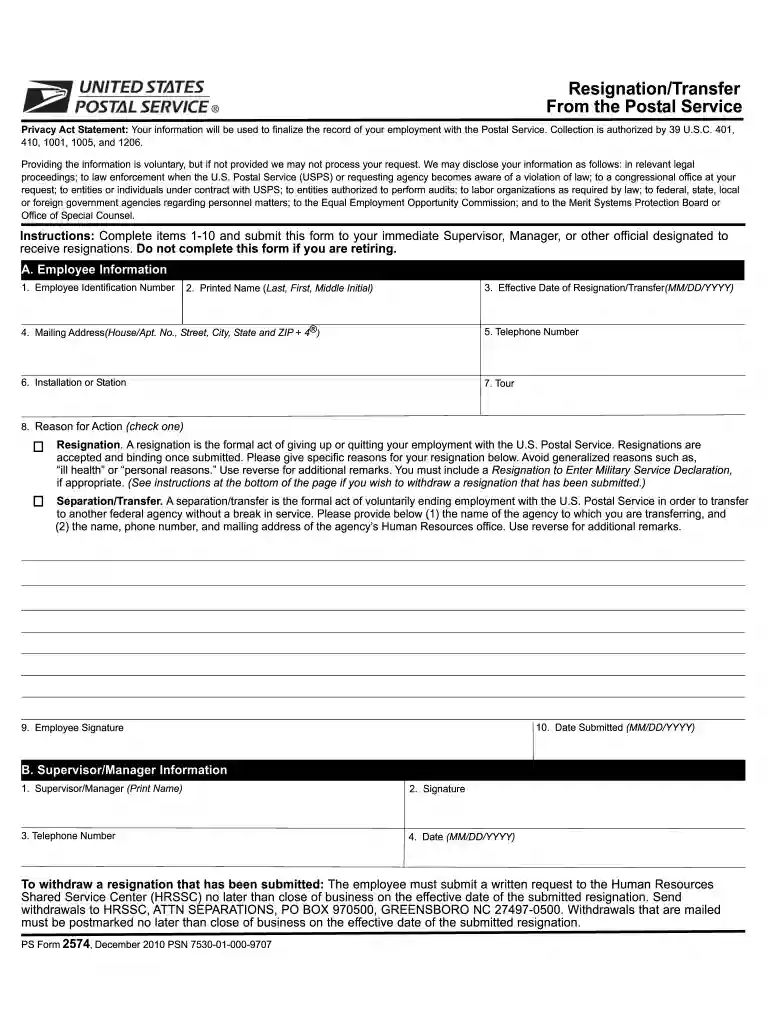
Type text, add images, blackout confidential details, add comments, highlights and more.

Draw your signature, type it, upload its image, or use your mobile device as a signature pad.

Send ps form 2574 via email, link, or fax. You can also download it, export it or print it out.
The resignation office form is a formal document used by employees to announce their intent to resign from their position within an organization. This form serves as an official record of the resignation and initiates the process for exiting the company. Specific details typically included in this form are the employee's name, identification number, effective date of resignation, reason for leaving, and acknowledgment of any pending obligations or benefits.
When completing this form, it is essential to adhere to the established company procedures. This ensures a smooth transition and allows for the proper management of human resources matters related to the employee's departure. The resignation office form is not only important for record-keeping but also serves as a means for the organization to facilitate an exit interview, if applicable, providing valuable feedback for improving workplace culture and retention.
Completing a resignation office form involves several key steps to ensure that the submission is clear and meets the requirements of the organization. Below are detailed steps to guide you through the process:
Gather Necessary Information
Obtain the Form
Fill Out the Form
Submit the Form
Follow Up
These steps are designed to contribute to a professional and respectful departure from your workplace, ensuring that all parties are informed and prepared for the transition.
Understanding the terminology associated with the resignation office form is crucial for effective communication. Here are some key terms that are relevant:
Effective Date: The specific day mentioned in the form that signifies when the employee’s resignation will take effect, typically two weeks after submission.
Notice Period: A standard timeframe during which an employee informs the employer of their intention to resign. The notice period varies by company policy but is commonly two weeks.
Exit Interview: A conversation between the departing employee and HR that aims to gather feedback on the workplace experience, which can provide insights for organizational improvement.
Acknowledgment of Obligations: A section within the form where the employee acknowledges any pending responsibilities or obligations they may need to fulfill before their departure.
Final Paycheck: The last paycheck issued to the employee, which may include any unused vacation days, bonuses, or other compensation due at the time of separation.
Familiarizing yourself with these terms can enhance your understanding of the resignation process and help you communicate effectively with HR and management.
The method by which you submit the resignation office form can vary depending on company policy. Below are the common submission methods:
Online Submission
Mail Submission
In-Person Submission
Employees should follow their organization's preferred submission method to ensure that the process is handled according to policy.
The resignation office form can take different forms depending on the situation. Below are a few practical examples illustrating how to use this form effectively:
Standard Resignation
Resignation Due to Relocation
Resignation for Professional Development
These examples underscore the flexibility of the resignation office form and the importance of clear communication during the resignation process.
The resignation office form acts as a legally binding document that signifies an employee's intent to terminate their employment. Understanding its legal implications is crucial:
Termination Notification: Submitting the resignation form is a formal notification to the employer, aligning with labor laws that often require notice of resignation.
Documentation of Intent: The form serves as evidence of the employee's decision to resign, protecting both parties in cases of disputes regarding the resignation timeline or circumstances.
Compliance with Company Policy: By following the prescribed format, the employee ensures compliance with the organization’s protocols and minimizes potential legal challenges related to their departure.
Employees should retain copies of their resignation forms in case future inquiries arise regarding their employment history or departure terms.
We've got more versions of the usps resignation form form. Select the right usps resignation form version from the list and start editing it straight away!
At DocHub, your data security is our priority. We follow HIPAA, SOC2, GDPR, and other standards, so you can work on your documents with confidence.


Thank you for the opportunities for professional and personal development that you have provided me during the last three years. I have enjoyed working forRead more
May 8, 2021 Staff.Wiki comes with a number of sample policies and procedures. Weve compiled a list below of some of the useful ones.Read more


