
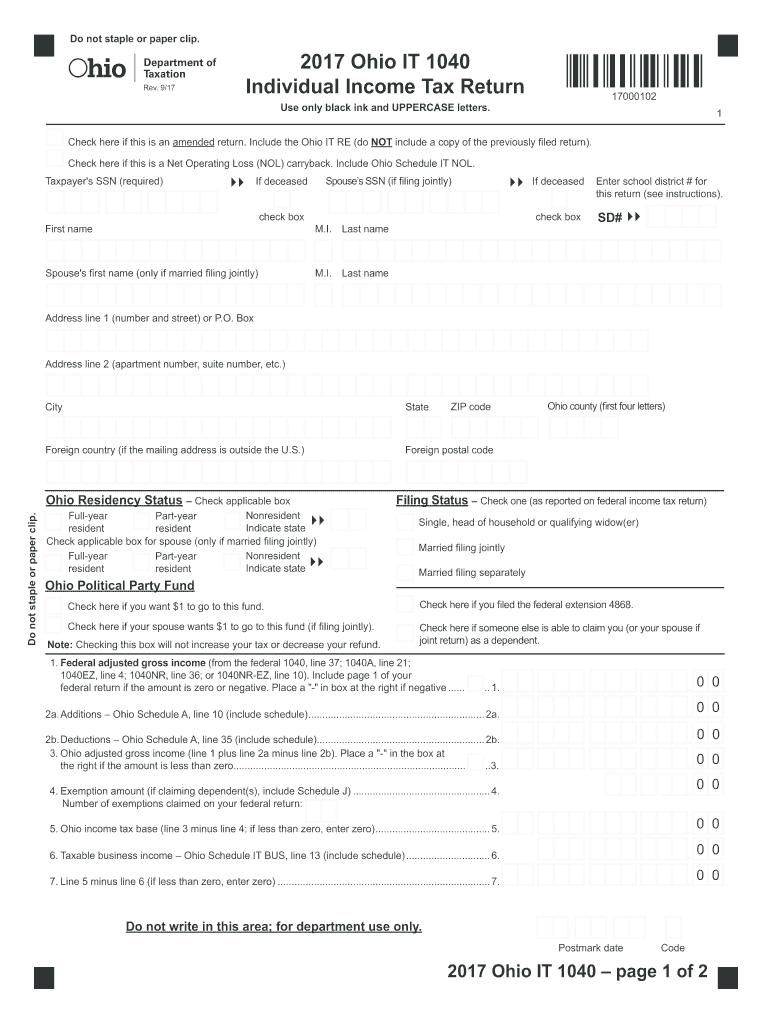







Definition and Purpose of the Ohio Form 2017
Ohio Form 2017, officially known as the Ohio IT 1040 Individual Income Tax Return form, serves as the primary document for Ohio residents to report their income and calculate state income tax obligations for the year 2017. This form is crucial for maintaining compliance with state tax laws and ensuring accurate reporting of income, deductions, and credits.
- Primary Function: The form is designed to capture all necessary financial data, including income, exemptions, and tax liabilities, from Ohio residents.
- Use Case: It is applicable to individuals, including those filing for deductions related to business incomes and expenditures.
- Required by: All Ohio residents with taxable income.
How to Obtain the Ohio Form 2017
Securing a copy of the Ohio Form 2017 can be accomplished through several pathways, ensuring that taxpayers can access the form at their convenience.
- Online Access: Visit the Ohio Department of Taxation's official website, where forms can be downloaded in PDF format.
- Physical Copies: The form is available at local libraries and post offices.
- Request by Mail: Taxpayers may contact the Ohio Department of Taxation directly to request a mailed copy.
- Ensure you acquire the correct form for accuracy in reporting and compliance.
Steps to Complete the Ohio Form 2017
Filing the Ohio Form 2017 requires attention to detail and adherence to specific instructions. Below is a step-by-step guide to completing the form:
- Personal Information: Start by entering your Social Security number, name, and address.
- Income Reporting:
- Calculate total federal adjusted gross income as shown on your federal return.
- Report any additional Ohio income or adjustments.
- Exemptions: Declare any personal or dependent exemptions to reduce taxable income.
- Tax Liabilities and Credits:
- Compute Ohio tax based on taxable income.
- Deduct applicable credits, such as the Retirement Income credit.
- Final Calculation:
- Determine the total tax obligation or refund due.
- Ensure all calculations are accurate to avoid discrepancies.
- Thoroughly review sections to ensure correct entries, avoiding penalties for errors.
Key Elements of the Ohio Form 2017
The Ohio Form 2017 features several critical sections that require precise data entry. Understanding these components is essential for compliance:
-
Income Section: Reflects earnings from various sources, crucial for tax calculations.
-
Exemption Section: Lists personal and dependent exemptions claimed.
-
Tax Calculation: Involves applying Ohio tax rates to the adjusted income.
-
Credits and Deductions: Incorporates various state-specific credits aimed at reducing tax dues.
-
Each section plays a vital role in determining total tax liability.
Important Terms Related to Ohio Form 2017
Familiarity with Ohio tax terminology ensures accurate completion and compliance with state requirements:
-
Adjusted Gross Income (AGI): Total income from all sources less specific deductions.
-
Exemptions: Deductions allowed for taxpayers and dependents, reducing taxable income.
-
Tax Credits: Direct reductions in tax due, such as the personal exemption credit.
-
Refund: Amount returned to a taxpayer when excess tax has been paid.
-
Understanding these terms aids in accurate form completion and maximizes potential refunds.
Legal Use of the Ohio Form 2017
Completing the Ohio Form 2017 aligns with state tax obligations and legal requirements:
-
Compliance: Accurate and timely filing avoids penalties and interest on unpaid taxes.
-
Audit Defense: Proper use of the form safeguards against potential audits by the Ohio Department of Taxation.
-
Legal adherence requires an honest and full disclosure of income and other financial information.
State-Specific Rules for the Ohio Form 2017
Certain state-specific rules apply when completing the Ohio Form 2017 to address unique tax laws:
-
Resident vs. Nonresident Filing: Differences exist between requirements for full-time residents and those living out of state but earning income in Ohio.
-
Reciprocity Agreements: Relationships with certain states affect tax liability for individuals working across state lines.
-
Staying informed about these rules ensures compliance and may affect tax liabilities positively.
Filing Deadlines and Important Dates
Meeting the Ohio Form 2017 submission deadlines is crucial for avoiding penalties:
-
Deadline: The standard filing deadline for Ohio state taxes was typically April 15, 2018, for the 2017 tax year.
-
Extensions: Taxpayers could file for an extension to October 15, 2018, if unable to meet the initial deadline.
-
Mark these dates to maintain compliance and avoid late fees or interest on outstanding balances.
Penalties for Non-Compliance
Failing to correctly file the Ohio Form 2017 invites certain penalties:
-
Late Filing Penalty: Imposed for missing deadlines without approved extensions.
-
Underpayment Penalty: Levied for inaccuracies or failure to pay the full amount owed.
-
These penalties highlight the importance of compliance and accurate tax reporting.




