




01. Edit your building self care plan free online
Type text, add images, blackout confidential details, add comments, highlights and more.

Type text, add images, blackout confidential details, add comments, highlights and more.

Draw your signature, type it, upload its image, or use your mobile device as a signature pad.

Send building self care template via email, link, or fax. You can also download it, export it or print it out.
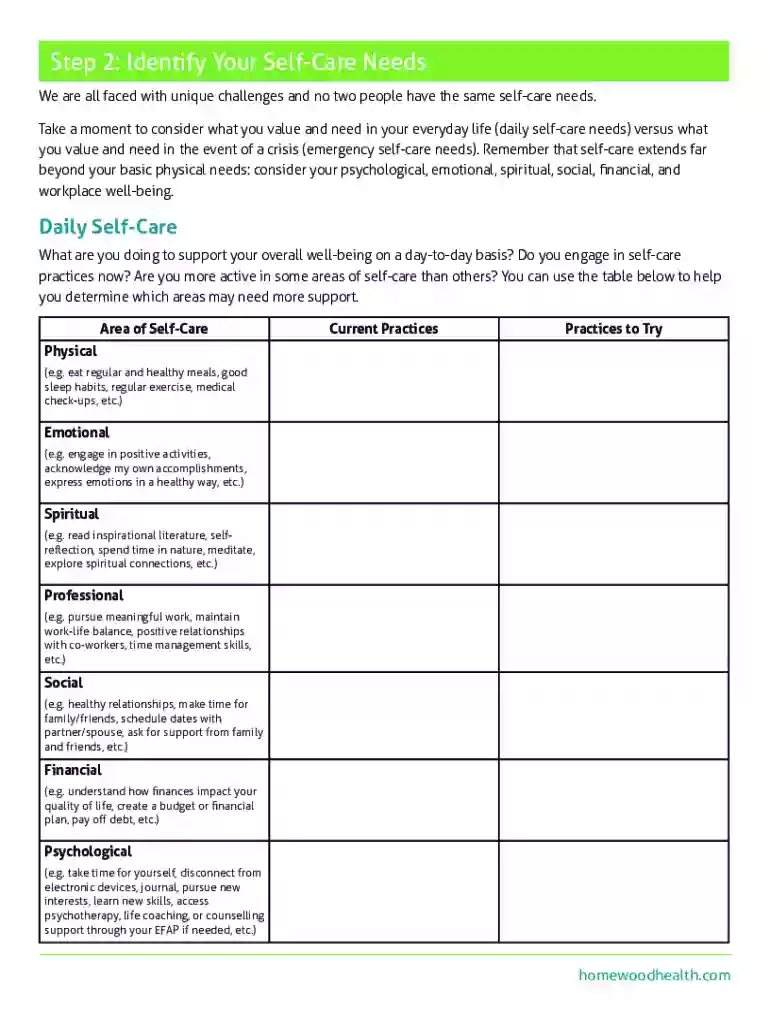
A self-care plan is a personalized approach to maintaining and improving one's well-being through structured strategies and activities. It encompasses emotional, physical, and psychological aspects, allowing individuals to prioritize their health and manage stressors effectively. A well-crafted self-care plan encourages self-awareness, guiding individuals in identifying their unique needs, barriers, and resources. This structured format empowers users to adopt healthier habits and cultivate resilience in the face of life's challenges.
Developing a self-care plan is essential for various reasons:
Crafting a comprehensive self-care plan involves several key elements that tailor the approach to the individual's specific circumstances and preferences. Each element serves as a crucial building block, promoting a balanced and holistic strategy.
Assessment of Needs: Start by evaluating your current mental, emotional, and physical health. Identify areas where you feel overwhelmed and suggest actions to address them. This assessment can include recognizing triggers that negatively impact your wellness.
Daily Self-Care Activities: Establish a routine that incorporates daily self-care practices such as exercising, meditating, or reading. Choose activities that you find enjoyable and rewarding, ensuring they are practical and realistic within your schedule.
Weekly Check-Ins: Designate a regular time for reflection on your self-care progress. This could involve assessing what practices worked well and which areas need adjustment. Regular check-ins foster accountability and adaptability in your approach.
Emergency Self-Care Strategies: Outline specific actions to take during high-stress moments or crises. This may include deep-breathing exercises, reaching out to a friend for support, or temporarily stepping back from responsibilities to regain composure.
Barriers to Self-Care: Recognize potential obstacles that may hinder your self-care efforts, such as time constraints or negative self-talk. Develop strategies for overcoming these barriers, which may involve setting boundaries or seeking social support.
Creating a self-care plan involves a structured process that helps you to engage actively in your well-being journey. Follow these detailed steps to develop a personalized self-care blueprint.
Conduct a Self-Assessment:
Define Your Self-Care Needs:
Set Actionable Goals:
Develop Your Plan:
Monitor and Adjust:
A self-care plan can benefit a wide range of individuals across various professions and demographics. Here are some key groups who may find value in utilizing a self-care plan:
Busy Professionals: Individuals working in high-stress environments often use self-care plans to maintain their mental health and reduce burnout.
Caregivers: Those caring for family members or patients can benefit significantly from self-care strategies, as these responsibilities may lead to neglecting their needs.
Students: Academic pressures can create significant stress, making self-care plans essential for promoting balance and well-being during challenging periods.
Social Workers: Professionals in this field may adopt self-care plans to manage the emotional toll of their work and maintain their effectiveness in helping others.
Individuals with Chronic Conditions: Those managing long-term health issues can use a self-care plan to identify routines that support their physical and mental health.
Recognizing and planning for potential barriers is an essential component of a successful self-care plan. Here are some common obstacles individuals may face:
Time Constraints: In today’s fast-paced world, individuals often find it difficult to carve out time for self-care amidst busy schedules.
Lack of Motivation: When feeling overwhelmed, it can be challenging to stay motivated to engage in self-care activities.
Financial Limitations: Access to resources for self-care, such as gym memberships or wellness activities, can be restricted by budgetary constraints.
Negative Self-Talk: Individuals may struggle with self-acceptance, impacting their willingness to prioritize self-care.
Addressing these barriers in your self-care plan is vital for ensuring sustainability and long-term success.
We've got more versions of the building self care plan free form. Select the right building self care plan free version from the list and start editing it straight away!
| Versions | Form popularity | Fillable & printable |
|---|---|---|
| 2016 | 4.8 Satisfied (102 Votes) |
At DocHub, your data security is our priority. We follow HIPAA, SOC2, GDPR, and other standards, so you can work on your documents with confidence.
Here are some self-care tips: Get regular exercise. Just 30 minutes of walking every day can boost your mood and improve your health. Small amounts of exerciseRead more
To develop your self-care plan, you will identify what you value and need as part of your day-to-day life (maintenance self-care) and the strategies you canRead more
Mar 6, 2023 This model is most applicable when considering the chronic or dependent client with complex emotional, psychological, behavioural and psychiatric needs.Read more


