
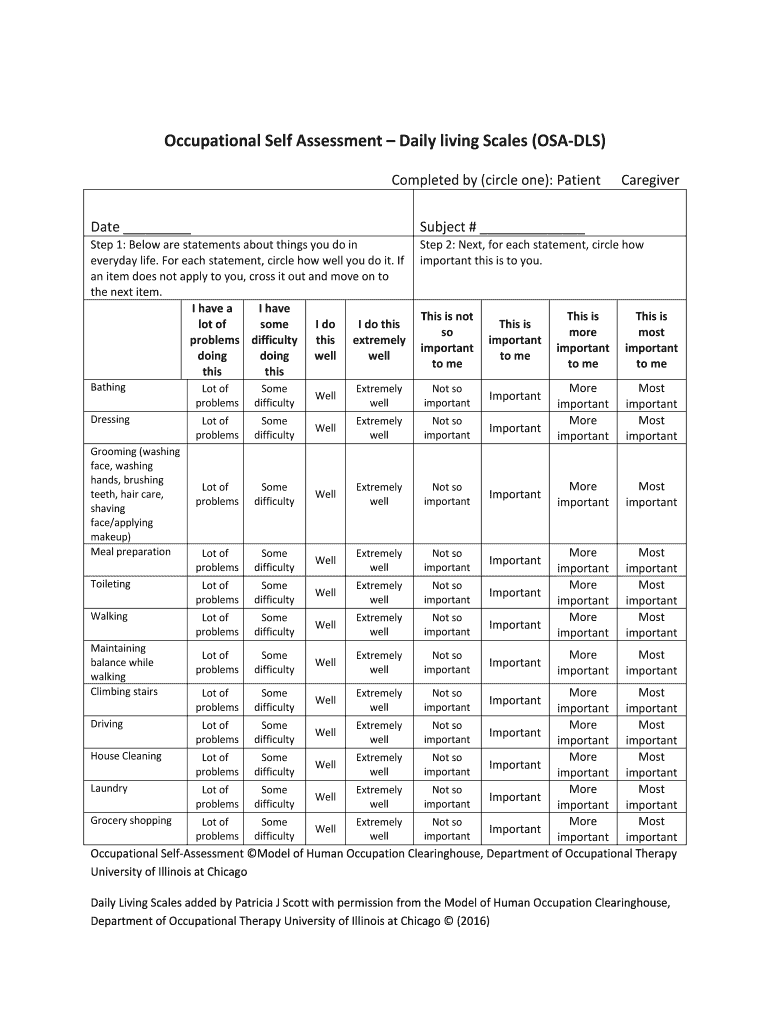







Understanding the Occupational Self Assessment PDF
The Occupational Self Assessment PDF is a tool utilized primarily in occupational therapy to help individuals reflect on their performance in various daily living activities. This assessment focuses on personal views regarding the importance of tasks such as bathing, dressing, grooming, and meal preparation. It is particularly beneficial for understanding one’s capabilities and areas needing improvement.
- Definition and Purpose: The objective of the occupational self assessment is to guide clients in evaluating how competent they feel in performing daily tasks and the significance these tasks hold in their lives. This process helps identify areas requiring support or intervention.
- Types of Users: Generally, the occupational self assessment PDF is employed by healthcare professionals, therapists, and patients, particularly those engaged in rehabilitation or therapy. It is also used in educational settings to support children and adolescents in understanding their own occupational profiles.
Steps for Completing the Occupational Self Assessment PDF
Completing the occupational self assessment PDF involves a systematic approach to ensure comprehensive evaluation of daily living skills.
- Gather Necessary Materials: Obtain the occupational self assessment PDF, writing tools, and a quiet space conducive to reflection.
- Review Instructions: Understand the directions provided in the PDF, which will guide the completion of the assessment efficiently.
- Self-Reflection: For each activity listed, reflect on both performance and importance.
- Performance: Rate your ability to complete each task.
- Importance: Rate how critical each task is to your daily life.
- Identify Areas of Focus: Highlight activities where there is a significant gap between perceived performance and importance; these become your targets for improvement or further evaluation in therapy.
- Complete the Document: Fill out the form thoroughly, ensuring clarity and accuracy to facilitate discussions with your healthcare provider.
This structured approach enhances the quality and effectiveness of the assessment.
How to Access the Occupational Self Assessment PDF
Obtaining the occupational self assessment PDF is straightforward, with several methods available to ensure accessibility for all users.
- Download from Official Sources: Many occupational therapy websites and professional organizations offer a free download of the PDF. You can typically find it in the resource or tools section.
- Consult Your Therapist: If you're working with an occupational therapist, they can provide a copy and guide you on how to use it effectively.
- Educational Institutions: Schools and universities often have resources available for students undergoing assessments. Check with the relevant department for access to the PDF.
- Online Platforms: Educational and health platforms sometimes feature the PDF as part of their course materials or resources.
Accessible formats ensure that individuals can engage with the assessment without barriers.
Important Elements Within the Occupational Self Assessment PDF
Key features of the occupational self assessment PDF serve to facilitate a comprehensive evaluation of a user’s daily living capabilities.
- Activity List: Includes commonly relevant areas such as grooming, household tasks, and mobility. Users will assess both performance and significance of each activity.
- Rating Scale: This often includes numerical scales or descriptive categories to help quantify feelings toward performance and importance.
- Comments Section: A space for users to elaborate on their thoughts for each activity, enhancing understanding of their self-perceptions.
- Visual Aids: Some versions may include diagrams or charts that help users visualize performance ratings versus importance ratings.
These elements are critical for crafting a meaningful assessment that can inform future therapeutic interventions.
Legal Considerations for Using the Occupational Self Assessment PDF
When utilizing the occupational self assessment PDF, it is essential to consider several legal and ethical factors that govern its use.
- Confidentiality: Personal responses should remain confidential, adhering to guidelines such as HIPAA (Health Insurance Portability and Accountability Act) to protect sensitive health information.
- Informed Consent: Users must be informed about how their data will be used and must consent before sharing personal information with therapists or healthcare providers.
- Documentation Standards: Ensure the assessment is completed according to best practices, maintaining accuracy in the documented responses to support legitimate use in professional settings.
Understanding these considerations ensures that the assessment is both ethically and legally sound, protecting the rights of the individual.
Examples of Applications for the Occupational Self Assessment PDF
The versatility of the occupational self assessment PDF allows it to cater to various needs across different demographics.
- In Rehabilitation Programs: Patients recovering from injury utilize the assessment to identify weaknesses in daily activities, enabling targeted therapy to improve functionality.
- In Academic Settings: Educators may use the assessment with students to help them identify their strengths and weaknesses in everyday tasks, fostering self-awareness and goal setting.
- In Mental Health Assessments: Individuals assessing their well-being can reflect on how mental health impacts their performance in daily living, providing therapists with insights into their challenges and needs.
These examples illuminate the practical applications of the assessment, emphasizing its relevance across multiple contexts.
Advantages of Using the Occupational Self Assessment PDF
Utilizing the occupational self assessment PDF offers numerous benefits for individuals and professionals alike.
- Self-Insight: It promotes self-exploration, helping individuals recognize what activities are most meaningful and where challenges lie.
- Baseline Evaluation: The assessment serves as a starting point for developing personalized therapy plans, offering a structured way to track progress over time.
- Facilitates Communication: Completing the assessment allows for informed discussions between clients and therapists, enhancing collaborative therapeutic approaches.
- Encourages Empowerment: Users take an active role in their health by assessing their daily living activities, fostering a sense of control over their rehabilitation or therapy processes.
The advantages derived from the occupational self assessment PDF solidify its importance in both therapeutic settings and personal development.




