






Definition & Meaning of Vehicle Selling Agreement Format
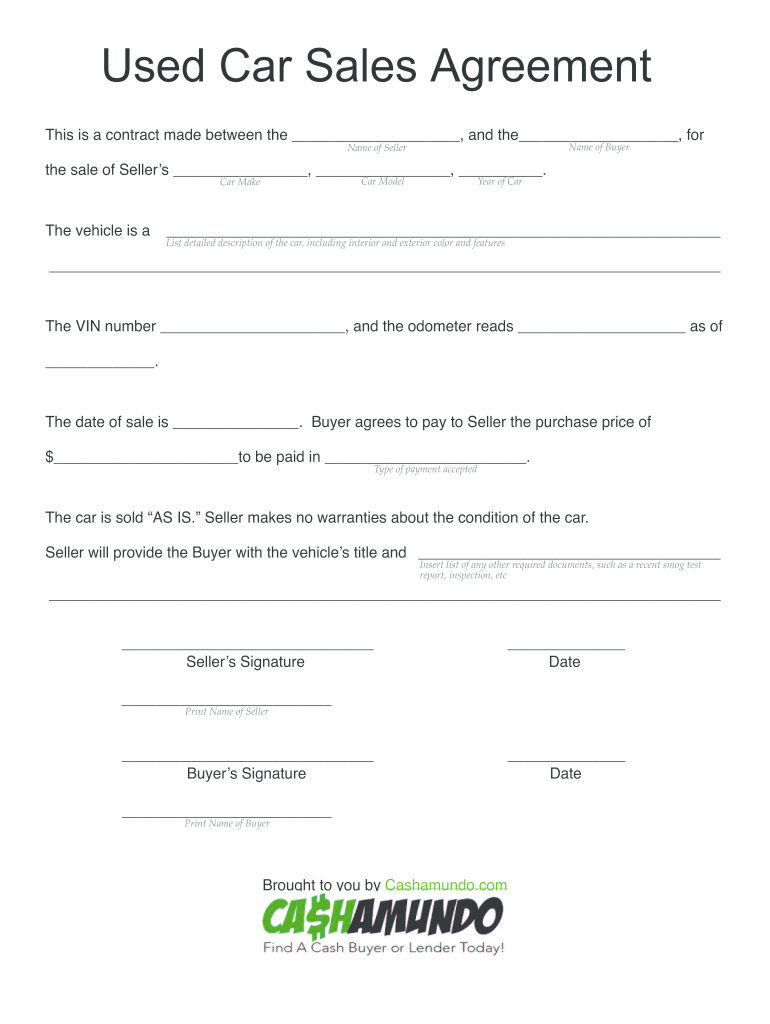
A vehicle selling agreement format is a structured document that outlines the terms and conditions under which a vehicle is sold from one party to another. This agreement serves as a legal binding contract between the seller and buyer and is essential in ensuring clarity and protection for both parties involved. The document typically includes critical details about the vehicle, such as the make, model, year, identification number (VIN), odometer reading, and the condition of the vehicle, which is often marked as "AS IS." The purpose of this agreement is to provide a comprehensive record of the transaction, establishing the seller's obligation to transfer ownership and the buyer's responsibility to pay the agreed purchase price.
The vehicle selling agreement format can vary based on the requirements of different states or individual preferences, but its core elements remain consistent. It is important to have a properly constructed agreement to avoid potential disputes or misunderstandings in the future. This document may also include clauses regarding any warranties, disclosures related to the vehicle's history, and jurisdiction in case of disputes.
Key Elements of the Vehicle Selling Agreement Format
A well-drafted vehicle selling agreement should include several key components to ensure thorough coverage of the transaction’s specifics. These elements include:
- Parties Involved: Clearly state the full names and contact information of the buyer and seller.
- Vehicle Details: Provide detailed information about the vehicle, including:
- Make and model
- Year of manufacture
- Vehicle Identification Number (VIN)
- Odometer reading
- Purchase Price: State the amount agreed upon for the sale, including any deposit and payment method (cash, check, etc.).
- Condition of the Vehicle: Indicate that the vehicle is sold "AS IS," clarifying that the seller does not guarantee its state beyond what is disclosed.
- Transfer of Title: Specify the obligations of the seller regarding the transfer of vehicle title, along with any additional paperwork necessary for registration.
- Signatures: Both parties must sign and date the agreement to validate it legally.
Each of these elements plays a crucial role in detailing the transaction and protecting both parties' interests.
Steps to Complete the Vehicle Selling Agreement Format
Completing a vehicle selling agreement format involves a series of specific steps to ensure that all crucial information is accurately captured. The following outlines the general procedure:
- Gather Information: Collect all necessary information about both the buyer and seller, as well as the vehicle. This includes personal data and documentation such as the title.
- Choose a Format: Decide whether to use a template for the vehicle selling agreement format or create one from scratch. Templates can often simplify this process.
- Fill in Details: Input the details regarding the vehicle—make, model, year, VIN, and odometer reading—while also including the agreed purchase price.
- Include Payment Terms: Specify how the payment will be made, including any deposits or financing terms agreed upon.
- State Vehicle Condition: Clearly indicate that the vehicle is sold "AS IS" and discuss any pre-existing issues that the seller is aware of.
- Review the Agreement: Ensure that both parties understand the terms of the agreement. Make edits as necessary to address any concerns before signing.
- Sign the Agreement: Both the buyer and seller should sign and date the document, which may require witnessing depending on state laws.
- Distribute Copies: Provide each party with a signed copy of the agreement for their records.
By following these steps, both the buyer and seller can ensure that the transaction is documented thoroughly and protects their respective interests.
Legal Use of the Vehicle Selling Agreement Format
The legal use of a vehicle selling agreement format ensures that the transaction is recognized by state laws, providing both parties with rights and obligations. Adherence to local regulations is crucial; thus, it's recommended to understand the specific legal requirements for vehicle sales in the relevant state or municipality.
Legal elements often include:
- Transfer of Ownership: Laws vary by state in terms of the processes and documentation required to officially transfer the title of the vehicle.
- Consumer Protection Laws: Some states require certain disclosures to be made, such as any known defects or previous accidents involving the vehicle.
- Signature Requirements: The agreement must be signed by both parties to be enforceable, and some states may require notarization.
Understanding these elements ensures that the agreement is not only thorough but also compliant with legal standards, safeguarding against potential disputes.
Important Terms Related to Vehicle Selling Agreement Format
A range of terms and concepts are commonly associated with vehicle selling agreements. Understanding these terms can provide both the buyer and seller with clearer insights during the transaction. Key terms include:
- “AS IS” Clause: This indicates that the seller is offering the vehicle without warranties regarding its condition and implies that the buyer accepts all risks associated with its purchase.
- Title: The legal document indicating ownership of the vehicle. The seller must provide the title as part of the transaction.
- Odometer Disclosure: Many states require an odometer reading to be documented in the agreement to prevent odometer fraud.
- Lien: If the vehicle has an outstanding loan, the agreement should disclose this, and the seller must clear the lien before the sale.
- Transfer Fees: Some agreements may reference any fees associated with transferring the vehicle's title, which can vary by jurisdiction.
Familiarity with these terms can enhance the overall effectiveness and clarity of the agreement.
Examples of Using the Vehicle Selling Agreement Format
Utilizing a vehicle selling agreement format can vary based on the context of the sale, and having real-world scenarios can help illustrate practical applications. Here are three examples:
-
Private Sale Between Individuals: A person selling their used car to a neighbor would prepare a vehicle selling agreement detailing the vehicle's make, model, and condition. This document protects both parties by ensuring that the buyer acknowledges the car’s condition and the seller’s obligations regarding the title transfer.
-
Sale of a Classic Car: A classic car collector selling their vehicle may use a more detailed agreement to outline specifics about the car's history, modifications, and value. The agreement could include clauses regarding maintenance records and any warranties.
-
Dealership Transactions: When a dealership sells a pre-owned vehicle, the agreement covers the additional complexities, such as financing terms and trade-ins. An organized agreement ensures compliance with consumer protection laws and provides disclosures required for used car sales.
These examples demonstrate the versatility of the vehicle selling agreement format across different transaction types, highlighting its importance in protecting parties involved in vehicle sales.