





Overview of the Bill of Sale for Boat and Trailer
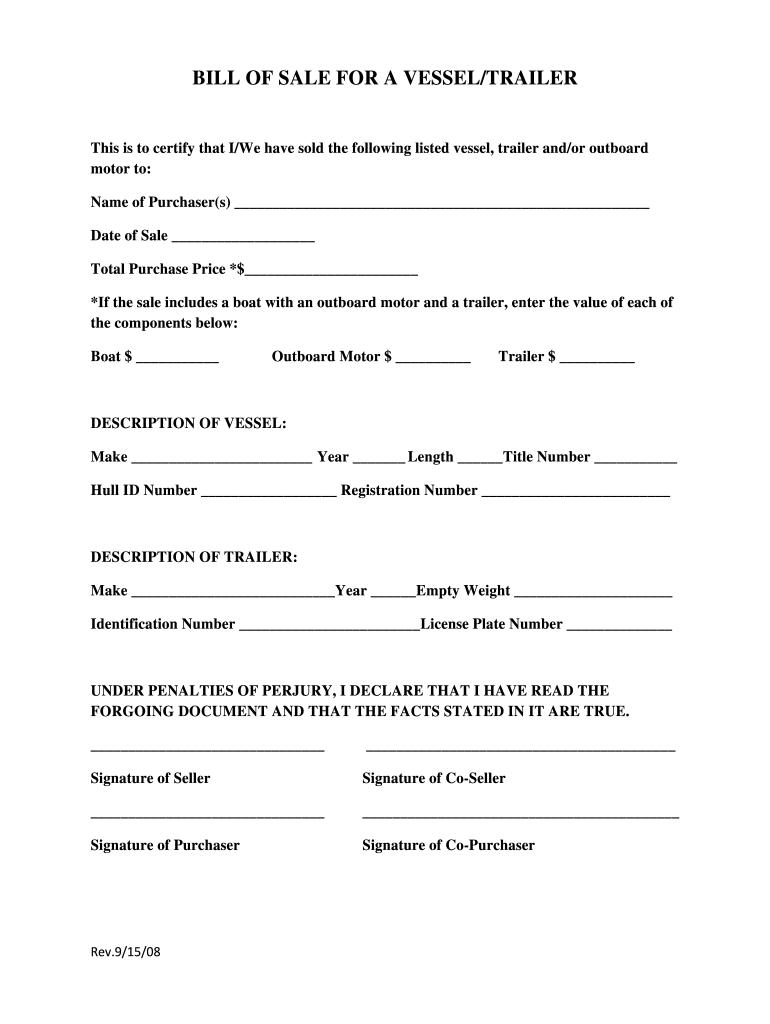
A bill of sale for a boat and trailer is a legal document that captures the sale transaction between a seller and a buyer. This document not only serves as proof of the purchase but also outlines the specifics related to the boat and trailer being sold. The essential components include:
- Parties Involved: Names and contact information of both the seller and purchaser.
- Sale Date: The exact date on which the transaction occurs.
- Purchase Price: Total amount agreed upon for the sale.
- Descriptions: Detailed descriptions of the boat and trailer, including make, model, year, hull identification number (HIN), and vehicle identification number (VIN).
Both parties are required to sign the document to validate the transaction. Keeping a copy of this bill is important for both legal and registration purposes.
Key Elements of the Bill of Sale
Understanding the critical components of a bill of sale for boat and trailer helps ensure that all necessary information is included. Key elements to consider are:
-
Identification of the Vessel and Trailer: Clearly specify the type, make, model, and year of both the boat and trailer. This includes:
- Boat: Type (e.g., fishing boat, sailboat), HIN.
- Trailer: VIN, type (e.g., single-axle, dual-axle).
-
Terms of Sale: Clarify whether the sale is "as-is" or if any warranties are offered. An "as-is" statement usually indicates that the seller will not be responsible for any issues post-sale.
-
Acknowledgment of Transfer of Ownership: A statement confirming that the seller has the legal right to sell the boat and trailer, and they are not financed or otherwise encumbered.
-
Signatures: Both the seller and the buyer must sign the document, including dates to solidify the transaction's legitimacy.
Creating a Boat and Trailer Bill of Sale Template
Crafting a template can simplify future transactions involving a boat and trailer. Here’s a guide to developing a versatile template:
-
Header: Title the document clearly as "Bill of Sale for Boat and Trailer."
-
Seller and Purchaser Information: Include sections for the names, addresses, and contact numbers of both the seller and buyer.
-
Date of Sale: Create a line for the date of the transaction.
-
Detailed Item Descriptions: Allocate space for specific information about the boat and trailer, including identification numbers and any additional features.
-
Purchase Price: Add a section to state the sale price, as well as payment method if applicable (e.g., cash, check).
-
Terms and Conditions: Draft a clause that describes the nature of the sale, whether is it a private sale with no warranties or if there is a warranty.
-
Signatures: Include space for both parties to print their names and add their signatures and dates.
Importance of Legal Compliance
For a boat and trailer bill of sale to hold legal weight, it is essential to comply with state regulations. Compliance typically involves:
-
Notarization: While not mandatory in all states, having the bill notarized can provide an extra layer of authenticity and verification.
-
State Forms: Some states require specific forms to be filled and filed along with the bill of sale, especially for registration or title transfer.
-
Tax Considerations: Proper documentation helps ensure that sales tax is calculated and paid correctly, as some states mandate tax payment upon the transfer of ownership.
Common Mistakes to Avoid
When crafting or completing a bill of sale for boat and trailer, ensure you avoid these common errors:
-
Incomplete Information: Always verify that all fields are filled out completely, including identification numbers and personal details.
-
Not Retaining a Copy: It's important for both parties to retain a signed copy of the bill of sale for future reference.
-
Failing to State Sale Terms: Clearly outline the sale conditions to prevent any disputes post-transaction regarding warranties or condition.
-
Excluding Signatures: Both buyer and seller must sign the document; a missing signature can render the document ineffective as proof of the sale.
Examples of State-Specific Requirements
State regulations may vary significantly, affecting how a bill of sale for a boat and trailer is treated. For instance:
-
Florida: In Florida, a specific form for the bill of sale may be required to register the boat with the Florida Fish and Wildlife Conservation Commission. This may include additional information such as the seller’s Florida driver's license number.
-
California: California may require a notice of transfer and release of liability, which must be submitted to the Department of Motor Vehicles alongside the bill of sale.
Utilizing Printable Templates
Many resources provide free printable templates for a boat and trailer bill of sale. Utilizing a standardized, legally compliant format can save time and help ensure all necessary elements are included. These templates can often be found in:
-
Online Document Platforms: Websites offering document-generating services where users can customize the bill of sale for their specific needs.
-
State Government Websites: Some states provide downloadable templates that are compliant with local laws, ensuring that important details specific to the state are included.
Incorporating these various aspects ensures that your bill of sale for boat and trailer transactions is thorough, compliant, and useful for both parties involved in the sale.