







Definition & Meaning
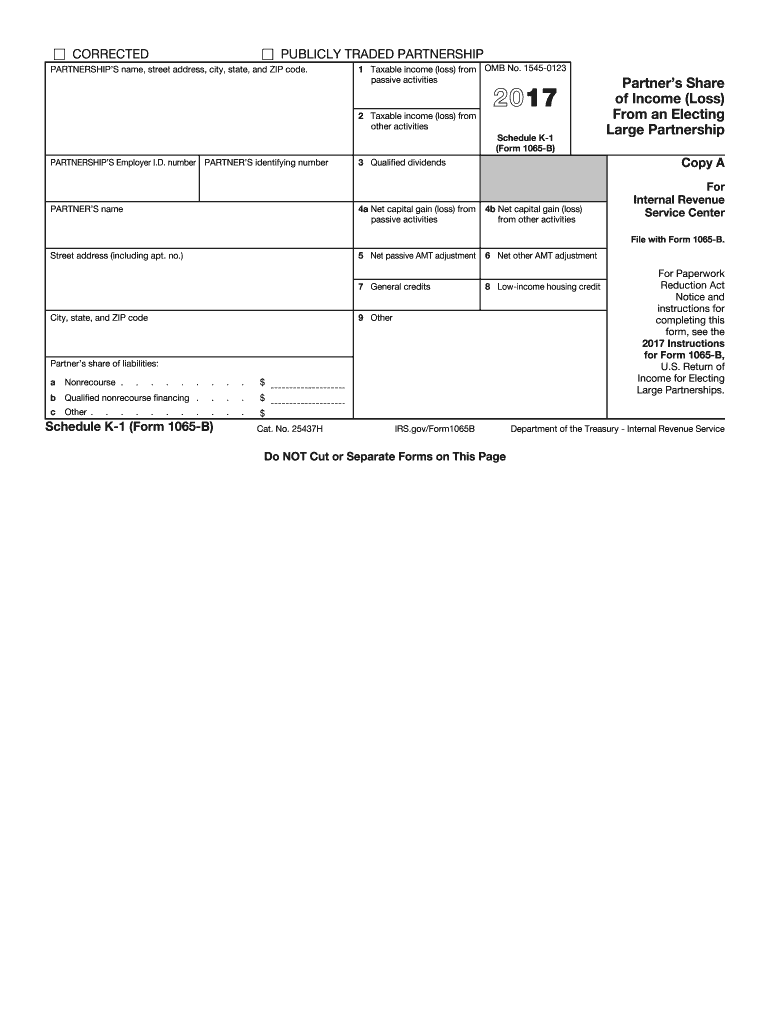
The IRS K-1 form, also known as Schedule K-1, is an integral tax document used in the United States. It is part of forms provided by the IRS related to partnerships, S corporations, estates, and trusts. This form is designed to report income, dividends, and other distributions to partners and shareholders. Its purpose extends largely to informing individuals about their share of the earnings that are subject to tax, ensuring each person is taxed correctly based on the income they receive through these entities.
The K-1 can vary slightly depending on the entity type, such as partnerships filing taxes with Form 1065, S corporations with Form 1120S, and estates and trusts with Form 1041. Though the entities themselves do not pay income tax directly, the K-1 helps allocate income, deductions, and credits to individual partners or beneficiaries to be reported on their personal tax returns.
How to Obtain the IRS K-1 Form
Partners or shareholders do not directly obtain the IRS K-1 form themselves. Instead, it is issued by the organization, partnership, or entity in which they hold a stake. These entities are responsible for preparing and distributing the form, generally after compiling their annual income and expenditure reports.
- Entities such as partnerships or S corporations issue the K-1s after filing their respective tax forms (Form 1065 or Form 1120S).
- It can be mailed or made available digitally, often through tax professionals or directly from the entity.
- The distribution timeline is generally aligned with that of the relevant tax filing deadlines and often issued by March 15 annually for partnerships and S corporations.
Steps to Complete the IRS K-1 Form
Completing the K-1 form involves several detailed steps:
-
Accumulate Financial Information: Gather details on income, deductions, and credits relevant to the partnership, S corporation, or trust for the fiscal year.
-
Fill Out the Necessary Details: Ensure the entity information, such as the name, address, and EIN, is correctly entered. Each partner's or shareholder's details must also be accurately filled.
-
Allocate Shares: Calculate each participant's share of income, losses, credits, and deductions. This necessitates precise calculations and understanding of percentage ownership.
-
Input Financial Data: Write down specific entries like interest income, ordinary dividends, long-term capital gains, etc., correlating to each participant's distributed share.
-
Review and Submit: A thorough review for accuracy before distribution is crucial. Once verified, distribute the forms electronically or via mail to the partners or shareholders.
Key Elements of the IRS K-1 Form
Several key components are present in the IRS K-1 form. Understanding these areas ensures the form is correctly interpreted and filled:
- Partner/Shareholder Information: Names, addresses, and Social Security numbers, which identify each individual in the partnership or corporation.
- Capital Account Analysis: Details of each partner's liquid capital account, either at adjusted or tax basis, fair market value, or GAAP standard.
- Income and Deductions: Lines indicating ordinary income or loss, real estate activities, other income items, self-employed earnings, credits, and deductions.
- Other Items: Sections detailing items like foreign transactions, alternative minimum tax (AMT) adjustments, and oil and gas depletion.
Important Terms Related to IRS K-1 Form
Certain financial and tax-specific terminologies are frequently associated with the IRS K-1 form:
- Distributive Share: The portion of income or loss allocated to each partner or shareholder.
- Pass-through Entity: A business structure like a partnership or S corporation wherein income is passed to owners without being taxed at the entity level.
- Ordinary Income: Regular income like salaries, wages, and dividends.
- Deduction Sharing: Mechanism used to allocate deductible expenses among partners or shareholders.
Examples of Using the IRS K-1 Form
In practical scenarios, the IRS K-1 form is utilized in various tax situations:
- Partnership Profits: A computer repair shop operating as a partnership divides its profits among partners, tailored by capital contributions and agreed percentage shares.
- S Corporation Dividends: If you own shares in a family-run S corporation, the K-1 details individual dividend incomes which are then reported on personal tax returns.
- Estate Beneficiary Income: Trusts distribute interest and dividends to beneficiaries; these reflect as income on K-1 forms and are reported on individual returns.
IRS Guidelines
IRS guidelines govern the proper use and completion of K-1 forms to ensure compliance with federal tax laws:
- Accuracy is Critical: All allocated amounts must be calculated with precision based on the partnership or corporate agreement.
- Timely Filing: Partner and shareholder K-1s must be delivered in a timely manner, usually alongside or shortly after the entity's tax return filing.
- Tax Year Synchronization: The tax year of the entity issuing the K-1 must align with the entity's fiscal year and the recipient's personal tax return year.
Filing Deadlines / Important Dates
Delivered typically by March 15, the deadlines for completing and distributing K-1s are set to grant individuals enough time to assimilate the input into their personal tax returns.
- Partnerships and S Corporations: Must issue K-1 forms as part of their Form 1065 or Form 1120S filings by this date.
- Trusts: For trusts with a fiscal calendar year matching the calendar year, K-1 is due as part of Form 1041 by April 15.
The above content framework provides a thorough overview and comprehensive instructions that ensure understanding and compliance with the intricacies of the IRS K-1 form. This approach aids in managing both individual and entity tax obligations effectively.




