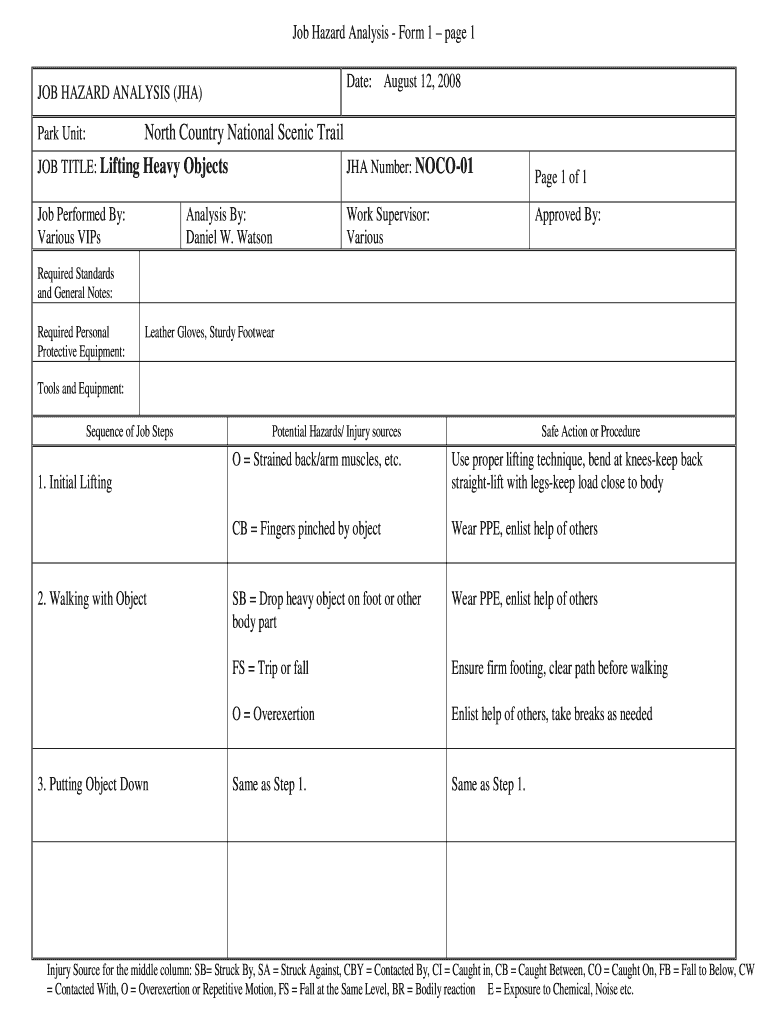







Definition & Meaning of Job Hazard Analysis
Job Hazard Analysis (JHA) is a systematic process used to identify and evaluate potential hazards associated with specific job tasks. The primary goal of a JHA is to reduce the risk of workplace injuries by understanding how to perform tasks safely. This involves breaking down each job into steps and analyzing the risks associated with each step to develop safer work practices. A well-designed job hazard analysis template Excel allows safety professionals and supervisors to document these evaluations clearly and efficiently.
Undertaking JHA involves several key components:
- Job Steps: Each task involved in the job should be listed sequentially. For example, if the job is lifting heavy objects, the steps may include: lifting, carrying, and placing the object.
- Hazard Identification: Identify what could go wrong at each step. Consider both typical hazards such as physical injuries and environmental hazards like exposure to toxic substances.
- Control Measures: Suggest measures to avoid or mitigate risks, such as using proper lifting techniques, wearing personal protective equipment (PPE), or modifying the work environment.
Having this analysis recorded in a structured job hazard analysis template Excel provides clarity and ensures that hazards are routinely evaluated and updated.
Steps to Create a Job Hazard Analysis Template
Creating an effective job hazard analysis template in Excel involves systematic steps to ensure all relevant information is captured accurately and efficiently.
- Define the Job: Start by clearly defining the job or task for analysis. For example, define if it’s a 'Warehouse Lifting Task' or 'Construction Site Tasks'.
- List Job Steps: Break down the job into manageable steps. For the lifting task, steps might be lifting the object, walking with it, and setting it down.
- Identify Hazards: For each step, note potential hazards. Examples include:
- Lifting: Risk of strains and sprains.
- Walking: Trip hazards in the path.
- Setting Down: Risk of dropping the object.
- Determine Controls: Specify controls to address each hazard. This can include the use of forklifts for lifting, ensuring clear walkways, and training on proper techniques for setting down heavy objects.
- Review and Revise: Regularly review the completed JHA to ensure it remains relevant to current working conditions and practices.
By following these steps, you can develop a comprehensive job hazard analysis that aids in maintaining workplace safety.
Key Elements of a Job Hazard Analysis Template
A job hazard analysis template Excel should include several key elements to ensure it is comprehensive and user-friendly. Each section serves a specific purpose in the analysis process.
- Job Title/Task Description: Clearly state the job title or task that requires analysis.
- Job Steps: An orderly list of tasks involved in the job.
- Hazard Identification: Detailed descriptions of identified hazards.
- Risk Level: Evaluation of the severity of each identified hazard, which can be categorized as low, medium, or high.
- Control Measures: A list of preventative measures and techniques to manage identified hazards.
- Responsibility: Identify who is responsible for implementing the controls.
- Date of Analysis: Date when the JHA was completed, ensuring timely reviews are scheduled.
Including these elements in a job hazard analysis template ensures that all critical aspects of the job are covered and aids in providing a clear safety framework.
Examples of Job Hazard Analysis Applications
The practical use of a job hazard analysis template can span various industries and job types. Here are several examples:
-
Construction Sites: A JHA can help assess the risks of falling from heights, exposure to hazardous materials, or equipment operation.
-
Manufacturing Facilities: A focus on machinery operation can help identify risks such as entanglement or noise exposure and guide the implementation of safety measures such as guards or noise-canceling equipment.
-
Healthcare Settings: Analysis in this sector can evaluate the risks of needle stick injuries or exposure to biohazards. Procedures can be put in place to train staff on using PPE effectively.
-
Agricultural Operations: Conducting JHAs can identify risks related to machinery handling, chemical exposure, or lifting heavy loads and promote safety training to mitigate these risks.
These applications demonstrate the versatility and critical importance of job hazard analysis across various fields.
Benefits of Using Job Hazard Analysis Templates
Utilizing a job hazard analysis template offers numerous benefits for businesses looking to enhance workplace safety.
- Consistency: A standardized template ensures that JHAs are created uniformly across jobs and departments, which facilitates comparison and evaluation of safety measures.
- Easy Documentation: Excel templates provide a clear format for recording hazards and safety measures, which aids in compliance with OSHA regulations.
- Improved Communication: By utilizing a template, all team members can have access to the same safety information, encouraging consistent communication and collaboration around safety practices.
- Efficiency: Templates streamline the process of documenting job hazards and make it easier to update as tasks, equipment, or regulations change.
These benefits help build a proactive safety culture that prioritizes employee well-being.
Legal Compliance and Job Hazard Analysis
Compliance with legal regulations regarding workplace safety is critical, and conducting a job hazard analysis plays a key role in this effort.
- OSHA Standards: The Occupational Safety and Health Administration (OSHA) requires that employers assess workplace hazards. A well-structured job hazard analysis demonstrates to regulators that employers are fulfilling this obligation.
- Documentation for Inspections: In the event of an OSHA inspection, having detailed JHAs provides evidence that the company is committed to worker safety and compliance with regulations.
- Worker Rights: Maintaining thorough job hazard analyses not only protects employees but also empowers them. Workers have the right to understand hazards and the measures implemented to protect them.
By ensuring compliance through effective use of job hazard analysis templates, organizations safeguard their workforce and enhance their operational integrity.