
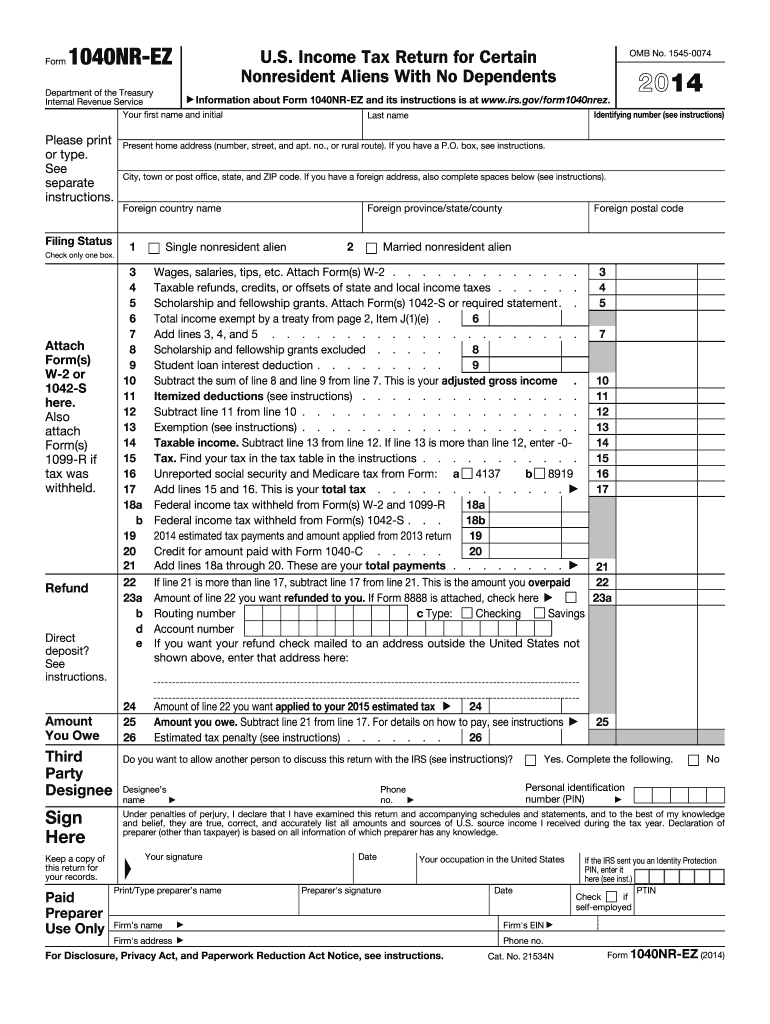







Definition and Purpose of the 2014 EZ Form
The 2014 EZ Form, specifically known as Form 1040NR-EZ, is a U.S. Income Tax Return for certain qualifying nonresident aliens without dependents. This tax form simplifies the filing process for eligible individuals by providing a streamlined format for reporting income and calculating taxes due for the 2014 tax year. It is designed for use by those who have specific types of income and straightforward tax circumstances, allowing them to avoid the complexities of more detailed tax forms.
Eligibility for the 2014 EZ Form
To qualify for using the 2014 EZ Form, the individual must meet several criteria:
- Be a nonresident alien, typically someone who resides in the U.S. but does not meet the residency requirements for tax purposes.
- Have no dependents.
- Earn income from specific sources such as wages, salaries, and tips, which are reported on Form W-2, 1099-G, or other approved forms.
- Not have any business or self-employment income.
Meeting these criteria allows eligible taxpayers to file using a simpler form, streamlining the process of completing and submitting their tax return.
Steps to Complete the 2014 EZ Form
Filing the 2014 EZ Form entails several clear steps to ensure accuracy and compliance:
- Gather Necessary Documentation: Collect relevant income statements such as W-2s and 1099s, as well as any records related to scholarships or fellowships received.
- Personal Information Section: Enter your personal information, including name, address, and taxpayer identification number.
- Income Reporting: Fill in the income section, reporting wages and other taxable income.
- Deduction and Exemption Calculations: Use the instructions to determine any deductions or exemptions you qualify for, which simplifies the tax calculation process.
- Tax Calculations: Utilize the provided tax table or worksheet to calculate the precise tax amount owed.
- Signature and Date: Ensure the form is signed and dated prior to submission.
Each step requires careful attention to detail to ensure the accurate reporting of income and compliance with IRS regulations.
How to Obtain the 2014 EZ Form
Obtaining a copy of the 2014 EZ Form is essential for those filing their taxes for the 2014 tax year. Here are some ways to access the form:
- IRS Website: The IRS offers downloadable PDF versions of the 2014 EZ Form on their official website. This is a reliable and direct means of accessing the document.
- Tax Preparation Software: Many software programs include past-year tax forms, allowing access to the 2014 EZ Form.
- Tax Professionals: Engaging with a tax professional or accountant can also facilitate acquiring the correct form, as they often have access to historical tax documents.
Ensuring you have the right form before starting the filing process is crucial for correct reporting and compliance.
Importance of Using the 2014 EZ Form
The 2014 EZ Form is an invaluable tool for nonresident aliens without dependents, offering simplicity and efficiency in tax filing. Utilizing this form when applicable ensures:
- Simplified Filing Process: Its straightforward format reduces the complexity often associated with other forms, saving time and effort.
- Compliance with Tax Laws: Adhering to IRS guidelines using the designated form helps avoid errors and potential penalties.
- Streamlined Tax Calculations: With fewer fields and calculations, taxpayers can accurately file their returns without unnecessary complications.
These advantages make it clear why eligible nonresidents should use this specific form for their 2014 tax returns.
Who Typically Uses the 2014 EZ Form
The typical users of the 2014 EZ Form are nonresident aliens who require a simplified tax filing process. This group includes:
- International Students: Those studying in the U.S. on temporary visas often qualify to use this form, especially if they have no dependents and receive income primarily from university employment or scholarships.
- Temporary Workers: Nonresidents who earn wages through short-term employment in the U.S. can benefit from the ease of filing with the 2014 EZ Form.
- Visiting Scholars: Academics participating in exchange or training programs with minimal U.S. income sources may find this form suitable.
Understanding the typical users helps clarify the intended audience and circumstances for which this form was created.


Key Elements of the 2014 EZ Form
Important sections and fields on the 2014 EZ Form include:
- Personal and Filing Status Information: Critical for determining tax treatment.
- Income Sources: To accurately report wages, salaries, and other income.
- Tax Deductions and Credits: Specific lines for calculating offsets such as exemptions.
- Direct Deposit Information: For users opting to receive refunds electronically.
These components are designed to facilitate straightforward calculations and simplify the overall tax reporting process.
IRS Guidelines for the 2014 EZ Form
The IRS provides specific guidelines for completing the 2014 EZ Form, which include:
- Detailed instructions accompanying each section to aid in accurate completion.
- Requirements for submitting supporting documentation, such as W-2 forms.
- Criteria for electronically filing or mailing the completed form.
Adhering to these guidelines ensures that the form is filled out correctly and submitted in accordance with IRS standards, minimizing the risk of errors or audits.
Filing Deadlines and Important Dates
The standard deadline for filing the 2014 EZ Form was April 15, 2015. However, understanding various filing scenarios is important:
- Extension Requests: Taxpayers needing more time could apply for an automatic extension, extending the deadline to October 15.
- Penalties for Late Filing: Failing to meet the deadline without appropriate extensions resulted in potential penalties, emphasizing the importance of timely submission.
Being aware of these critical dates and actions ensures proper compliance and avoids unnecessary penalties.
Required Documents for the 2014 EZ Form
Proper completion of the 2014 EZ Form requires the assembly of several pertinent documents, including:
- W-2 Forms: To report wages and salary income accurately.
- 1099 Forms: If applicable, to account for other types of income.
- Scholarship or Fellowship Information: For those receiving educational financial support.
Compiling these documents beforehand facilitates a more efficient filing process and helps ensure all necessary data is accurately reported.




