
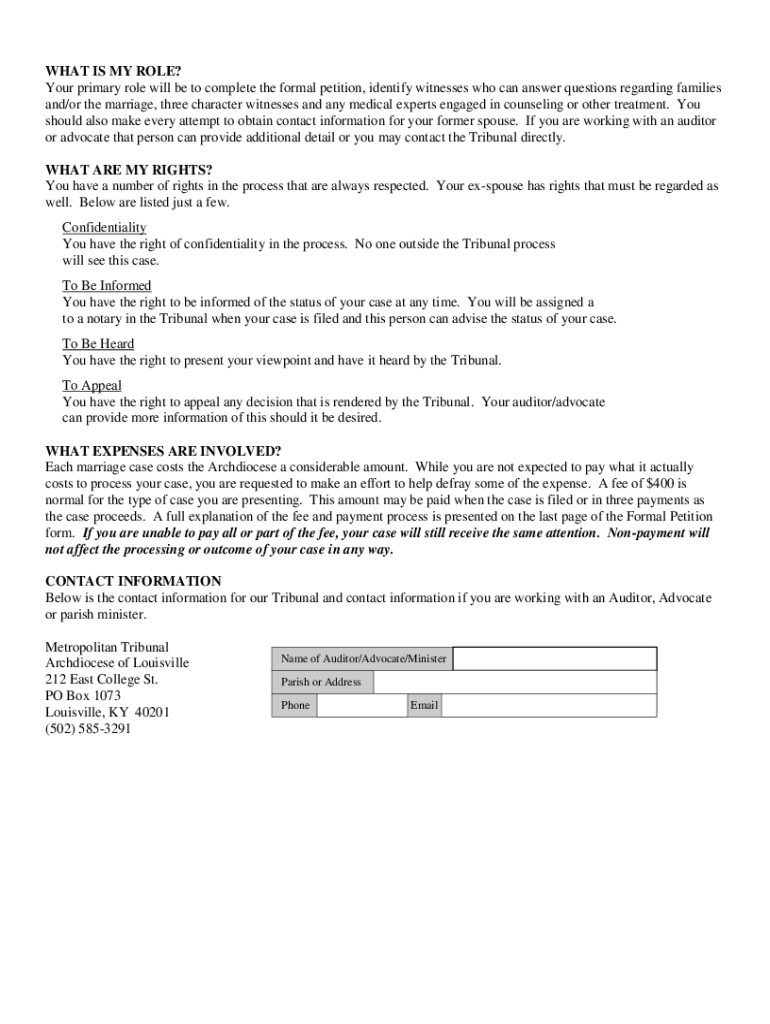







Understanding the Catholic Annulment Process
A Catholic annulment, or Declaration of Nullity, is a formal process that legally declares a marriage as invalid in the eyes of the Church. This declaration does not erase the sacramentality of the marriage but instead asserts that a valid marriage was never formed according to Church law. Understanding the annulment process can help individuals navigate this often emotional and complex journey.
Implications of Annulments
-
Impact on Children: An annulment does not affect the legitimacy of children born during the marriage. They remain legitimate and are entitled to all rights as children of the parents. However, the implications for custody and support are separate from the annulment process.
-
Civil Matters: An annulment is recognized differently from divorce in civil law. While a divorce legally dissolves a marriage, an annulment asserts the marriage was never valid. Individuals are free to remarry within the Church following an annulment.
Steps to Obtain a Catholic Annulment
-
Initial Consultation: Begin by speaking with a parish priest or a member of the Church's canonical team. They will provide guidance and information on the annulment process tailored to your situation.
-
Filing the Petition: Complete the necessary annulment paperwork. This includes detailed information about the marriage and reasons for seeking an annulment. This documentation is crucial and must be thorough.
-
Gathering Evidence: Collect supporting documents and witness statements. This may involve testimonies from friends, family, or anyone familiar with the marriage.
-
Review Process: Your petition will be submitted to a Church tribunal, which will evaluate the merits of the case. This may take several months.
-
Notification: You will be notified of the tribunal's decision. If the annulment is granted, you will receive formal documentation stating that the first marriage was invalid.
Example of a Catholic Annulment Letter
When seeking an annulment, an example of a Catholic annulment letter could include the following sections:
- Personal Details: Name, contact information, marriage details including date and place.
- Grounds for Annulment: Specific reasons that qualify under canon law, such as lack of consent, psychological capacity, or a prior marriage.
- Witness Information: Details about individuals who can attest to your claims.
Sample Church Annulment Letter
[Your Name]
[Your Address]
[City, State, Zip Code]
[Email Address]
[Date]
[Parish Priest’s Name]
[Parish Name]
[Parish Address]
Dear [Parish Priest’s Name],
I am writing to formally request a declaration of annulment for my marriage to [Former Spouse’s Name], which took place on [date] at [location]. I believe that this marriage did not meet the essential criteria for a valid marriage according to the teachings of the Catholic Church.
The grounds I am presenting for this annulment include [list the grounds, e.g., lack of mental capacity, lack of free consent, etc.]. I have also gathered witness statements to substantiate my claims, which I will submit along with this letter.
Thank you for your guidance and assistance throughout this process.
Sincerely,
[Your Name]
Key Components of the Annulment Process
-
Witness Statements: Providing testimony from people who observed the marriage can strengthen your case. These should be unbiased, and individuals must be willing to discuss their experiences.
-
Emotional Support: Engaging with a support group or a pastoral counselor may help individuals process feelings associated with the annulment.
Common Questions About the Annulment Process
-
Is there a fee for the annulment process? Yes, there may be associated fees for filing and processing the annulment petition. Costs vary by diocese.
-
How long does the process take? The timeline for processing an annulment varies, generally taking several months; however, it can be expedited in certain circumstances.
-
Can I remarry after my annulment is granted? Once you receive the annulment decree, you are free to marry in the Catholic Church, provided that you have properly followed all necessary steps.
Final Considerations
Navigating the annulment process can be complex and emotionally taxing. Understanding the full scope of requirements and implications of the annulment can aid individuals in making informed decisions. Consulting with Church authorities and utilizing support systems can provide additional guidance and comfort throughout this experience.




