2016 1120s k 1 form-2026

Get Form
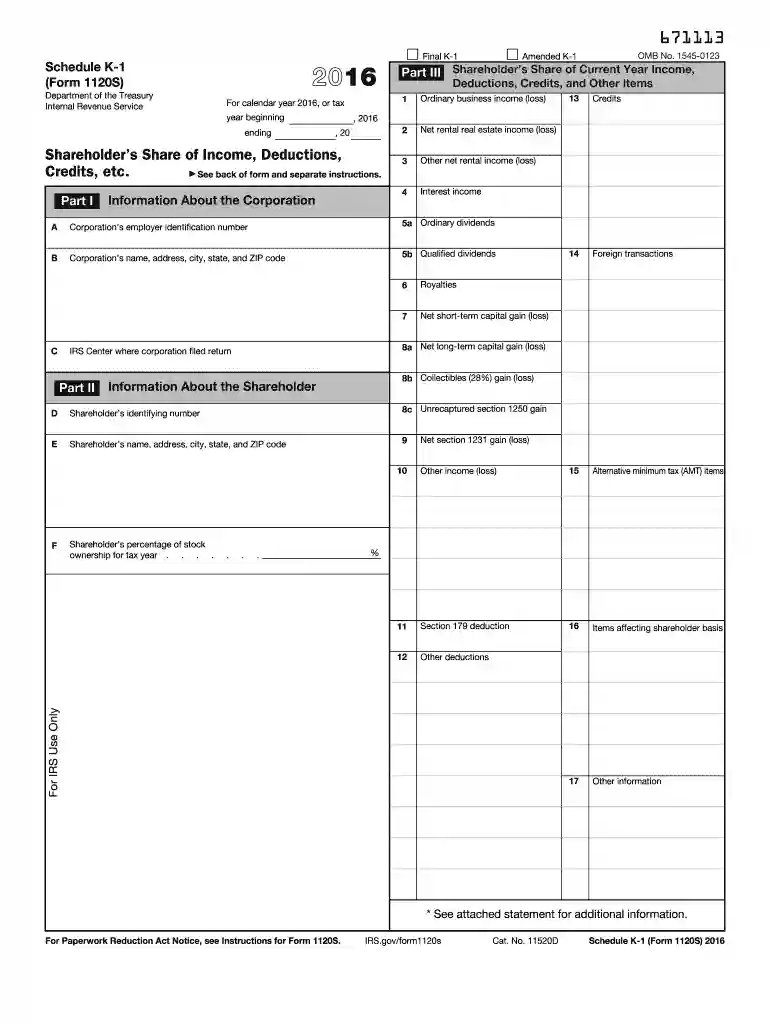
2016 1120s k 1 form Preview on Page 1

Here's how it works

01. Edit your form online
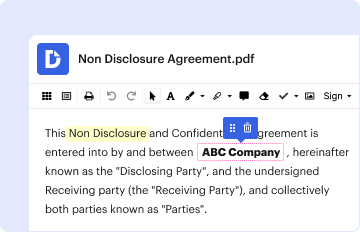
Type text, add images, blackout confidential details, add comments, highlights and more.

02. Sign it in a few clicks
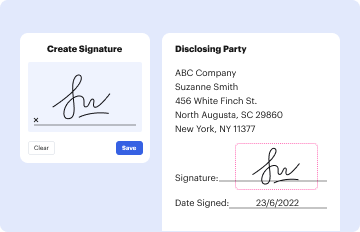
Draw your signature, type it, upload its image, or use your mobile device as a signature pad.

03. Share your form with others
Send it via email, link, or fax. You can also download it, export it or print it out.

Definition & Meaning of the 2S K-1 Form

The 2S K-1 form, officially known as Schedule K-1 (Form 1120S), is a crucial document that S corporations in the United States use to report the earnings, losses, and other tax-related information of their shareholders. This form captures each shareholder's share of income, deductions, credits, and other relevant items that may be included in their personal tax returns. It serves to distribute the financial outcomes of the corporation to its individual shareholders, enabling them to report this information accurately on their respective tax returns.

Importance of the K-1 Form

  • Allocation of Income: It details how income is distributed among shareholders, reflecting their percentage of ownership.
  • Tax Reporting: Shareholders use the K-1 to report this income on their individual tax returns, ensuring compliance with federal tax regulations.
  • Tracking Deductions and Credits: The form outlines any applicable deductions and credits shareholders can claim, impacting their overall tax liability.

Understanding the purpose and details of the 2S K-1 form is essential for both corporations and shareholders to fulfill their tax responsibilities effectively.

How to Use the 2S K-1 Form

Using the 2S K-1 form requires careful attention to detail to ensure accurate reporting. Once shareholders receive the form from the S corporation, they must follow specific steps to utilize it properly for their tax filing.

Steps for Shareholders

  1. Reviewing the Information: Shareholders should first verify that all entries are accurate, including their personal details and the financial figures reported.
  2. Transferring Details to Tax Returns: The income, losses, and other items listed on the K-1 need to be reported on the appropriate lines of the individual's IRS Form 1040.
  3. Understanding Each Box: Each box on the K-1 has designated meanings, such as ordinary business income, capital gains, and deductions, which must be correctly placed on the personal tax return.
  4. Consulting Tax Professionals: Given the complexity of tax laws, shareholders may wish to seek help from tax professionals to ensure correct reporting, especially if there are numerous entries.

Key Considerations

  • Multiple K-1 Forms: If a shareholder has interests in multiple S corporations, they will receive multiple K-1 forms, each requiring a similar reporting process.
  • Amendments: If the S corporation amends its tax return, a revised K-1 may be issued. Shareholders need to update their personal tax returns accordingly.

Using the K-1 form correctly is essential for both tax compliance and financial documentation.

Steps to Complete the 2S K-1 Form

Filling out the 2S K-1 form requires accurate data entry and adherence to specific IRS guidelines.

Step-by-Step Process

  1. Gather Necessary Information: Collect all relevant documentation, including the corporation’s financial statements and any previous K-1 forms for consistency.
  2. Fill in Identification Information: Enter the corporation’s name, address, and Employer Identification Number (EIN) at the top of the form, along with the shareholder’s identifying details.
  3. Report Income: Enter ordinary business income, rental income, and other income figures in the designated boxes. Use financial records to ensure accuracy.
  4. Declare Deductions and Credits: Identify and enter any applicable deductions or credits attributable to each shareholder.
  5. Double-Check Entries: Review all entries for accuracy and completeness, ensuring all figures are supported by documentation.
  6. File the Form: Submit the completed K-1 to the IRS and provide copies to each shareholder as part of their tax reporting obligations.

Important Reminders

  • Filing Deadline: Ensure the K-1 is completed and distributed to shareholders by the deadline established by the IRS, typically aligned with the corporate tax return due date.
  • Record Keeping: Keep a copy of the K-1 and all supporting documentation in corporate records to justify entries in case of an IRS audit.

Completing the 2S K-1 form requires diligence to guarantee compliance and accurate reporting.

Who Typically Uses the 2S K-1 Form?

The 2S K-1 form is primarily utilized by S corporations and their shareholders, reflecting the unique structure of this business entity type.

decoration image ratings of Dochub

Primary Users

  • S Corporations: The producing entity that reports its earnings and losses to the IRS through the K-1 form.
  • Shareholders: Individual owners of the S corporation who receive K-1 forms to report their proportional share of the entity’s tax items.

Related Users

  • Tax Professionals: Accountants and tax advisors who assist S corporations and shareholders in preparing and filing necessary tax documents.
  • IRS Auditors: Individuals responsible for ensuring compliance with tax laws who may examine K-1 forms during audits.

The usage of the K-1 form is essential for proper income distribution and tax reporting among entities and their shareholders.

Important Terms Related to the 2S K-1 Form

Understanding the terminology associated with the 2S K-1 form is vital for effective communication and compliance.

Key Terms

  • S Corporation: A specific type of corporation that meets IRS requirements to pass income, losses, and other tax items directly to shareholders.
  • Distributions: Payments made to shareholders that represent a share of the corporation's profits.
  • Ordinary Business Income: Income generated by the S corporation from its regular business operations, reported on the K-1.
  • Deductions: Expenses that shareholders can deduct on their personal tax returns, derived from the corporation’s activities as indicated on the K-1.

Additional Terms

  • Accrual Basis Accounting: A method of accounting where income and expenses are recorded when they are earned or incurred, regardless of when cash is actually exchanged.
  • K-1 Schedule: A specific report issued for partnerships, estates, trusts, and S corporations that detail income and tax liabilities as directed by the IRS.

Familiarity with these terms will facilitate understanding and application of the 2S K-1 form in tax contexts.

Filing Deadlines for the 2S K-1 Form

Understanding the deadlines for filing the 2S K-1 form is crucial for compliance and timely reporting.

Important Dates

  • Corporate Tax Return Due Date: Generally, S corporations must file their Form 1120S by March 15, 2017. This deadline applies to corporations operating on a calendar-year basis.
  • K-1 Distribution Deadline: S corporations are required to provide K-1 forms to their shareholders by the same date they file their corporate tax return.
  • Extensions: If necessary, corporations can file for an extension to obtain an additional six months to submit their Form 1120S; however, this does not extend the deadline for providing K-1 forms to shareholders.

Consequences of Late Filing

  • Penalties: Failure to file the K-1 on time can result in penalties from the IRS for both the corporation and the shareholders.
  • Impact on Shareholders: Shareholders rely on the timely receipt of K-1 forms to accurately complete their personal tax returns.

Awareness of these deadlines ensures compliance and can help prevent unnecessary penalties associated with late filings concerning the 2S K-1 form.

See more 2016 1120s k 1 form versions

We've got more versions of the 2016 1120s k 1 form form. Select the right 2016 1120s k 1 form version from the list and start editing it straight away!
Versions Form popularity Fillable & printable
2023 4.1 Satisfied (28 Votes)
2022 4.5 Satisfied (32 Votes)
2021 4.8 Satisfied (80 Votes)
2020 4.3 Satisfied (86 Votes)
2019 4.3 Satisfied (67 Votes)
2018 4.3 Satisfied (118 Votes)
2017 4.2 Satisfied (97 Votes)
2016 4.4 Satisfied (267 Votes)
2015 4.2 Satisfied (76 Votes)
2014 4.3 Satisfied (67 Votes)
2013 4 Satisfied (36 Votes)
2012 4 Satisfied (48 Votes)
2011 4.4 Satisfied (26 Votes)
2010 4 Satisfied (58 Votes)
2009 4.1 Satisfied (64 Votes)
be ready to get more

Complete this form in 5 minutes or less

Get form

Got questions?

We have answers to the most popular questions from our customers. If you can't find an answer to your question, please contact us.
Contact us
Who has to file it? You co-own a business with one or more other person, but that business isnt incorporated. Youve signed a partnership agreement and registered the partnership with the state. Your company is an LLC with multiple owners and has not decided to be taxed as a C or S corporation.
S corporations that fail to file Form 1120S by the due date or by the extended due date face a $220 (for 2024) penalty for each month or part of a month the return is late.
Use Form 1120-S to report the income, gains, losses, deductions, credits, etc., of a domestic corporation or other entity for any tax year covered by an election to be an S corporation.
Use Schedule K-1 to report a beneficiarys share of the estates or trusts income, credits, deductions, etc., on your Form 1040 or 1040-SR. Keep it for your records. Dont file it with your tax return, unless backup withholding was reported in box 13, code B.
After filing Form 1120-S, the corporation gives each shareholder their Schedule K-1. The K-1 reflects a shareholders share of income, deductions, credits, and other items that the shareholder will need to report on their individual tax return.
be ready to get more

Complete this form in 5 minutes or less

Get form

People also ask

The 1120/1120S forms are received by parents whom have ownership in a corporation. The 1065 form is received by parents whom have ownership in a partnership. The supporting Schedule K-1s will indicate the percentage that parent(s) own in the business.
Schedule K-1 records each owners share of the businesss income, deductions, credits, and other financial items. The corporation submits a copy of all K-1s to the IRS with the 1120S form. Each owner gets their own copy used to complete their personal tax returns.
Although the S corporation is subject to various taxes, you are liable for the income tax on your share of the S corporations income, whether or not distributed, and you must include your share on your California tax return.

Related links