




01. Edit your anti dumping duty commodity form fedex online
Type text, add images, blackout confidential details, add comments, highlights and more.

Type text, add images, blackout confidential details, add comments, highlights and more.

Draw your signature, type it, upload its image, or use your mobile device as a signature pad.

Send anti dumping form fedex via email, link, or fax. You can also download it, export it or print it out.
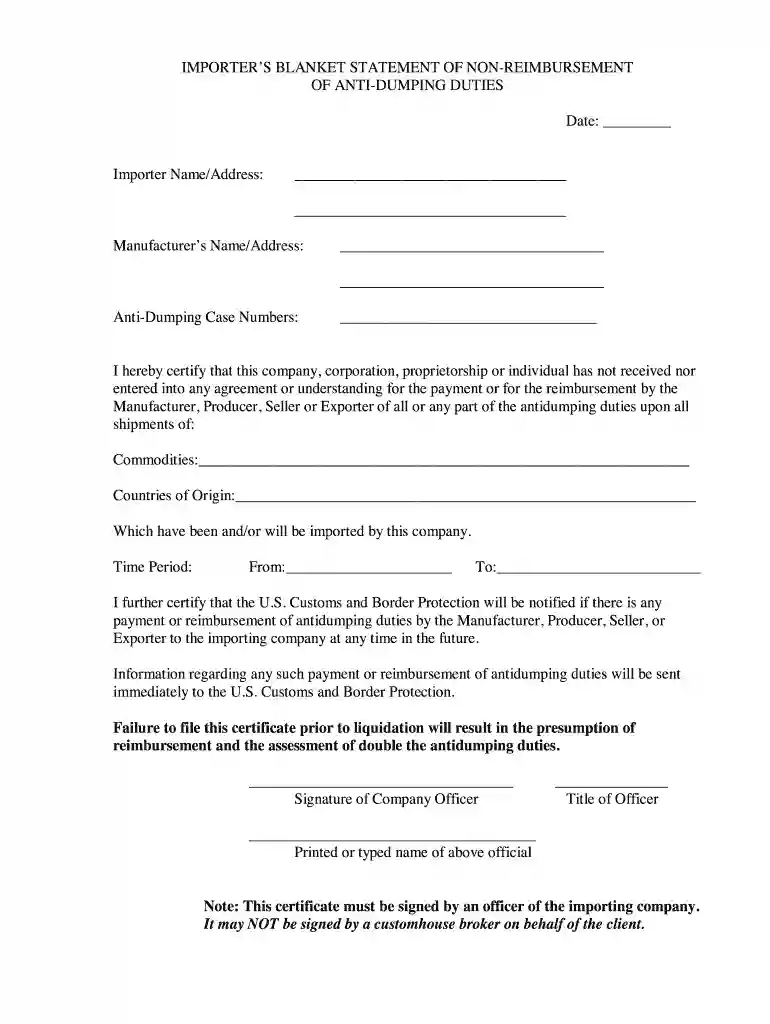
The statement of anti-dumping duties is a critical document for importers dealing with international trade commodities that may be subject to anti-dumping measures. It serves as an Importer's Blanket Statement of Non-Reimbursement, confirming that the importer has not received any reimbursement for anti-dumping duties from manufacturers or exporters. This statement is essential for compliance with U.S. Customs and Border Protection (CBP) regulations, enabling the U.S. government to monitor dumping practices effectively.
The purpose of this statement includes:
Failure to accurately file this statement can lead to significant financial repercussions, including additional duties being assessed and potential legal action.
Importers typically encounter various scenarios when they are required to file an anti-dumping duty statement. Here are a few practical situations:
Regular Import Transactions: When an importer regularly brings in products that are subject to anti-dumping duties, filing this statement upon each import is essential.
New Product Imports: If new commodities are imported that fall under anti-dumping laws, the importer must file or update their statement before the products arrive at U.S. ports.
Changes in Supplier Agreements: Should a supplier agree to reimburse anti-dumping duties, the importer must notify the CBP and may need to revise their existing statements.
Form Updates: Whenever there are changes to relevant regulations or definitions related to anti-dumping duties, importers have the obligation to resubmit their statements to remain compliant with CBP requirements.
Understanding these situations helps ensure that companies remain compliant and avoid financial penalties associated with the enforcement of anti-dumping regulations.
Filing the anti-dumping duty statement involves a thorough understanding of specific requirements. Importers must be mindful of the following essential components:
Accurate Details: The statement must accurately reflect the company’s operations, including information about the commodities imported and any arrangements with manufacturers or exporters.
Certification of Non-Reimbursement: Importers must confirm that they have not reimbursed any anti-dumping duties, providing transparency in their transactions.
Notification Obligation: If a future reimbursement occurs, the importer must notify the CBP. This obligation is crucial to help maintain fair practices in international trade.
Deadlines: Importers should be aware of the filing deadlines, which can vary. They need to submit their statement promptly with respect to import schedules.
Meeting these requirements ensures that importers uphold their compliance responsibilities, thereby minimizing the risk of penalties.
Non-compliance with the anti-dumping duty statement requirements can lead to significant repercussions for importers. Potential consequences include:
Financial Penalties: Importers may face fines or increased duties if they fail to file the statement correctly or on time. Non-compliance is taken seriously by the CBP and may be met with legal actions.
Double Assessment of Duties: If reimbursement is not reported, importers may be subject to double duties, resulting in substantial additional costs on imports.
Record-Keeping Audits: Failure to maintain proper records regarding anti-dumping duties can trigger audits from the CBP, leading to further scrutiny of the importer’s practices.
Legal Action: Continuous non-compliance can result in criminal charges, fines, or sanctions against the company and its executives.
Understanding these consequences is vital for importers to manage risk effectively and maintain good standing with U.S. Customs and internationally in trade relationships.
Familiarity with relevant terminology is important for understanding and completing the anti-dumping duty statement. Key terms include:
By understanding these terms, importers can better navigate the complexities associated with anti-dumping duties and maintain compliance.
Real-world examples help illustrate how the anti-dumping duty statement operates in practice:
Steel Imports: An importer of steel products must constantly verify that they are not receiving reimbursements from exporters. They may need to file the statement every time they import, ensuring compliance with U.S. regulations.
Consumer Electronics: In the case of electronics, if a manufacturer agrees to absorb the anti-dumping duties for imported smartphones, the importer must notify the CBP and potentially file a new statement, indicating the change in transaction dynamics.
Textiles and Apparel: A clothing importer finds that specific garments are being sold below market value, triggering anti-dumping duties. Maintaining the statement is crucial to avoid financial penalties from the CBP while purchasing these items.
At DocHub, your data security is our priority. We follow HIPAA, SOC2, GDPR, and other standards, so you can work on your documents with confidence.
The determination under this paragraph shall be the basis for the assessment of countervailing or antidumping duties on entries of merchandise covered by theRead more
Sep 16, 2025 Antidumping and countervailing duties are intended to offset the value of dumping and/or subsidization, thereby leveling the playing field for domesticRead more


