




01. Edit your kyc2 fnbbotswana co bw online
Type text, add images, blackout confidential details, add comments, highlights and more.

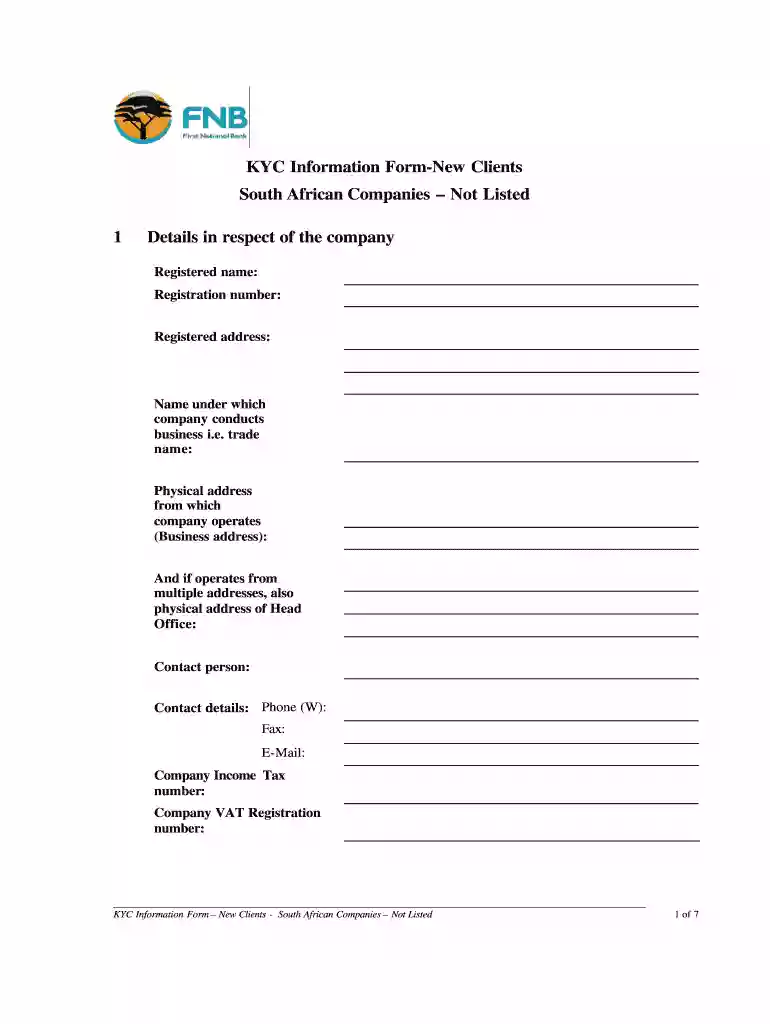
Type text, add images, blackout confidential details, add comments, highlights and more.

Draw your signature, type it, upload its image, or use your mobile device as a signature pad.

Send fnb kyc via email, link, or fax. You can also download it, export it or print it out.
The KYC3 FNBBotswana Co. BW form is a critical component for banks and financial institutions, ensuring compliance with Know Your Customer (KYC) regulations. This form is specifically designed for entities operating within Botswana and collects detailed information vital for verifying identity and mitigating risks associated with money laundering and fraud.
The KYC3 form necessitates several essential elements that companies must provide. These include:
Company Identification Details:
Contact Information:
Ownership Structure:
This information is crucial for banks to ensure that all parties involved in the business are appropriately identified and verified under the applicable legal frameworks.
Completing the KYC3 form involves several steps that need to be followed carefully:
Gather Required Documents:
Fill Out Company Information:
Disclose Ownership Information:
Review Before Submission:
Submit the Form:
Response and Follow-Up:
KYC compliance is not just a legal requirement but also serves to protect the integrity of the financial system. By implementing robust KYC processes, institutions can greatly reduce the risks associated with financial fraud, money laundering, and other illicit activities.
Legal Protection:
Enhanced Trust:
Despite its importance, completing the KYC3 form and complying with regulations can present challenges:
Complex Documentation Requirements:
Keeping Information Updated:
Navigating Regulatory Changes:
As businesses engage with financial institutions in Botswana, understanding the KYC3 FNBBotswana Co. BW form becomes essential. Not only does it facilitate compliance with regulations, but it also serves as a foundational element in establishing secure and trustworthy financial operations in the regional landscape.
By investing time in understanding both the requirements and the process involved, entities can streamline their KYC compliance and contribute to a healthier financial ecosystem.
At DocHub, your data security is our priority. We follow HIPAA, SOC2, GDPR, and other standards, so you can work on your documents with confidence.


