
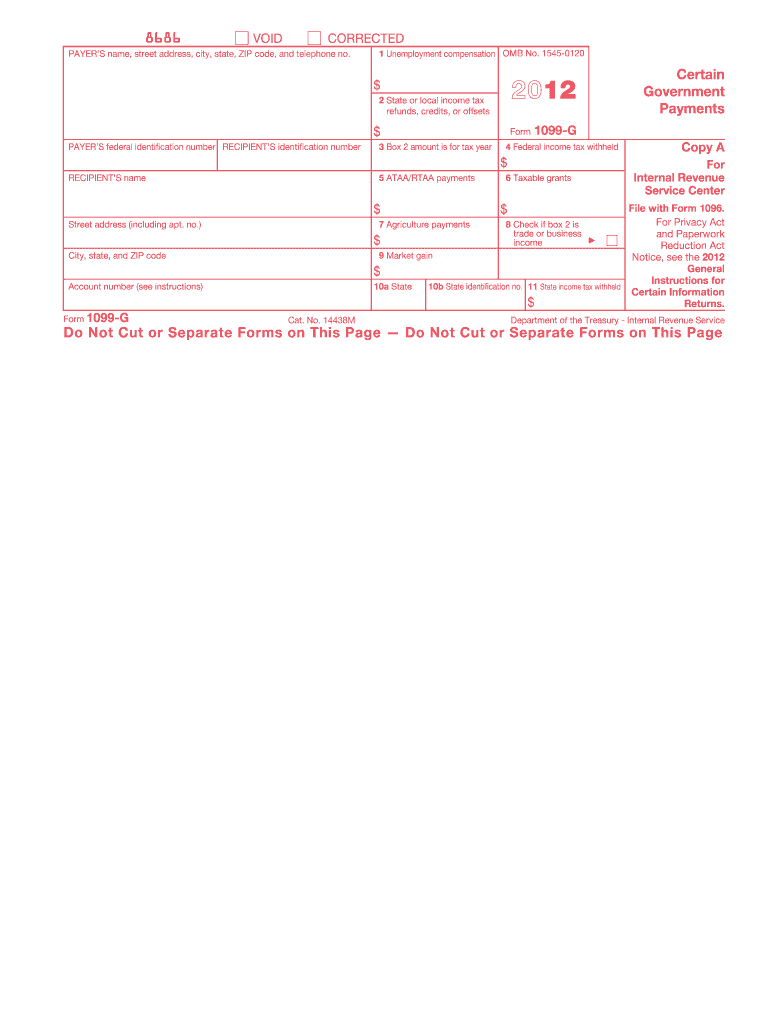







Definition and Purpose of the 2-G Form
The 2012 Form 1099-G is used to report certain types of government payments. This includes unemployment compensation and state or local income tax refunds that were issued during the tax year 2012. The form informs the recipient and the IRS of the amount of these specific types of income, which may be taxable and should be reported on the individual's federal income tax return.
How to Use the 2-G Form
-
Review Form Details:
- Check the payer's information and ensure all details match your records.
- Verify the amounts listed, especially unemployment compensation and state or local tax refunds.
-
Tax Return Integration:
- Report the amounts from the 1099-G form on your federal income tax return.
- Unemployment compensation is typically entered on line 19 of Form 1040A or line 7 on Form 1040EZ.
-
Adjustments and Deductions:
- Make certain to adjust your tax return if you itemized deductions in the previous tax year and received state or local tax refunds.
Steps to Complete the 2-G Form
-
Gather Required Information:
- Obtain documentation for unemployment compensation and other payments relevant to the 1099-G.
-
Input Payer Details:
- Include detailed information about the issuing government entity.
-
Enter Specific Payment Information:
- List all payments received that fall under the category the form covers, ensuring accuracy and completeness.
-
Calculate Totals:
- Clearly sum all totals, checking for errors before submission.
Obtaining the 2-G Form
-
From Government Agencies:
- Contact the government agency that issued your benefits or refunds for the form.
-
Online Access:
- Many agencies offer an online portal to download your form securely.
Who Typically Uses the 2-G Form
-
Taxpayers Receiving Unemployment:
- Individuals who received unemployment benefits during 2012.
-
Taxpayers with State or Local Tax Refunds:
- Especially those who itemized deductions in a prior year's federal tax return.


Important Terms Related to the 2-G Form
-
Unemployment Compensation:
- Payments received from the government if you're unemployed.
-
State or Local Tax Refund:
- Reimbursements for overpaid taxes from state or local entities.
IRS Guidelines for 2-G Form
-
Filing Requirements:
- Report all amounts accurately on your tax return.
-
Correcting Errors:
- If there is an error in the form, contact the issuing agency for correction before filing your return.
Penalties for Non-Compliance
-
Failure to Report:
- Not reporting amounts from the 1099-G can result in penalties and interest from the IRS.
-
Incorrect Information:
- Providing incorrect information can lead to delays in tax processing and possible audit inquiries.
Form Submission Methods
-
Online:
- Use tax software that supports electronic filing to submit your return.
-
Mail:
- Complete and mail a paper tax return with the 1099-G information reported accurately.
Digital vs. Paper Version
-
Digital Convenience:
- Electronic versions allow for easier integration with tax software and usually faster processing.
-
Paper Reliability:
- Paper forms can be directly mailed for those who prefer physical records or have limited internet access.




