






Definition and Meaning of IRS Form 8857
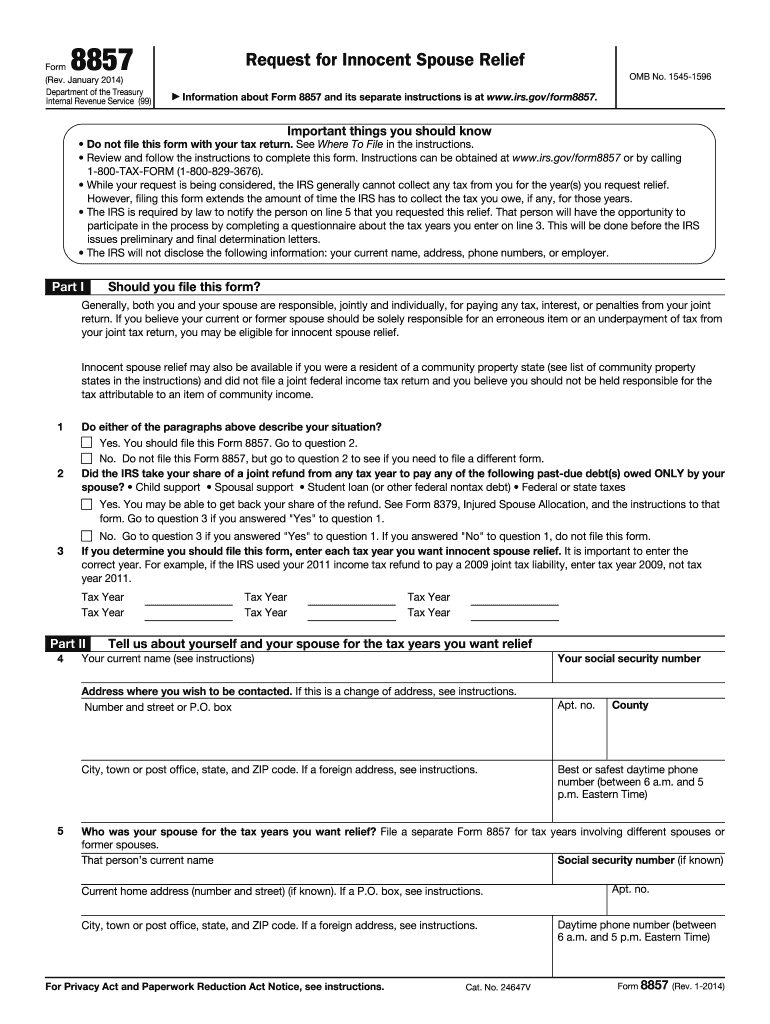
IRS Form 8857, or the Request for Innocent Spouse Relief, allows taxpayers to seek relief from tax liabilities incurred through a joint tax return. This form is particularly useful when one spouse believes they should not be held responsible for erroneous items or underpayments caused by the other spouse. The purpose of this application is to address situations where one spouse may have been unaware of certain financial discrepancies and seeks to rectify this by having the IRS evaluate the circumstances for equitable relief. Filing IRS Form 8857 is a crucial step in protecting oneself from unfair tax burdens resulting from the other spouse's actions.
How to Use IRS Form 8857
Using IRS Form 8857 effectively requires a solid understanding of its different sections and requirements. The form must be completed with accurate personal details, a comprehensive explanation of the circumstances that led to the tax liabilities, and justification, such as evidence of domestic abuse if relevant. Taxpayers should be prepared to provide detailed information about their financial situation and any pertinent documentation that supports their claim for relief. It's also important to maintain copies of the completed form for personal records before submission. Each section of the form serves a distinct purpose, gathering information that the IRS will use to make a determination regarding the applicant's claim for innocent spouse relief.
How to Obtain IRS Form 8857
Obtaining a copy of IRS Form 8857 is straightforward and can be done through various methods. The form is available for download directly from the IRS official website, ensuring easy access to the latest version. Alternatively, taxpayers can visit local IRS offices to pick up a physical copy if needed. For those who prefer receiving forms by mail, a request can be made by calling the IRS customer service line. Once acquired, it is crucial to read through the instructions and guidelines provided with the form to ensure all required sections will be filled out correctly.
Steps to Complete IRS Form 8857
- Gather Required Information: Before filling out the form, collect all necessary documentation, including tax returns, financial statements, and any relevant correspondence from the IRS related to the tax issue.
- Fill in Personal Information: Accurately complete the section with your personal details, including your name, Social Security number, and your spouse's information.
- Explain the Circumstances: Provide a thorough explanation of why you believe you qualify for innocent spouse relief. Include details of the financial discrepancies and your lack of knowledge about them.
- Submit Supporting Documentation: Attach copies of supporting documents, such as financial records or any evidence highlighting relevant personal circumstances, like domestic violence.
- Sign and Review: Ensure all information entered is correct, then sign and date the form. It's crucial to review each section for completeness and correctness before proceeding.
- Send the Form: Mail the completed form and attachments to the IRS address specified in the form instructions or submit electronically if the option is available.
Important Terms Related to IRS Form 8857
- Innocent Spouse Relief: A provision that allows a taxpayer to be relieved from joint liability for tax deficiencies.
- Joint Return: A tax return filed together by married taxpayers combining their incomes and deductions.
- Erroneous Items: Errors or oversights on the tax return for which the taxpayer may seek relief.
- Equitable Relief: Relief granted when a taxpayer does not qualify under other specific types but has a fair reason to claim that they should not be held liable.
Eligibility Criteria for IRS Form 8857
To qualify for innocent spouse relief, certain criteria must be met. Primarily, you must have filed a joint return containing errors solely attributable to your spouse. You must not have known, nor had reason to know, about these errors at the time of signing the tax return. The request for relief must be made within two years of the IRS initiating collection activities against you. Moreover, it must be inequitable to hold you liable for the tax deficiency, given all circumstances, including significant hardships or abuse.


Filing Deadlines for IRS Form 8857
Deadlines for filing IRS Form 8857 are critical to ensure eligibility. Typically, the form must be submitted within two years from the date of the IRS's first attempt to collect. However, exceptional circumstances may extend this timeframe, such as when a taxpayer can demonstrate reasonable cause for a delay in filing. It's crucial to adhere strictly to these deadlines to avoid losing the opportunity for relief. Any delays in filing could result in continued liability for the taxpayer, underscoring the importance of timely action.
Required Documents for IRS Form 8857
When filing IRS Form 8857, it's essential to include all necessary documents that support your claim for relief. These documents may consist of copies of your joint tax returns, any correspondence from the IRS related to the claim, financial records showing your income, expenses, and assets, and documents that outline significant personal issues like evidence of abuse. Compiling comprehensive documentation strengthens your case and can expedite the review process.
Legal Use of IRS Form 8857
Filing IRS Form 8857 involves significant legal considerations, as it deals with the reallocation of tax responsibilities. By requesting relief, taxpayers indicate that they are not liable for errors or debts on the joint tax return attributable to their spouse. It is a formal legal request for reevaluation of tax liabilities that omits any penalties or interests resulting from the disputed items. Applicants should consider consulting a tax attorney or advisor to navigate the process carefully and ensure compliance with all legal prerequisites and filing procedures.