




01. Edit your schedule c ez online
Type text, add images, blackout confidential details, add comments, highlights and more.

Type text, add images, blackout confidential details, add comments, highlights and more.

Draw your signature, type it, upload its image, or use your mobile device as a signature pad.

Send it via email, link, or fax. You can also download it, export it or print it out.
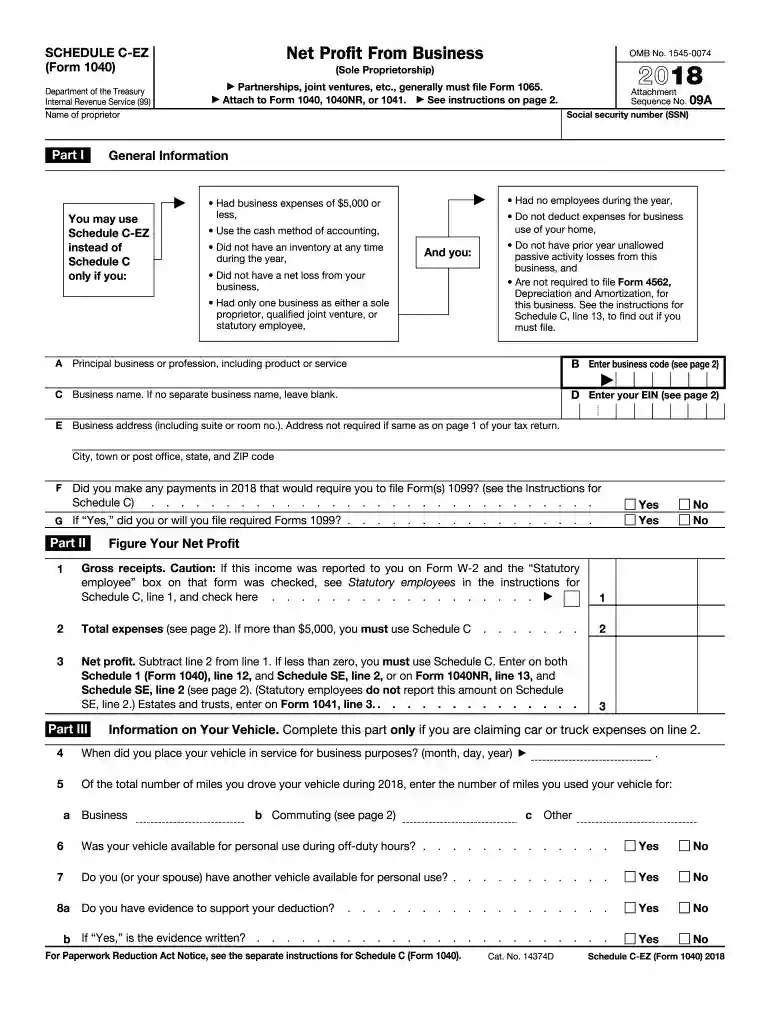
The EZ IRS Net refers to the simplified version of tax filing for sole proprietorships or qualified joint ventures using Schedule C-EZ (Form 1040). This form is used to report net profit from business operations, allowing certain small business owners to detail their income and expenses with less paperwork and fewer data points than the standard Schedule C. This form is beneficial for businesses with straightforward financials, as it streamlines the reporting process.
Using the EZ IRS Net involves filling out the Schedule C-EZ as part of your annual tax return. This form is designed for small businesses with expenses less than $5,000 and no deducted home office expenses. To use this form effectively:
Schedule C-EZ is designed for businesses with:


While both digital and paper forms of Schedule C-EZ are available, the digital version offers convenience with built-in calculations that reduce manual errors. Many e-filing software, like TurboTax, allow direct submission of the form, streamline the process, and often provide guidance to ensure compliance.
The IRS provides specific instructions for completing and filing the Schedule C-EZ, outlining eligibility criteria, necessary forms, and filing procedures. Adhering to these guidelines ensures compliance and reduces the risk of filing errors. Always review the latest IRS guidelines or consult a tax professional for updates on filing requirements.
We've got more versions of the schedule c ez form. Select the right schedule c ez version from the list and start editing it straight away!
| Versions | Form popularity | Fillable & printable |
|---|---|---|
| 2018 | 4.8 Satisfied (37 Votes) | |
| 2017 | 4.3 Satisfied (158 Votes) | |
| 2016 | 4.3 Satisfied (70 Votes) | |
| 2015 | 3.9 Satisfied (34 Votes) | |
| 2014 | 4 Satisfied (41 Votes) | |
| 2013 | 3.8 Satisfied (45 Votes) | |
| 2011 | 4 Satisfied (54 Votes) | |
| 2010 | 4 Satisfied (50 Votes) | |
| 2009 | 4.3 Satisfied (64 Votes) | |
| 2007 | 4.1 Satisfied (39 Votes) |
At DocHub, your data security is our priority. We follow HIPAA, SOC2, GDPR, and other standards, so you can work on your documents with confidence.




Jan 4, 2017 Mail Form 4506-T or Form 4506T-EZ (both available on IRS.gov). Using online tools to help prepare your return. Go to. IRS.gov/tools for theRead more
Pay your taxes. Get your refund status. Find IRS forms and answers to tax questions. We help you understand and meet your federal tax responsibilities.


