




01. Edit your form 1024 online
Type text, add images, blackout confidential details, add comments, highlights and more.

Type text, add images, blackout confidential details, add comments, highlights and more.

Draw your signature, type it, upload its image, or use your mobile device as a signature pad.

Send irs form 1024 via email, link, or fax. You can also download it, export it or print it out.
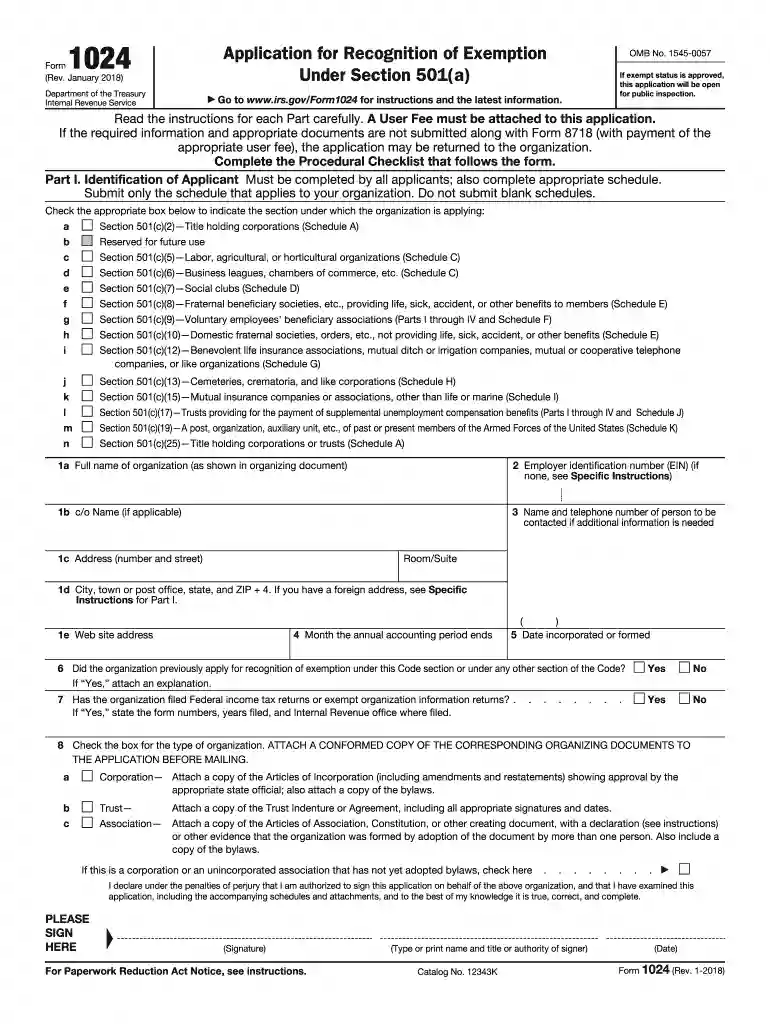
IRS Form 1024 is an application used by organizations seeking recognition of tax-exempt status under Section 501(a) of the Internal Revenue Code. This designation is typically pursued by various organizations, including social welfare groups, labor organizations, and agricultural or horticultural associations. The form serves as a comprehensive document to facilitate the evaluation of an organization’s eligibility for tax exemption.
Obtaining IRS Form 1024 is a straightforward process that ensures organizations have the necessary documentation to apply for tax-exempt status. The form is commonly accessed and filed through the following methods:
Online Access: You can download Form 1024 from the official IRS website. This ensures you are using the most up-to-date version with all current information requirements.
Request a Copy by Mail: Organizations can request physical copies by contacting the IRS directly. This option might be preferable for those who need hard copies for records or manual completion.
Professional Assistance: Consulting tax professionals or using accounting software services can provide an additional avenue for obtaining the form, though they often download it directly from the IRS as well.
Completing IRS Form 1024 requires careful attention to detail and a thorough understanding of the organization's operations. Here is a step-by-step guide to navigating the form:
Gather Information: Prepare all necessary details about the organization including its purpose, financial records, and structural framework.
Fill Basic Details: Input foundational information such as the organization’s name, address, and key identification numbers.
Explain Activities: Provide a comprehensive description of past, current, and planned activities to demonstrate operational alignment with tax-exempt purposes.
Financial Data: Attach financial statements that reflect the organization’s monetary activities, typically including the last three years’ worth of data.
Submit User Fee: Include the applicable user fee with submission, as failure to do so can delay processing.
Understanding the key components of IRS Form 1024 can significantly streamline its completion. Here are the critical sections:
Section II: Organizational Structure: Details the nature of the entity, verifying it fits into categories eligible for tax-exemption.
Section III: Narrative Description of Activities: Requires a detailed account of the organization's operations, ensuring alignment with exemptions.
Schedules and Attachments: Depending on the organization's type, you may need to include specific schedules, such as Schedule B for social clubs.
IRS Form 1024 is used by various organizations that seek tax-exempt status under differing IRS code sections. Here are examples of entities that may file this form:
Social Welfare Organizations: Non-profits that advance public welfare through community services or advocacy.
Labor and Agricultural Organizations: Groups focusing on improving working conditions or agricultural practices.
Network and Membership Groups: Entities such as chamber of commerce groups or business leagues.
Familiarizing yourself with terms relevant to IRS Form 1024 is crucial for properly completing the application:
Section 501(a): The IRS code section that governs tax-exempt eligibility.
Bylaws: Documents that should outline the governance structure, often required with the form.
User Fee: A mandatory fee required when submitting the form, varying by organization type and size.
Although there is no strict deadline tied to the submission of Form 1024, timely filing can impact the tax status benefits retroactively.
Retroactive Effect: If filed within 27 months of formation, approved exemptions can be retroactively applied to the organization’s inception.
Expedited Review: Under certain circumstances, organizations can request expedited processing for urgent situations, though this is rare.
While Form 1024 is the standard application for many organizations seeking tax exemption, there are alternatives for specific types:
Form 1023: Used by charitable organizations seeking exemption under Section 501(c)(3).
Form 1024-A: A simplified version available for specific organization types under Section 501(c)(4).
Form 990 Series: These forms are used for different reporting and compliance purposes post-approval of tax-exemptions.
Each version ensures a streamlined application according to organizational types and IRS requirements. Form selection depends on the nature and purpose of the tax-exempt organization.
We've got more versions of the form 1024 form. Select the right form 1024 version from the list and start editing it straight away!
At DocHub, your data security is our priority. We follow HIPAA, SOC2, GDPR, and other standards, so you can work on your documents with confidence.





Complete if the organization is a section 501(c)(3) organization or a section 4947(a)(1) nonexempt charitable trust. Attach to Form 990 or Form 990-EZ. Go toRead more
If exempt status is approved, this application will be open for public inspection. (Rev. September 1998). Department of the Treasury. Internal Revenue Service.Read more
Jan 23, 2026 Organizations must electronically file Form 1024 to apply for recognition of exemption under section 501(a) for being described in section 501(c).Read more


