
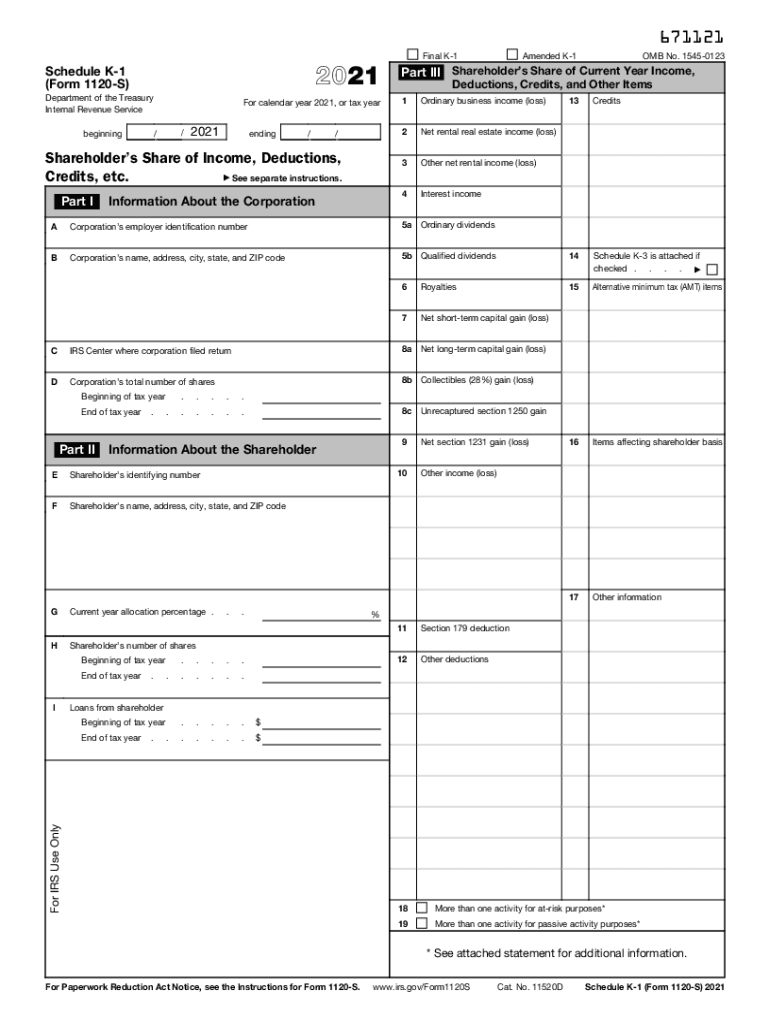







Definition & Purpose of IRS Schedule K-1
IRS Schedule K-1 is a tax form used to report a shareholder's share of income, deductions, credits, and other items from entities such as S corporations, partnerships, and some trusts. It's essential for determining an individual's tax liability. For S corporations, the form is explicitly known as Schedule K-1 (Form 1120-S). Each shareholder receives a K-1 reflecting their share of the corporation’s earnings. This form ensures shareholders individually account for their portion of tax-related activities.
Components of the Form
- Income Sections: It details ordinary business income, dividends, and capital gains.
- Deductions: Outlines deductible expenses that shareholders can claim.
- Credits: Provides information on available tax credits.
- Other Items: Involves items like foreign transactions, AMT items, and more.
How to Obtain the IRS Schedule K-1 Download
To download the IRS Schedule K-1 for Form 1120-S, it can typically be acquired through online tax software, directly from the IRS website, or from tax forms management platforms like DocHub. Shareholders generally receive a copy from the entity filing the 1120-S. The form can be accessed digitally, ensuring ease of download, and can be filled using document management tools.
Steps for Downloading
- Visit the IRS Website: Navigate to the forms and publications section.
- Search for Schedule K-1 (Form 1120-S): Use the search feature to find the specific form.
- Download: Select the relevant form and initiate the download.
Steps to Complete the IRS Schedule K-1
Completing IRS Schedule K-1 requires precision, as it affects shareholder tax obligations. Shareholders must integrate the information from the K-1 into their personal tax returns.
Detailed Steps
- Gather Required Information: Secure documents reflecting income, deductions, and credits.
- Input Ordinary Income: Start with entering business income or loss data.
- Include Deductions and Credits: List allowable deductions and credits relevant to the individual shareholder.
- Review Additional Items: Complete additional sections that discuss various allocations like foreign transactions.
- Consult Professional Resources: Using tools like DocHub can simplify form completion and ensure accuracy.
Who Typically Uses the IRS Schedule K-1
IRS Schedule K-1 is primarily used by shareholders of S corporations and partners in partnerships, allowing these individuals to report their share of income from the business entity.


Types of Stakeholders
- S Corporation Shareholders: Each owner receives a K-1 to report their portion of the corporation’s financial activities.
- Partnership Partners: Partners receive a Schedule K-1 (Form 1065) to disclose their share of partnership earnings.
- Beneficiaries of Trusts: Trusts use the form to report distributions to beneficiaries.
Important Terms Related to IRS Schedule K-1
Understanding specific terms associated with IRS Schedule K-1 is vital for accurately completing the form and ensuring compliance with tax regulations.
Key Terminology
- Ordinary Business Income: Investment or operating income from a business.
- Pass-through Entity: A business structure that passes income directly to owners, bypassing corporate taxation.
- Allocation: The process of distributing income, losses, credits, and deductions to shareholders.
Legal Use of the IRS Schedule K-1
The form is legally required for shareholders or partners to report their portion of income and other financial metrics to the IRS. It's vital for transparency and compliance, ensuring accurate tax reporting by individuals.
Compliance Criteria
- Accurate Reporting: All reported figures must reflect actual earnings and deductions.
- Timely Submission: Deadlines must be honored to avoid penalties.
- Record Keeping: Maintain copies for personal and IRS records for audit purposes.
IRS Guidelines for Schedule K-1
The IRS provides comprehensive guidelines for the completion and submission of Schedule K-1. These guidelines ensure that the form is filled out correctly, reflecting accurate and truthful information.
Compliance Checks
- Taxpayer Identification: Ensure correct Social Security Numbers or Employer Identification Numbers are used.
- Detailed Financial Information: All income, deductions, and credits should be correctly itemized.
- Cross-verification: It's prudent to cross-check with supporting tax documents for consistency.
Filing Deadlines and Important Dates
The deadline for submitting Schedule K-1 typically aligns with other tax returns, but exact dates can vary based on individual or entity tax requirements.
Critical Schedule
- Due Date for S Corporations: Generally must be filed by the 15th day of the third month after the end of the corporation’s tax year.
- Extensions: If an extension is granted, ensure timely completion post-extension.
In-depth understanding and precise completion of the IRS Schedule K-1 are vital for compliance, accurate income reporting, and optimal tax management for shareholders and partners. Using platforms like DocHub facilitates streamlined workflows, enabling easier management of these critical tax documents.


