




Definition and Meaning
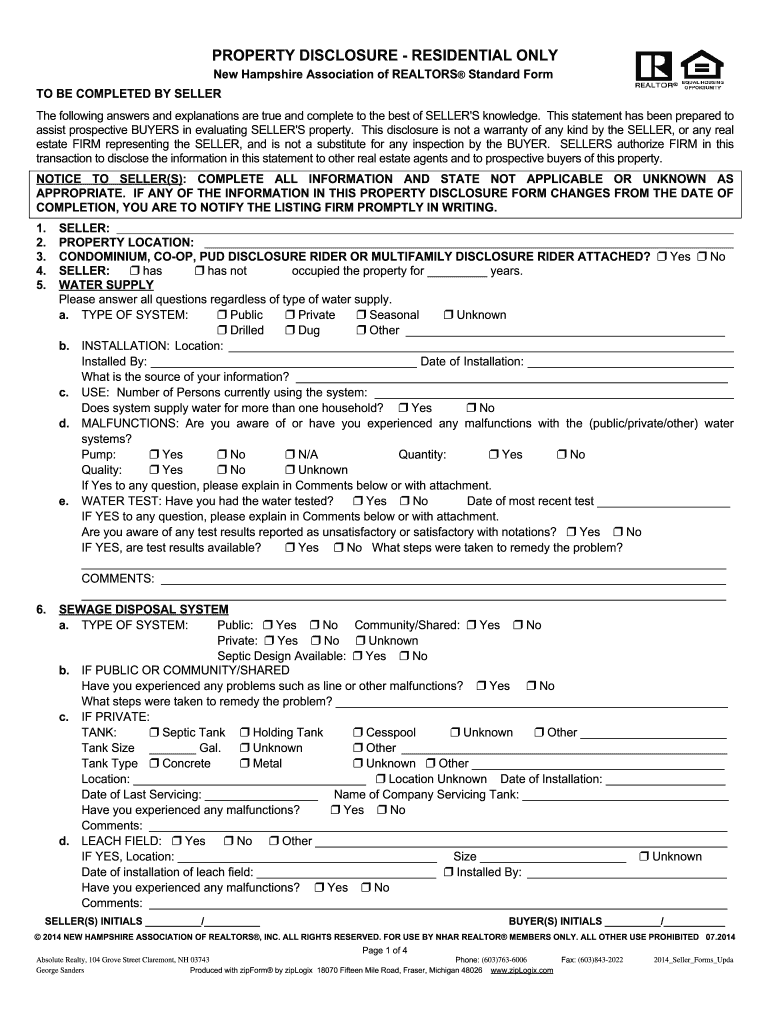
The New Hampshire Property Disclosure Form is a crucial document used in real estate transactions to provide transparency about the condition of a residential property. This form is primarily completed by the seller and offers essential information about various aspects of the property. It includes details such as the state of the water supply, sewage disposal systems, and any hazardous materials present on the property. It serves to inform and protect both the buyer and the seller by ensuring that all known issues, repairs, and potential risks are disclosed before the sale is finalized.
The form aims to assist prospective buyers in evaluating the property comprehensively. However, it's important to understand that it does not act as a warranty. Buyers are still encouraged to conduct independent inspections to verify the information provided. This document is a critical step in the real estate process, helping to prevent misunderstandings and legal disputes related to undisclosed property conditions.
Key Elements of the NH Property Disclosure Form
The structure of the NH Property Disclosure Form includes several key sections that require thorough attention by the seller. Each section asks for specific disclosures relating to different components and systems of the property.
- Water Supply: Sellers must disclose the type of water supply (e.g., public, private well) and any known issues or repairs.
- Sewage Disposal: Details about the sewage disposal system, whether it’s public, private septic, or another type, are required.
- Hazardous Materials: This includes disclosure of any known hazardous materials such as lead paint, asbestos, or radon.
- General Property Information: Sellers must provide a detailed account of the overall condition of the property, including material defects and repairs.
To ensure the form is comprehensive, each section requires a detailed explanation of any known issues or mechanisms in place. This transparency helps buyers make informed decisions and assess any potential future liabilities.
Steps to Complete the NH Property Disclosure Form
Filling out the NH Property Disclosure Form involves several detailed steps, ensuring that sellers provide complete and accurate information about the property.
- Review the Form: Begin by carefully reviewing all sections of the form to understand what information you need to provide.
- Gather Information: Collect all documentation related to your property’s systems and conditions, including past inspections and repair records.
- Disclose Known Issues: Systematically fill out the form, ensuring that you disclose any known defects, repairs, or issues in each relevant section.
- Consult a Professional: If unsure about certain aspects, consult with a real estate professional or attorney for guidance to ensure compliance with local regulations.
- Double-Check for Accuracy: Before finalizing, review all provided information to confirm its accuracy and completeness.
Each step of the completion process is important to ensure that all disclosures meet the legal standards and provide a complete picture of the property's condition to potential buyers.
Why Use the NH Property Disclosure Form
Using the NH Property Disclosure Form is legally mandated for most residential real estate transactions in New Hampshire. It provides a formal method of communication between the seller and buyer, which mitigates risks and helps in building trust. The form:
- Protects Both Parties: By disclosing all known property issues, it reduces the chances of legal disputes post-sale.
- Ensures Compliance: Adhering to state-specific disclosure requirements prevents legal penalties for non-compliance.
- Facilitates Informed Decisions: Buyers can better assess property value and condition, allowing for informed purchasing decisions.
The form's primary function is to create transparency and provide a documented basis for the seller's representations about the property’s condition.
State-Specific Rules for the NH Property Disclosure Form
New Hampshire has specific laws governing property disclosures that sellers must adhere to when filling out the form. These laws ensure fairness and legal compliance in real estate transactions.
- Mandatory Disclosure: Sellers must disclose any known issues or repairs that might affect the property’s value or desirability.
- Buyer’s Right to Inspect: Buyers are encouraged to conduct independent inspections despite the information provided in the form.
- Compliance with Federal Laws: For properties built before 1978, sellers must comply with federal regulations regarding lead-based paint disclosures.
Understanding these rules is vital for compliance and avoiding potential fines or legal complications. Sellers should familiarize themselves with both state and federal guidelines relevant to property disclosures.
Legal Use of the NH Property Disclosure Form
The NH Property Disclosure Form has a significant role in legal matters related to real estate transactions within the state. Its proper use helps prevent litigation and misunderstandings between parties.
- Acts as Evidence: In legal disputes, this form serves as evidence of the seller’s disclosure of property conditions.
- Limits Liability: Proper completion of the form limits the seller's liability for undisclosed property issues that arise after the sale.
- Standard Practice: It is a standard document in New Hampshire, essential for ensuring both parties understand and agree on the property’s condition.
The form aligns with the state's legal framework to streamline the real estate transaction process effectively. Understanding its legal implications is crucial for both sellers and buyers.
Who Typically Uses the NH Property Disclosure Form
In New Hampshire real estate transactions, the NH Property Disclosure Form is typically utilized by home sellers, real estate agents, and buyers. Each party interacts with this document differently:
- Home Sellers: Required to accurately complete and present the form to buyers before the sale is finalized.
- Real Estate Agents: Use the form to guide their clients through the process and ensure compliance with disclosure laws.
- Home Buyers: Evaluate the property thoroughly using the details provided in the form, often supplementing with an independent home inspection.
Understanding the role of each participant ensures the disclosure form fulfills its purpose in facilitating a transparent transaction.


Examples of Using the NH Property Disclosure Form
The NH Property Disclosure Form is instrumental in several real-world scenarios, illustrating its utility in real estate transactions.
- Selling a Historic Home: Owners of older properties might disclose outdated electrical systems or the presence of lead paint, which are crucial for buyer awareness.
- Repair Transparency: A seller who recently repaired a roof leak should disclose these repairs, providing assurances to potential buyers about the property's maintenance.
- Environmentally Affected Property: When living near bodies of water, disclosing past instances of water intrusion or current drainage systems can be critical for prospective buyers.
These examples highlight the form's role in setting clear expectations and promoting informed decisions in real estate deals. Proper disclosure fosters trust and clarity between all parties involved in a transaction.