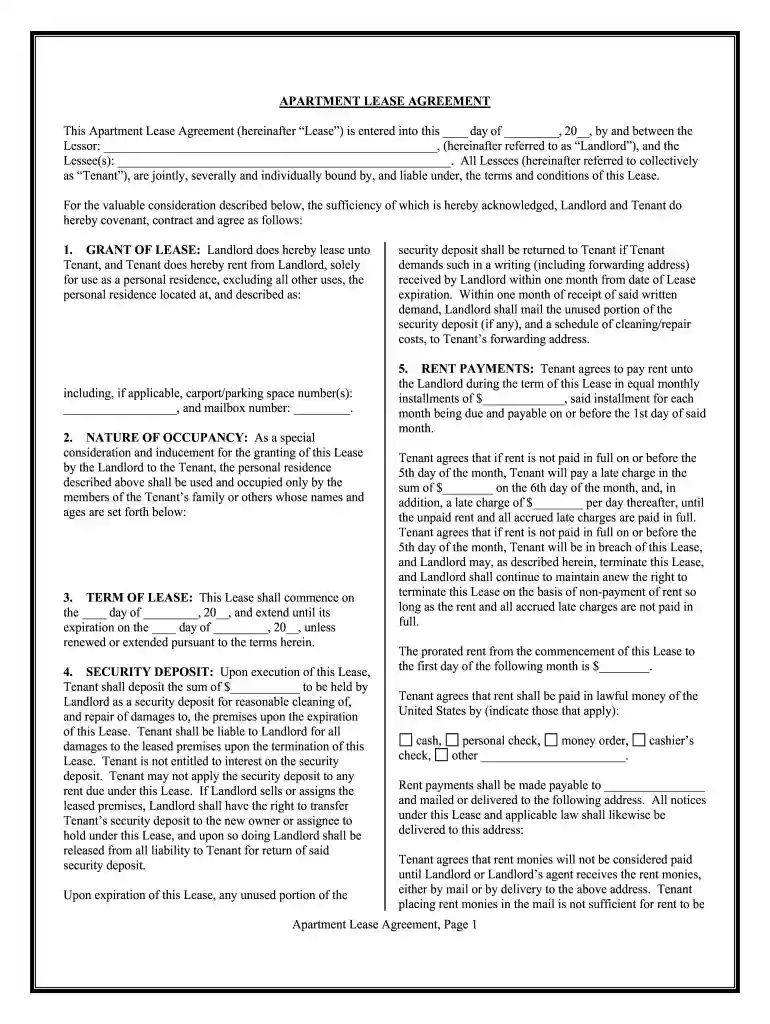
south carolina residential landlord and tenant act Preview on Page 1

Landlord tenant residential 2026

Here's how it works

  • 01. Edit your south carolina residential landlord and tenant act online

    Type text, add images, blackout confidential details, add comments, highlights and more.

  • 02. Sign it in a few clicks

    Draw your signature, type it, upload its image, or use your mobile device as a signature pad.

  • 03. Share your form with others

    Send it via email, link, or fax. You can also download it, export it or print it out.

How to use or fill out landlord tenant residential with our platform

Form edit decoration
9.5
Ease of Setup
DocHub User Ratings on G2
9.0
Ease of Use
DocHub User Ratings on G2
  1. Click ‘Get Form’ to open the landlord tenant residential document in the editor.
  2. Begin by filling in the date and names of both the Landlord and Tenant at the top of the form. Ensure all parties are correctly identified.
  3. In the 'Grant of Lease' section, specify the address of the rental property, including any carport or mailbox numbers if applicable.
  4. Complete the 'Nature of Occupancy' section by listing all individuals who will reside in the property, along with their ages.
  5. Fill out the 'Term of Lease' section with start and end dates for the lease agreement.
  6. Enter the security deposit amount in its designated field, ensuring you understand its terms regarding return and deductions.
  7. Detail rent payment amounts and due dates in the 'Rent Payments' section, including any late fees that may apply.
  8. Review all sections for accuracy before saving your changes. Utilize our platform's features to sign electronically if required.

Start using our platform today to easily complete your landlord tenant residential form online for free!

be ready to get more

Complete this form in 5 minutes or less

Got questions?

We have answers to the most popular questions from our customers. If you can't find an answer to your question, please contact us.

A landlord is the owner of property such as a farm, house, apartment, condominium, land, or real estate that is rented or leased to an individual or business, known as a tenant (also called a lessee or renter).
Your rights and responsibilities live in a property thats safe and in a good state of repair. have your deposit returned when the tenancy ends - and in some circumstances have your deposit protected. challenge excessively high charges. know who your landlord is. live in the property undisturbed.
California: Guests become tenants when they stay for over 14 days within six months, or seven nights in a row.
Washington has a Residential Landlord-Tenant Act (RCW 59.18), which defines the minimum duties of landlords and tenants of residential dwellings. These laws also impose certain restric- tions and provide remedies if one party fails to carry out a duty.
a. : one who has the occupation or temporary possession of lands or tenements of another. specifically : one who rents or leases a dwelling (such as a house) from a landlord. b. : one who holds or possesses real estate or sometimes personal property (such as a security) by any kind of right.

Security and compliance

At DocHub, your data security is our priority. We follow HIPAA, SOC2, GDPR, and other standards, so you can work on your documents with confidence.

People also ask

A tenant is an individual or group who rents and occupies a property owned by a landlord. In the UK, tenants enter into a legal agreement, known as a tenancy agreement, which outlines their rights and responsibilities, including paying rent and maintaining the property.
The term landlord refers to a person who owns property and allows another person to use it for a fee. The person using the property is called a tenant. The agreement between a landlord and a tenant is called a lease or rental agreement.

Related links

landlord-tenant law | Wex | LII / Legal Information Institute

Landlord-tenant law governs the rental of residential and commercial property. It regulates lease terms and termination, tenant screening, subleasing, repairs,Read more

Learn more
Chapter 59.18 RCW: RESIDENTIAL LANDLORD-TENANT

Tenancy from month to month or for rental periodEnd of tenancyArmed forces exceptionExclusion of childrenConversion to condominiumDemolition, substantialRead more

Learn more
EXHIBIT 2 - Search / Commission Files - NY.Gov

Feb 7, 2012 Section 228 of the New York Public Service Law states that [n]o landlord shall interfere with the installation of cable television facilitiesRead more

Learn more
If you believe that this page should be taken down, please follow our DMCA take down process here