
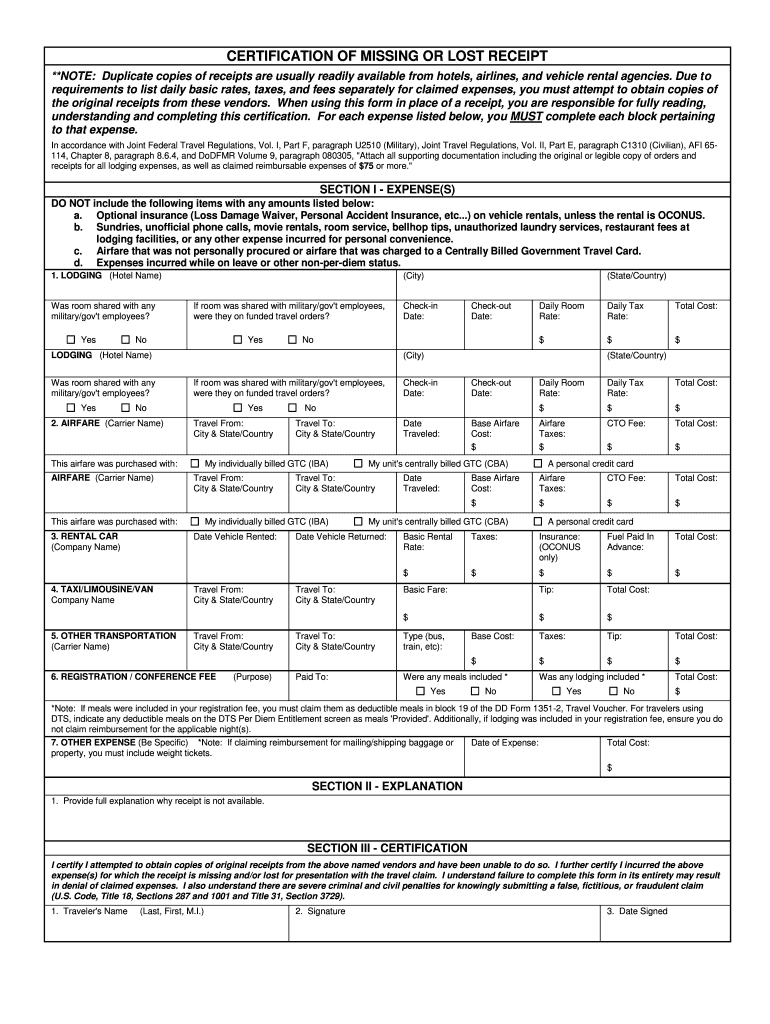







Understanding the Certification of Missing or Lost Receipt
A certification of missing or lost receipt form is essential for individuals or entities who need to claim expenses without having the original receipts. This document serves as an official statement confirming the loss, enabling reimbursement or tax deductions where applicable. It is crucial to detail the nature of the lost expenses, ensuring that all relevant information is accurately represented to comply with financial regulations.
Key Components of the Missing Receipt Certification
- Claimant Information: Include the name, address, and contact details of the individual claiming the expenses. This information is vital for identifying the claimant and facilitating any follow-ups.
- Description of Expenses: Clearly outline the specific items or services for which the receipts are missing. Descriptions should be as detailed as possible, including dates, amounts, and purposes of the expenses.
- Circumstances of Loss: Provide a thorough explanation detailing how the receipts were lost or destroyed. This narrative should address any steps taken to recover the receipts, enhancing credibility.
Completing the Certification Form Effectively
When filling out the certification of missing or lost receipt form, accuracy is paramount. Here are steps to ensure the document is completed correctly:
- Gather Supporting Documentation: Collect any available information that can support your claim, such as bank statements or credit card charges that correspond with the missing receipts.
- Fill in All Required Fields: Ensure that every section of the form is completed, including any mandatory fields. Incomplete forms may result in delays or denials of claims.
- Sign and Date the Form: By signing the certification, you confirm the accuracy and truthfulness of the information provided. This step is legally important as it may serve as a sworn declaration.
Compliance and Regulations
Using a certification of missing or lost receipt form must align with specific financial regulations, particularly under tax-related guidelines. Here are important points to consider:
- IRS Guidelines: The Internal Revenue Service may necessitate the use of this certification form for claims on missing receipts during tax filings. Ensure familiarity with IRS standards to avoid complications.
- Travel Regulations: If expenses pertain to travel, specific guidelines under the Joint Travel Regulations (JTR) may apply. Ensure compliance to avoid penalties.
- Documentation Retention: Keep copies of the completed form and any supporting documents for record-keeping and future reference, especially during audits.
Types of Applicable Forms for Missing Receipts
Various forms can serve a similar function for different contexts, such as:
- DTS Missing Receipt Form: Utilized specifically within the Defense Travel System for military personnel needing to account for expenses without supporting receipts.
- USAF Lost Receipt Form: A designated form for Air Force members to certify lost receipts related to official travel or business expenditures.
- UCSF Declaration of Missing Receipt: A specific university form detailing lost receipts for student or employee expenses.
Real-World Scenarios for Certification Use
Understanding how these certifications fit into practical situations can enhance awareness of their importance:
- Business Travel: An employee on a business trip loses a receipt for a meal. Using the certification form, they provide a declaration of the lost receipt to their employer, enabling reimbursement.
- Petty Cash Claims: A department has a petty cash fund for small expenses like office supplies. If a receipt is lost, using the certification allows for accounting compliance without significant disruption.
- Tax Deductions: Freelancers may lose receipts for business expenses incurred throughout the year. Submitting a certification form with tax returns verifies the claim for deductions.
Importance of Using Fillable Forms
Utilizing a fillable format for the certification of missing or lost receipt enhances the process:
- Ease of Completion: Digital forms simplify the input of data, reducing the potential for errors that could occur with handwritten entries.
- Accessibility and Storage: Fillable forms can be saved on various devices, ensuring easy access when needed for future reference or in compliance scenarios.
- Environmental Consideration: Digital completion minimizes paper usage, aligning with more sustainable practices.
The certification of missing or lost receipt is a crucial tool for individuals and businesses alike, facilitating financial accountability while enabling proper claim processes in situations where documentation may be lost.


