




01. Edit your escrow statement example online
Type text, add images, blackout confidential details, add comments, highlights and more.

Type text, add images, blackout confidential details, add comments, highlights and more.

Draw your signature, type it, upload its image, or use your mobile device as a signature pad.

Send escrow account statement via email, link, or fax. You can also download it, export it or print it out.
An escrow account disclosure is a vital document that outlines the financial transactions related to an escrow account, particularly in real estate transactions. The primary purpose is to provide borrowers with transparent information about the funds held in escrow for taxes and insurance, ensuring that all parties are informed about the collection and disbursement processes involved.
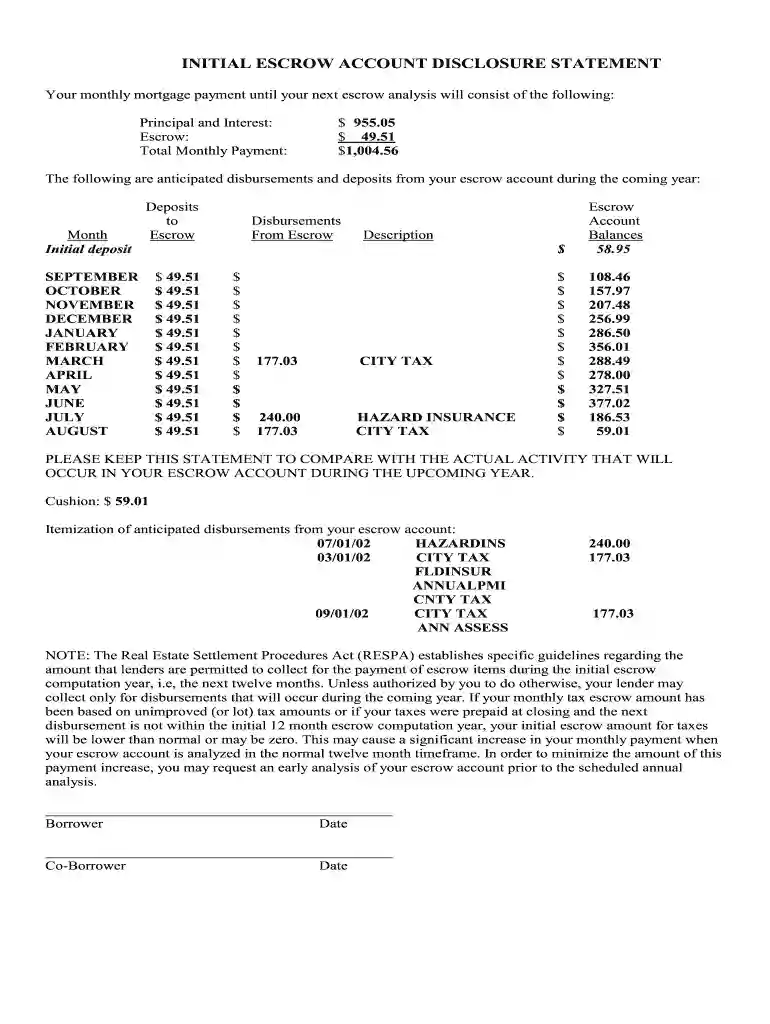
The disclosure includes important details such as the monthly mortgage payment breakdown, which covers principal, interest, and escrow components. By adhering to the Real Estate Settlement Procedures Act (RESPA), the disclosure helps homeowners understand their financial obligations related to property ownership.
An escrow account statement typically encompasses several key components:
Monthly Payment Breakdown: This section details the total monthly payments, including the amounts allocated for principal, interest, and escrow contributions. Understanding this breakdown is essential for borrowers to manage their finances effectively.
Anticipated Deposits and Disbursements: The statement outlines the expected inflows and outflows from the escrow account over the coming year. This includes projected payments for property taxes, homeowners insurance, and any reserved funds to cover fluctuations.
Cushion Requirement: Many escrow accounts have a cushion, which is a small amount held in reserve to accommodate any unexpected increases in tax or insurance payments. Disclosures explain how this cushion is calculated and its significance in preventing shortfalls.
Escrow account disclosures can take various forms, each serving specific purposes:
Initial Escrow Account Disclosure Statement: Provided at the closing of a mortgage, this document gives borrowers a detailed overview of the initial funding and required payments over the first year.
Annual Escrow Account Disclosure Statement: Issued annually, this document provides an account summary, detailing actual deposits and disbursements from the previous year, along with projections for the upcoming year. It allows borrowers to see if their current escrow contributions meet the requirements for upcoming expenses.
Escrow Disclosure Statement Example: Familiarizing oneself with an example of an escrow disclosure statement can provide better insight into its structure and content. An example would typically illustrate the various line items, such as individual charges for property insurance and taxes.
Lenders and servicers are obliged to provide escrow account disclosures in compliance with RESPA. Key legal obligations include:
Timeliness: The disclosures must be provided to borrowers in a timely manner, typically at the time of loan closing for initial disclosures and annually thereafter.
Accuracy: All information included in the disclosures must be accurate, clearly detailing how funds are being managed and the projected costs. Inaccuracies can lead to compliance issues or mismanagement claims.
Clear Language: The disclosures must utilize language that is easily understandable, avoiding unnecessarily complex jargon that may confuse borrowers.
The significance of escrow account disclosures for borrowers is multi-faceted:
Financial Planning: By understanding escrow account disclosures, borrowers can better plan for their financial obligations, ensuring they allocate sufficient funds for taxes and insurance payments.
Monitoring Escrow Accounts: Regular review of escrow disclosures allows homeowners to monitor their accounts for potential deficiencies or overages, enabling proactive financial management.
Resolution of Disputes: In the event of discrepancies or disputes regarding escrow payments, documented disclosures serve as essential records to substantiate claims or provide clarity.
Borrowers should pay attention to the following when reviewing their escrow account disclosures:
Reviewing Annual Changes: It's essential to examine changes in projected costs from one year to the next, as these can significantly impact monthly payments.
Understanding Payment Fluctuations: Becoming aware of any historical trends related to tax and insurance increases can help homeowners anticipate future adjustments to their escrow contributions.
Communication with Lenders: If discrepancies or concerns arise, borrowers should maintain open communication with their lenders to seek clarification and resolve issues promptly.
By understanding the components and implications of an escrow account disclosure, borrowers can take informed steps in managing their mortgage and associated responsibilities.
At DocHub, your data security is our priority. We follow HIPAA, SOC2, GDPR, and other standards, so you can work on your documents with confidence.
This section sets out the requirements for an escrow account that a lender establishes in connection with a federally related mortgage loan.Read more
Mar 1, 2024 The first of these harms is to ensure the security of financial institutions by preventing the disclosure of examination, operation, andRead more


