







Definition and Meaning of Field Trip Form
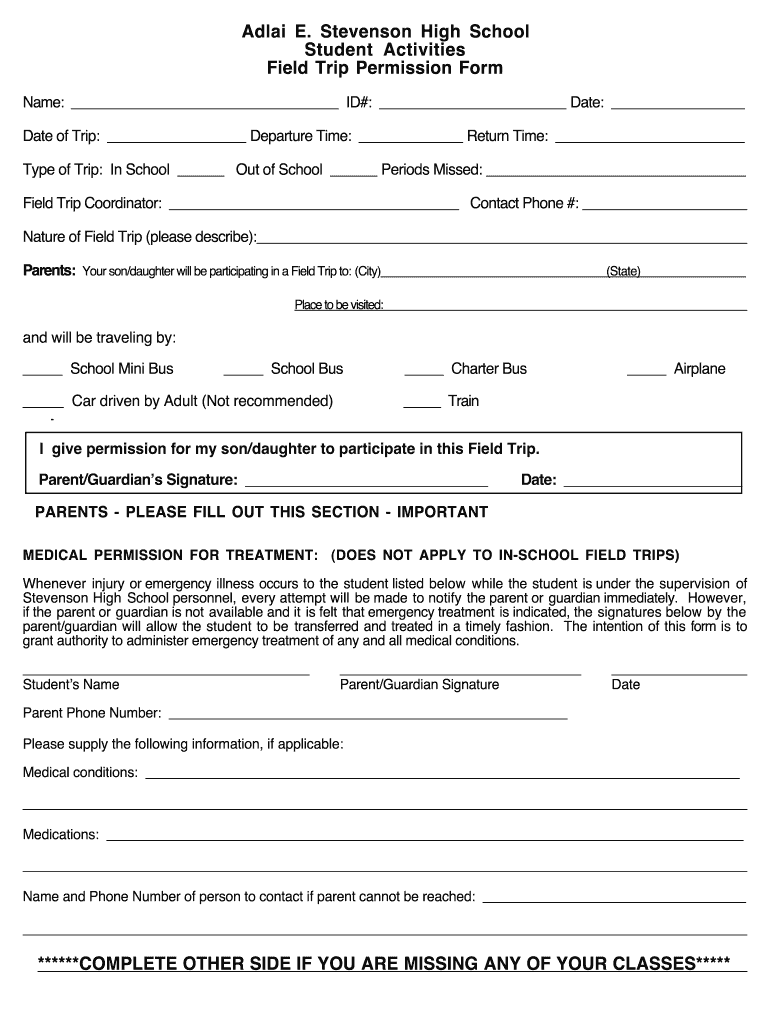
A field trip form is a document used by educational institutions to obtain permission from parents or guardians for students to participate in school-sponsored trips outside the regular school environment. It serves as a formal request for consent and provides essential details about the trip, including its purpose, location, date, and any associated costs. This form also typically collects vital information, such as medical authorizations and emergency contact details, ensuring that schools can effectively respond to student needs during the outing.
Field trip forms are a critical part of managing student safety and liability for schools. They are designed to confirm that parents are informed about the logistics of the trip and that they agree to the conditions set forth by the school. Additionally, these forms often detail any transportation arrangements and safety measures in place, which help assuage parental concerns regarding the trip's safety.
Key Elements of a Field Trip Form
Essential components of a field trip form generally include:
- Parental Consent: A section for parents to sign, confirming their approval for their child's participation.
- Trip Details: Information regarding the date, destination, purpose, and itinerary of the trip.
- Medical Information: Authorization for treatment in case of emergencies and any relevant medical conditions or allergies the school should know.
- Transportation Arrangements: Details about how students will travel to and from the trip location, including information on personal vehicle transport if applicable.
- Emergency Contacts: A list of individuals to contact in case of an emergency during the trip.
Comprehensively addressing these aspects in the field trip form helps ensure a structured approach to student outings, promoting safety and transparency.
How to Use the Field Trip Form Effectively
Using a field trip form effectively involves several steps to ensure all necessary information is captured and procedures are followed.
-
Distributing the Form: Schools should provide the field trip form at least two weeks prior to the trip. This allows parents sufficient time to review the information and ask questions if needed.
-
Completing the Form: Parents or guardians must fill out the form thoroughly, providing not only consent but also detailed medical and emergency contact information. Inaccuracies or omissions could lead to issues during the trip.
-
Submitting the Form: It is vital that completed forms are returned to the school by the specified deadline. This ensures that the school has ample time to review the information and make any necessary adjustments regarding transportation or accommodation.
-
Reviewing the Forms: Teachers and administrators must check each form for completeness and accuracy. Missing information should be addressed promptly to avoid last-minute complications.
-
Storage and Accessibility: The completed forms should be stored securely yet remain accessible for reference during the trip, ensuring that staff can respond to any emergencies effectively.
Importance of Detailed Procedures
Following these procedures is crucial for maintaining accountability and ensuring student safety, providing peace of mind to families, and ensuring a well-organized trip experience.
Steps to Complete the Field Trip Form
Completing a field trip form requires following a series of detailed steps to ensure all necessary information is provided accurately. Here’s how to correctly fill out the form:
-
Read the Instructions Carefully: Each field trip form should come with specific instructions on how to fill it out. Understanding these details prevents errors.
-
Provide Student Information:
- Include the student's full name, grade, and class.
- Clearly indicate any special assistance or adaptations the student may require.
-
Fill Out Trip Information:
- Clearly state the trip's destination, date, purpose, and the duration of the trip. -Provide information on the itinerary if available.
-
Complete Medical Authorization:
- Answer questions about allergies, chronic conditions, or medications.
- Sign the authorization allowing school staff to seek medical assistance if necessary.
-
List Emergency Contacts:
- Provide at least two contacts with valid phone numbers who can be reached during the trip.
-
Parental Signature: Make sure that a parent or guardian signs the form, providing legally binding consent for the student to attend.
Importance of Accuracy
Accuracy in completing each section is critical—not only for legal compliance but also to ensure that all necessary precautions are in place for student safety.
Who Typically Uses the Field Trip Form
Field trip forms are utilized by various stakeholders in the educational system, including:
-
Teachers and Educators: They use the forms to organize trips efficiently, gathering necessary permissions and documentation from parents.
-
School Administrators: Administrators require the forms to manage logistics, ensure safety protocols are followed, and maintain records of student consent.
-
Parents and Guardians: Primarily, parents use the forms to stay informed about their children’s participation in school activities, making decisions based on details provided in the form.
-
Students: While they may not fill out the form themselves, students benefit from the permissions granted through the completed documentation in terms of participation in enriching educational experiences.


Impact on Stakeholders
The utilization of the field trip form facilitates a collaborative effort toward providing learning opportunities outside the traditional classroom setup, ensuring that everyone’s rights and responsibilities are clearly delineated.
Important Terms Related to Field Trip Form
Understanding key terminology associated with field trip forms can enhance clarity and facilitate communication among all parties involved. These terms typically include:
- Permission Slip: Often used interchangeably with field trip form, this document seeks parental consent for student participation.
- Medical Release: This is a clause that allows school personnel to obtain emergency medical treatment for a student if required.
- Liability Waiver: A statement within the form that limits school liability in case of an accident during the trip.
- Chaperone: An adult who supervises students during the field trip, ensuring their safety and adherence to rules.
Familiarity with these terms helps parents and school staff communicate more effectively, reducing confusion and ensuring smooth planning and execution of field trips.
Legal Use of the Field Trip Form
Legal considerations surrounding the field trip form are essential to protect both schools and students. Each form must comply with applicable laws and regulations that govern student safety and parental consent.
Compliance with State Laws
-
Consent Requirements: Many states mandate that schools obtain explicit consent from parents for students to participate in activities outside the normal school setting. This protects the school from liability claims arising from accidents or injuries.
-
Medical Release Laws: In some jurisdictions, medical release requirements are stricter, necessitating detailed medical history disclosures.
Record Keeping and Liability
Maintaining accurate records of collected forms is not just a best practice; it is often required by law. Schools should ensure that forms are:
- Stored securely yet accessible.
- Kept for a specified duration post-trip to address any potential legal issues or claims.
By adhering to these legal standards, schools protect themselves while providing necessary safety assurances for students and their families.




