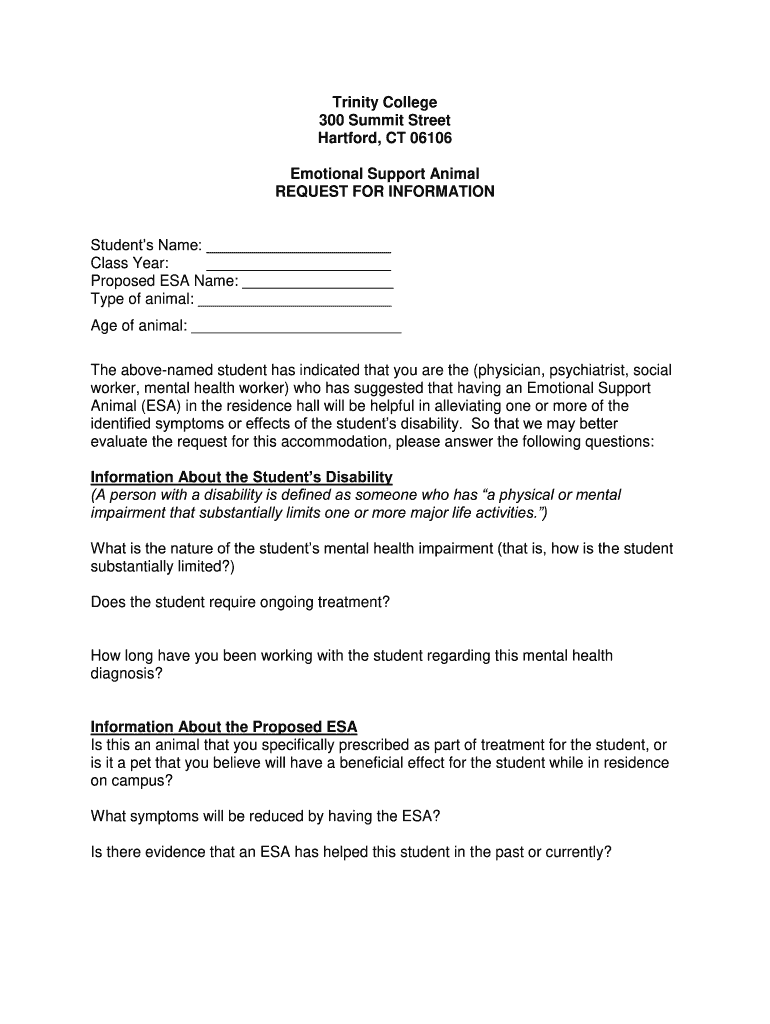







Definition and Meaning of the Emotional Support Animal Letter PDF
An emotional support animal letter serves as a formal document written by a licensed mental health professional, indicating that an individual has a mental health condition that requires the presence of an emotional support animal (ESA) for treatment. The letter confirms that the animal provides therapeutic benefits to its owner, enabling them to better manage their condition.
The emotional support animal letter PDF is often required for individuals seeking to live with their ESA in housing situations where pets are normally prohibited. This document is recognized under the Fair Housing Act, which protects the rights of individuals with disabilities, allowing them to have ESAs as reasonable accommodations.
Key Components of an Emotional Support Animal Letter
- Mental Health Professional's Information: The letter must include the name, credentials, and contact information of the mental health provider.
- Patient's Information: It should identify the individual requesting the ESA and their specific mental health condition.
- Animal Details: The type of animal—and in some cases the name—must be specified, confirming that it is an ESA.
- Statement of Necessity: The letter should clearly articulate how the animal alleviates symptoms of the disability, outlining its therapeutic benefits.
- Signature and Date: The professional’s signed declaration and the date of issuance validate the letter.
Steps to Obtain the Emotional Support Animal Letter PDF
Securing an emotional support animal letter involves a straightforward process, typically involving a mental health professional. Here is a structured approach to obtaining this essential document.
-
Consult a Licensed Mental Health Professional: Schedule an appointment with a qualified therapist, psychologist, or psychiatrist who has experience with ESAs.
-
Assessment: During the consultation, the professional will evaluate your mental health history and current symptoms. Be prepared to discuss your condition honestly and how it affects your daily life.
-
Request the ESA Letter: If the mental health professional determines that an ESA is appropriate for your condition, request the formal letter. Ensure it meets specific requirements relevant to housing or travel.
-
Receive the Letter: After the assessment, the mental health provider will deliver the letter—often in PDF format. Make sure it includes all key components listed previously.
-
Use the Letter Appropriately: Once received, you can submit this letter to landlords or institutions where you require accommodation for your emotional support animal.
Important Terms Related to the Emotional Support Animal Letter PDF
Understanding some key terminology will help grasp the nuances of the emotional support animal letter and its significance:
- Emotional Support Animal (ESA): A pet that provides comfort and emotional stability to individuals with mental health challenges.
- Fair Housing Act (FHA): A U.S. law that protects individuals from discrimination in housing based on disability and requires accommodation for ESAs.
- Licensed Mental Health Professional: A therapist or counselor with the qualifications and legal authority to diagnose mental health conditions and recommend ESAs.
- Reasonable Accommodation: Adjustments or modifications made in housing policies to enable individuals with disabilities to enjoy equal housing opportunities.
Legal Use of the Emotional Support Animal Letter PDF
The emotional support animal letter PDF holds significant legal weight, especially in housing scenarios. Here’s how the legal framework supports its use:
- Fair Housing Act Compliance: Under this act, individuals with mental health issues have the right to request reasonable accommodations, including the presence of ESAs even in pet-restricted housing.
- No Breed or Weight Restrictions: Unlike standard pet policies, landlords cannot impose breed or size restrictions on emotional support animals if the letter is valid.
- Documentation Requirement: Landlords may request an ESA letter but cannot demand exhaustive medical records. The letter itself suffices as proof.
Rights and Responsibilities
- Tenant Rights: Individuals protected under the FHA have the right to live with their ESAs and should not face unnecessary obstacles or fees.
- Responsibilities: Owners must ensure their ESAs are well-behaved and do not pose a threat or nuisance to others in the community.
Examples of Using the Emotional Support Animal Letter PDF
Here are practical scenarios illustrating how the emotional support animal letter PDF can be utilized effectively:
-
Housing Application: A tenant applies to a new apartment but faces a no-pets policy. By providing an ESA letter from their mental health professional, they can legally secure accommodation for their emotional support animal.
-
Travel with ESAs: An individual traveling on an airline might need to show their ESA letter to ensure their animal is allowed on the flight, adhering to specific airline policies regarding emotional support animals.
-
School Accommodations: A student with anxiety could present their emotional support animal letter to the academic institution to request additional support and accommodations for their ESA on campus.
Eligibility Criteria for the Emotional Support Animal Letter PDF
To qualify for an emotional support animal letter, certain eligibility criteria must be met, based on professional assessments and legal guidelines:
-
Diagnosis of a Mental Health Condition: A licensed mental health provider must diagnose the individual with a condition recognized by the DSM-5, such as depression, anxiety, or PTSD.
-
Need for ESA: The individual must demonstrate that an ESA substantially alleviates symptoms associated with their diagnosis and contributes to their overall mental health.
-
Professional Recommendation: Only mental health professionals like psychologists, psychiatrists, or licensed clinical social workers can provide the necessary recommendations for ESAs.