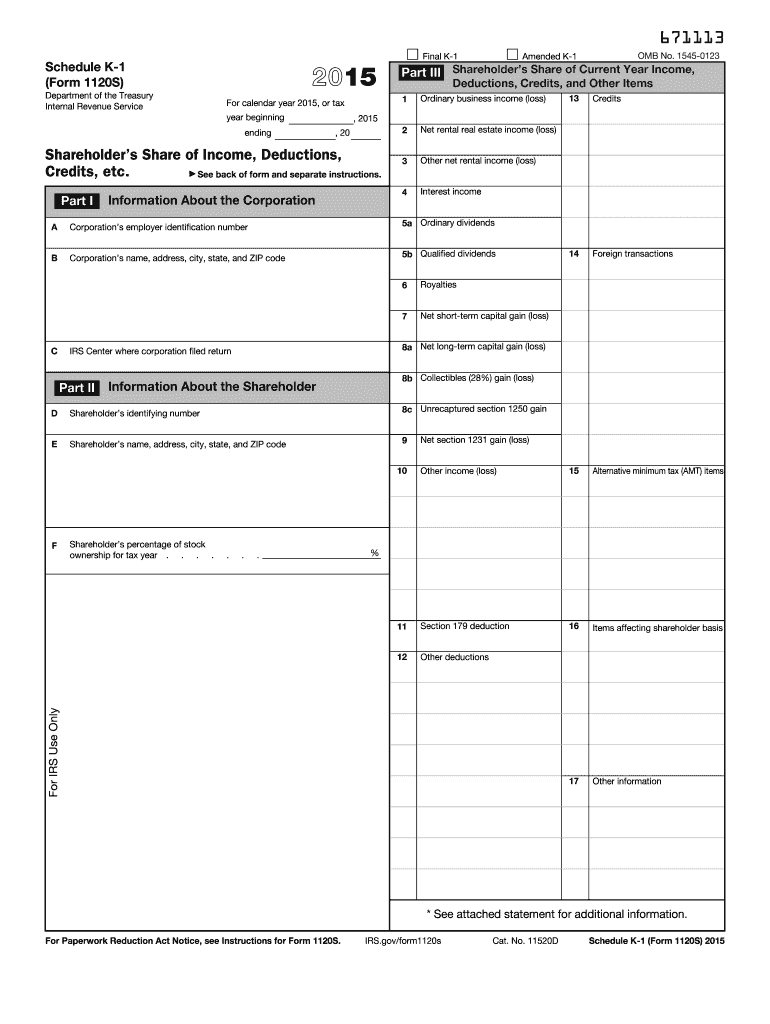







Understanding the 2015 Schedule K-1 (Form 1120S)
The 2015 Schedule K-1 (Form 1120S) is a tax document used by S Corporations to report each shareholder's share of income, deductions, credits, and other distribution items. It is an essential form for shareholders as it outlines the necessary information to report on their individual tax returns. The form captures various income types, such as business income, rental income, dividends, and capital gains.
How to Use the 2015 Schedule K-1
Shareholders of S corporations should utilize the 2015 Schedule K-1 to determine their taxable income and credits from the corporation. The form provides detailed sections for various types of income and expenses that should be reported on the individual's federal tax return. The information should be transcribed accurately onto the shareholder's tax forms, such as Form 1040, ensuring compliance with IRS requirements.
Steps to Complete the 2015 Schedule K-1
-
Obtain Required Information:
- Gather the company's financial statements and relevant tax documents.
- Ensure access to the information regarding each shareholder's share of income, expenses, and credits.
-
Fill Out the Form:
- Enter the corporation's details, including the name, address, and employer identification number (EIN).
- Report each shareholder's distributed share of income and deductions, ensuring correctness for each line item.
-
Review and Distribute:
- Verify all information for accuracy and compliance with IRS guidelines.
- Distribute the completed Schedule K-1 to each shareholder for use in their personal tax filings.
Key Elements of the 2015 Schedule K-1
- Ordinary Business Income: Highlights the net income or loss from the corporation's main operations.
- Dividends and Distributions: Details any dividends received by the corporation, which are passed on to shareholders.
- Capital Gains: Reports the shareholder's share of capital gains from the sale of assets held by the corporation.
- Deductions and Credits: Includes any allowable deductions and credits that apply to shareholders.
Obtaining the 2015 Schedule K-1
Shareholders can receive their Schedule K-1 forms directly from the corporation after it prepares and files its tax returns. Corporations are responsible for distributing these forms to shareholders annually. It's important for shareholders to ensure they provide the corporation with current contact information to receive their tax documents promptly.
IRS Guidelines for the 2015 Schedule K-1
The IRS provides specific instructions for completing and interpreting Schedule K-1 (Form 1120S). Corporations must comply with these guidelines to avoid penalties. The IRS expects corporations to report income and deductions accurately, reflecting the shareholder's correct percentage of ownership. Detailed IRS instructions can be accessed directly from their official website for further clarity.
Penalties for Non-Compliance
Failure to accurately complete and distribute the 2015 Schedule K-1 can result in penalties for the corporation. The IRS may impose fines for late delivery of forms, incorrect information, or failure to file. Shareholders, who neglect to include their share of income from Schedule K-1 on their returns, may also face penalties, including interest on unpaid taxes.
State-Specific Rules for Schedule K-1
While the federal Schedule K-1 (Form 1120S) is used for federal tax purposes, states may have additional reporting requirements or variations. Shareholders should be aware of state-specific tax rules that could affect how income from an S corporation is reported on state tax returns. Consulting with a tax professional knowledgeable about state tax laws can provide clarity and ensure compliance.
Software Compatibility with Schedule K-1
Tax preparation software like TurboTax and QuickBooks can facilitate the process of entering Schedule K-1 information. These programs usually offer step-by-step guidance to ensure data is entered correctly and complies with federal and state regulations. Shareholders can take advantage of such software to streamline tax preparation and filing.
Who Typically Uses the 2015 Schedule K-1
The primary users of the 2015 Schedule K-1 are shareholders of S corporations. These individuals range from active business owners involved in day-to-day operations to passive investors. The form serves as a critical document for them to report their income from the corporation on their personal tax returns.