




01. Edit your unitedhealthcare insurance cancellation form online
Type text, add images, blackout confidential details, add comments, highlights and more.

Type text, add images, blackout confidential details, add comments, highlights and more.

Draw your signature, type it, upload its image, or use your mobile device as a signature pad.

Send united healthcare disenrollment form via email, link, or fax. You can also download it, export it or print it out.
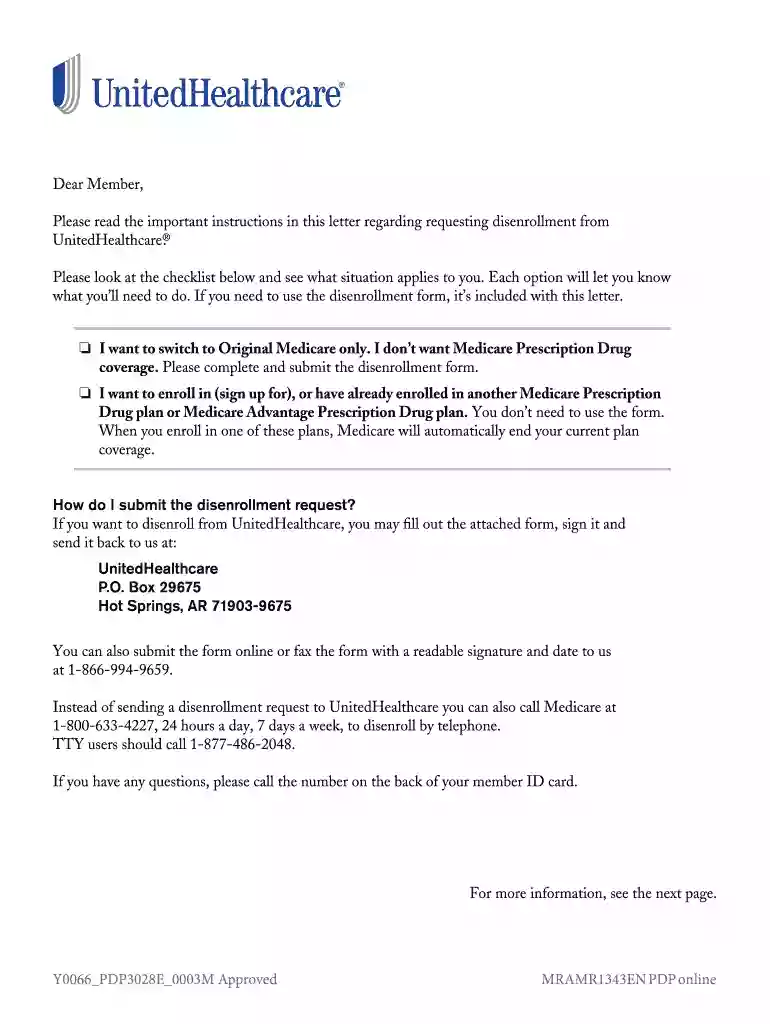
UnitedHealthcare disenrollment refers to the process by which members can terminate their enrollment in a UnitedHealthcare plan, including Medicare Advantage and other insurance products. This action may be necessary for various reasons, such as switching to a different insurance provider, finding a plan that better meets individual healthcare needs, or experiencing eligibility changes. Understanding the nuances of disenrollment is crucial for members navigating the complexities of health insurance.
Members can disenroll from various UnitedHealthcare plans, including:
Certain criteria must be met to disenroll from a UnitedHealthcare plan:
Disenrolling from a UnitedHealthcare plan involves several key steps that members must follow to ensure a seamless experience.
Identify the Disenrollment Period: Confirm whether your situation qualifies for disenrollment outside of the AEP, such as losing other coverage or moving outside your plan’s service area.
Gather Required Information: Collect personal details, policy numbers, and any relevant documentation that supports your disenrollment request.
Complete the Disenrollment Form: Fill out the UnitedHealthcare disenrollment form accurately. Ensure that all fields are completed to avoid delays in processing.
Submit the Form: Send the completed form through the specified channels—either online, via mail, or in-person. Keep a copy of the form for your records.
Follow Up: After submission, verify with UnitedHealthcare using their disenrollment phone number to confirm that your request has been processed.
Members should be aware of critical implications when considering disenrollment from their UnitedHealthcare plan.
Before proceeding, members might want to consider:
Members often have numerous questions regarding the disenrollment process. Here are some common inquiries:
To cancel your coverage online, log into your UnitedHealthcare account and navigate to the disenrollment section. Follow the prompts to complete the online disenrollment form.
Disenrollment is generally limited to specific periods, such as the AEP. Exceptions may exist based on qualifying life events, so it is advisable to verify eligibility before taking action.
When initiating the disenrollment process, certain documents may be required to ensure compliance and facilitate a smooth transition. Commonly required documents include:
Understanding the process of disenrollment from UnitedHealthcare is vital for maintaining control over your healthcare coverage. By familiarizing oneself with the eligibility requirements, documentation needed, and steps involved, members can ensure a smoother experience during their disenrollment journey, ultimately allowing them to secure coverage that better aligns with their needs.
We've got more versions of the unitedhealthcare insurance cancellation form form. Select the right unitedhealthcare insurance cancellation form version from the list and start editing it straight away!
At DocHub, your data security is our priority. We follow HIPAA, SOC2, GDPR, and other standards, so you can work on your documents with confidence.
An MA organization may disenroll an individual from the MA plan for failure to pay basic and supplementary premiums under the following circumstances.Read more
The Manual is divided into sections stating Medi-Cal program requirements and regulatory/contractual standards to support you in providing high quality andRead more


