
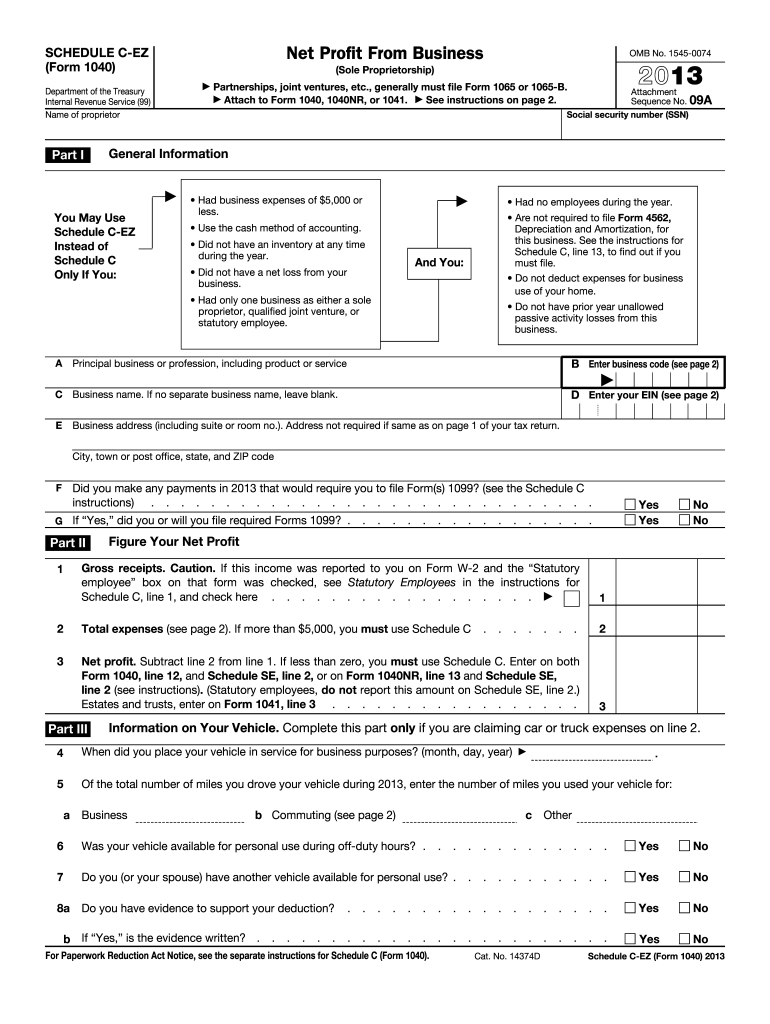







Definition & Purpose of Schedule C-EZ
Schedule C-EZ is a simplified version of the standard Schedule C form used to report net profits from business activities. It was specifically designed for sole proprietors who meet certain eligibility criteria, reducing the paperwork burden and simplifying the tax filing process. The main goal of the 2013 Schedule C-EZ was to minimize the detailed reporting required by the more comprehensive Schedule C, allowing eligible taxpayers to report their business income in a streamlined manner.
Eligibility Criteria for Using Schedule C-EZ
Not all sole proprietors qualify to use Schedule C-EZ; eligibility is contingent on several factors. The principal requirements include having business expenses of $5,000 or less in the tax year, operating without employees, and not claiming deductions for depreciation or amortization. Additionally, no inventory should be maintained, and the business should not have a net loss. Meeting these conditions ensures that the form remains simple and manageable for small-scale business operations.

Key Sections of the 2013 Schedule C-EZ Form
The 2013 Schedule C-EZ form is structured to include several critical sections that capture essential business data succinctly:
- Gross Receipts: This section requires the total income generated from business activities within the tax year.
- Total Expenses: A summary of all business expenses, excluding those that are capitalized elsewhere.
- Net Profit or Loss: Calculated by subtracting the total expenses from gross receipts.
- Automobile and Other Expenses: If applicable, includes fields for reporting vehicle-related expenses essential for business operations.
Step-by-Step Instructions for Completing Schedule C-EZ
- Gather Required Information:
- Gather all financial records for the business, including bank statements, invoices, receipts, and prior tax returns.
- Calculate Total Income:
- Total all sources of income received through business operations and enter this number as your gross receipts.
- Summarize Business Expenses:
- Identify allowable business expenses that do not exceed $5,000 in total. Enter this amount in the total expenses section.
- Determine Net Profit:
- Subtract total business expenses from gross receipts to calculate net profit.
- Complete Vehicle-Related Expenses (if applicable):
- Fill out any relevant information regarding business use of a vehicle, such as mileage and type of expenses incurred.
Importance of Using Schedule C-EZ
For qualifying self-employed individuals, Schedule C-EZ offers a practical solution by reducing the time and effort spent on tax paperwork. Its streamlined nature allows for quick completion, enabling business owners to focus more on growing their enterprises rather than extensive documentation. The condensed form also mitigates errors associated with more detailed reporting.
Who Typically Uses the Schedule C-EZ?
Sole proprietors and single-member LLCs frequently utilize Schedule C-EZ due to its straightforward requirements. It caters to small business owners and independent contractors with uncomplicated financial situations and minimal expenses. This makes it particularly useful for freelancers, consultants, and small-scale service providers.

Why Schedule C-EZ Was Phased Out by the IRS
Though Schedule C-EZ was beneficial for many, the IRS opted to phase it out in favor of simplifying the Schedule C form itself. This decision aimed to decrease confusion and ensure consistent reporting standards across all self-employed taxpayers. The consolidation into one form reduces administrative complexity and potential misapplication of different versions.
Required Documents for Completing Schedule C-EZ
To accurately complete Schedule C-EZ, taxpayers must gather several documents, including:
- Income Records: Invoices, bank deposit records, and any documentation that verifies earned income.
- Expense Receipts: Documentation for business purchases, utilities, and other deductible expenses.
- Mileage Logs: If claiming vehicle expenses, detailed logs of business mileage must be maintained.
Form Submission Methods: Options Available
Taxpayers can submit the completed Schedule C-EZ through various channels:
- Online Filing: Many utilize IRS-approved software that accommodates electronic filing, offering a quick and efficient submission process.
- Postal Mail: Paper submissions are still accepted, requiring taxpayers to send their complete tax return package to the appropriate IRS address.
- In-Person: Direct submission is possible at local IRS offices, although this method is less common.
These routes ensure flexibility in filing, allowing taxpayers to choose the method that aligns best with their circumstances.




