




01. Edit your virginia 45 hour driving log filled out online
Type text, add images, blackout confidential details, add comments, highlights and more.

Type text, add images, blackout confidential details, add comments, highlights and more.

Draw your signature, type it, upload its image, or use your mobile device as a signature pad.

Send 45 hour driving log filled out example via email, link, or fax. You can also download it, export it or print it out.
A DMV driving log is an essential tool for documenting practice driving sessions, primarily required by individuals applying for a graduated driver’s license in various states, including Virginia and West Virginia. This log helps ensure that new drivers gain the necessary real-world experience under supervised conditions before obtaining their full driving privileges.
The primary goal of a DMV driving log is to provide a formal record of driving experience. This log includes vital details such as:
Completing the log is not just a formality; it is a critical part of ensuring that new drivers meet the minimum requirements set by their state's Department of Motor Vehicles (DMV).
To properly complete the DMV driving log, several key pieces of information are required. These include:
Completing a DMV driving log involves systematically recording each practice session. Here are the steps to effectively fill it out:
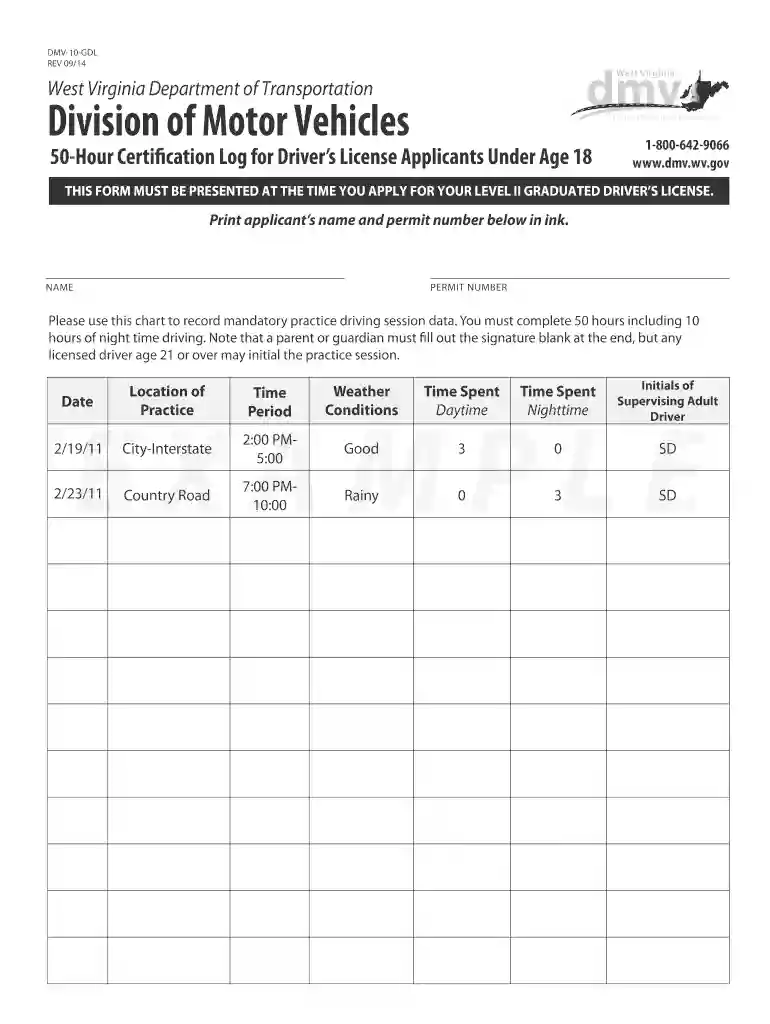
To illustrate how a DMV driving log might look when filled out, consider this example:
Maintaining an up-to-date and accurate DMV driving log is crucial not only for meeting state requirements but also for preparing yourself for the driving test. An accurately filled-out log provides tangible proof of the effort and experience gained, and it can help in reinforcing good driving habits during practice sessions.
Many new drivers and their guardians may encounter misunderstandings regarding the DMV driving log. Here are some common issues:
Ensuring that these aspects are properly addressed can lead to a smoother path toward obtaining a full driving license.
We've got more versions of the virginia 45 hour driving log filled out form. Select the right virginia 45 hour driving log filled out version from the list and start editing it straight away!
At DocHub, your data security is our priority. We follow HIPAA, SOC2, GDPR, and other standards, so you can work on your documents with confidence.
REQUIREMENTS: ∙ Complete a minimum of 60 hours of driving. ∙ No more than 10 hours per week may count toward the 60 hours. ∙ At least 10 of the 60 hoursRead more
session of the 40 Hour Parent/Teen Driving Guide and Driving Log has been completed. Sworn to and subscribed before me,. This day of , 20Read more
This manual provides driver license testing information for drivers who wish to have a commercial driver license (CDL). This manual does. NOT provideRead more


