
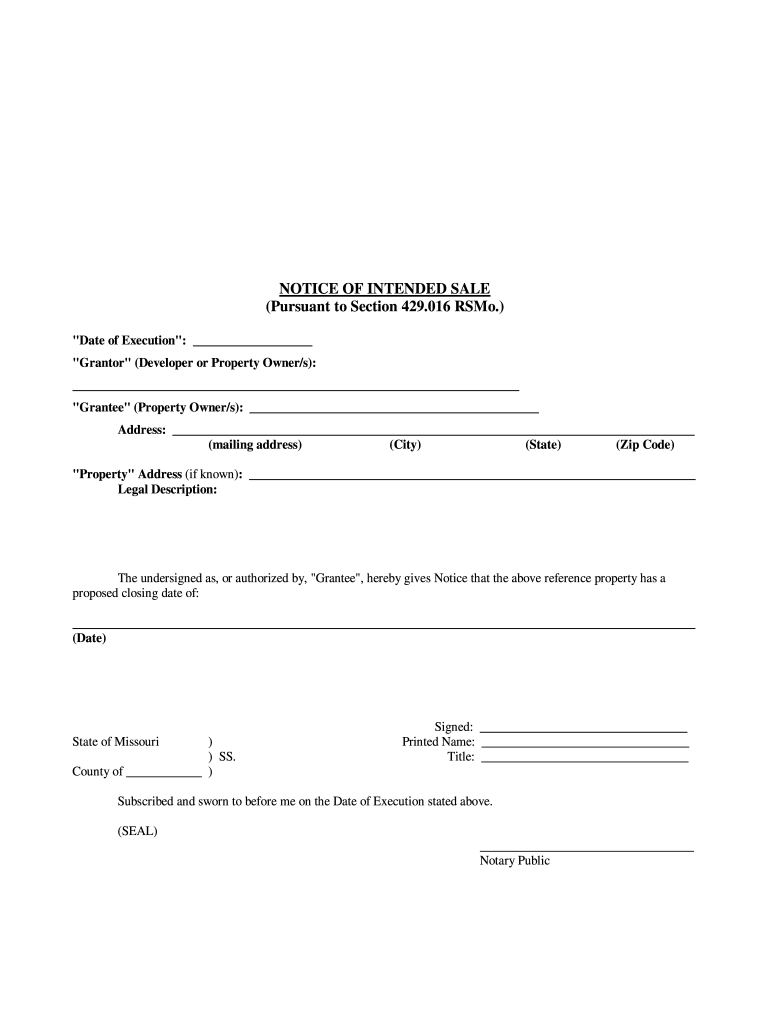







Definition and Purpose of a Notice of Intent to Sell Property
A notice of intent to sell property is a formal document that communicates the intent of the property owner to sell a specified property, typically used in real estate transactions. This notice serves as an initial step in the selling process and is crucial for informing potential buyers, tenants, and other stakeholders. It outlines essential details about the property, such as its location, legal description, and expected closing date.
The document is typically structured to include:
- Property Details: The address of the property and any relevant legal descriptions that define boundaries and ownership.
- Seller and Buyer Information: The full names and contact information of both the grantor (seller) and grantee (buyer), ensuring all parties are identifiable.
- Proposed Closing Date: A timeline for when the transaction is expected to be finalized, which can help set expectations for all involved.
This notice can be used in various contexts including residential sales, commercial property transactions, and situations involving rental properties. In many states, this notice might also fulfill legal requirements for notifying tenants about the sale of a rental property, effectively ensuring compliance with local laws.
Key Components of a Notice of Intent to Sell Property
To effectively convey the intent to sell, the notice should contain several critical elements:
- Title: Clearly state that it is a "Notice of Intent to Sell Property."
- Date of Notice: Include the date the notice is created to establish a timeline.
- Property Description: A comprehensive description of the property, including the address and any unique identifiers (like a parcel number).
- Contact Information: Include the seller’s contact details and any other relevant real estate agent or legal representation.
- Intended Sale Details: The proposed price or terms of sale, if applicable.
- Signatures: Signatures of the involved parties validate the document under legal standards, often requiring notarization.
In some instances, the seller may also wish to indicate their intent to notify specific stakeholders, such as current tenants, to ensure transparency throughout the process.
Legal Requirements and Considerations
When preparing a notice of intent to sell property, various legal obligations must be observed. These may differ based on state laws:
- Notification Periods: Different jurisdictions may have specific requirements regarding how much notice must be provided before property sales, especially in the context of rental properties.
- Disclosures: In certain states, property owners are required to disclose specific information regarding the property condition or any known issues before finalizing a sale.
- Tenant Rights: If the property is currently rented, landlords must follow specific regulations to inform tenants of their intent. This often includes providing notices of intent to sell and information regarding the sale process.
It’s essential to consult local real estate laws to ensure compliance while drafting this notice, as failing to do so could have legal ramifications for the seller.
Sample Templates and Formats
Utilizing a standardized template for the notice of intent to sell property can simplify the process and ensure all necessary information is included. Here is a basic layout:
Example Format:
[Date]
[Your Name/Company] [Your Address] [City, State, Zip Code]
[Recipient's Name] [Recipient's Address] [City, State, Zip Code]
RE: Notice of Intent to Sell Property
Dear [Recipient's Name],
I hereby notify you of my intent to sell the property located at [Property Address]. The expected closing date is [Proposed Closing Date].
[Optional: Summary of terms or conditions regarding the sale.]
Please feel free to contact me at [Your Phone Number] or [Your Email Address] for any further information.
Sincerely,
[Your Signature]
[Your Printed Name]
Templates can vary based on the complexity of the transaction, but they must always include the essential components.
Filing and Notification Processes
The delivery of the notice of intent to sell property should also consider the proper methods of notification. Common practices include:
- Personal Delivery: This ensures the recipient receives the notice directly, allowing for immediate acknowledgment.
- Certified Mail: Sending the notice via certified mail provides proof of delivery, which can be beneficial if disputes arise later.
- Electronic Notification: With the increase in digital communication, some may choose to send the notice via email, provided both parties have agreed to this method.
In addition to the property’s current tenants, it may be wise to notify local authorities or homeowners’ associations, depending on the property type and location.
Variations Based on State Regulations
While the core elements of a notice of intent to sell remain consistent, variations may exist based on state regulations:
- California Notices: In California, for instance, specific regulations require landlords to provide written notice to tenants about the sale, including information about any new management or ownership.
- Missouri Requirements: Missouri real estate transactions may involve distinct legal frameworks regarding notices, requiring additional disclosures or stipulations.
Researching local laws and potential regional variations ensures compliance and aids in a smooth transaction.
Practical Use Cases
Here are a few scenarios where a notice of intent to sell property is essential:
- Residential Property Sale: Homeowners selling their residential property can issue this notice to inform potential buyers, especially if the home is currently occupied by tenants.
- Commercial Transactions: Businesses looking to sell commercial real estate benefit from notifying stakeholders, including partners and current tenants, about the intent to sell.
- Investment Properties: Investors holding rental properties can use this notice to manage tenant expectations and comply with local regulations when aiming to sell.
These practical applications illustrate the broad utility of a notice of intent to sell property across various real estate contexts while emphasizing its role in ensuring transparent business practices.




