
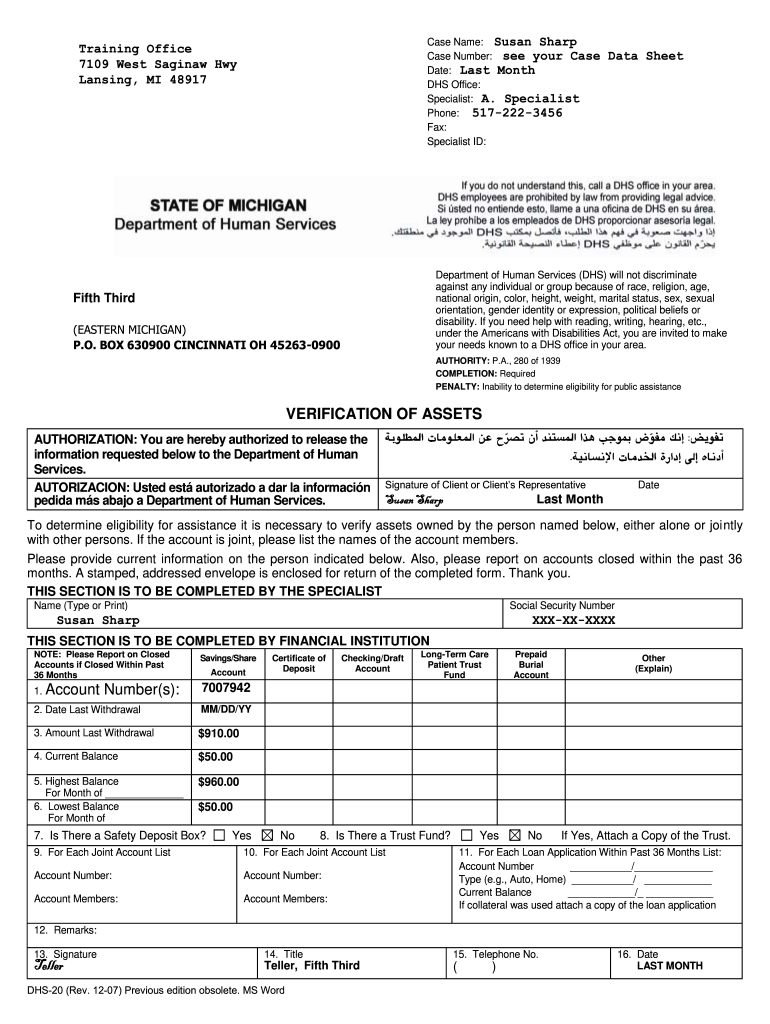







Definition & Meaning of DHS 20 Verification of Assets
The DHS 20 verification of assets is primarily a form used within the realm of public assistance eligibility assessments managed by the Department of Human Services (DHS). This form serves to compile an individual's or household's financial information, allowing for a comprehensive review to determine eligibility for various social services. It specifically focuses on asset verification by requesting detailed account information from financial institutions. Typically, the documentation must include current account balances and any records of closed accounts within a specified period, usually the last 36 months. Understanding this form is crucial for both applicants and caseworkers involved in the benefits issuance process.
The information gathered through the DHS 20 is used to ensure compliance with federal and state regulations regarding asset limits for public assistance programs. This verification is essential to prevent fraudulent claims and ensures that benefits are allocated based on accurate and current financial data. Failure to provide complete information can lead to delays in processing or denial of benefits.
Steps to Complete the DHS 20 Verification of Assets
Completing the DHS 20 verification form requires careful attention to detail and adherence to specific procedural steps. Below is a structured approach to ensure successful completion:
-
Gather Required Information:
- Collect financial documents such as bank statements, account numbers, and previous asset records.
- Ensure you have information regarding all types of assets, including savings, checking, and investment accounts.
-
Fill Out the Form:
- Provide accurate personal identification details, including your name, address, and social security number.
- List all financial accounts, including the financial institution's name, account type, and current balance.
-
Submit Supporting Documents:
- Attach copies of the required bank statements showing current balances.
- If applicable, include documentation from closed accounts indicating closure dates and final balances.
-
Review and Verify Information:
- Double-check all entries for accuracy.
- Ensure that all required fields of the DHS 20 form are completed, and make corrections where necessary.
-
Submit the Completed Form:
- Send the form either electronically or by mail, depending on the specified guidelines provided by your local DHS office.
- Keep a copy of the submitted form and supporting documents for your records.
Important Terms Related to DHS 20 Verification of Assets
Understanding the terminology associated with the DHS 20 verification of assets is vital for both applicants and DHS personnel. Below are definitions of key terms:
- Asset: Any resource owned by an individual or household that has monetary value, including bank accounts, real estate, and stocks.
- Eligibility: The criteria that must be met to qualify for public assistance programs; primarily based on income and asset evaluations.
- Verification: The process of confirming the accuracy and completeness of financial information submitted through the DHS 20 form.
- Closed Accounts: Bank accounts that have been officially terminated and are no longer active; pertinent details regarding these accounts must also be included in the verification process.
These terms are crucial for ensuring the correct interpretation and successful completion of the DHS 20 form, aiding applicants in fulfilling their obligations and assisting DHS staff in their reviews.
Who Typically Uses the DHS 20 Verification of Assets
The DHS 20 verification of assets is primarily utilized by individuals applying for or currently receiving public assistance in various forms, such as food assistance, medical aid, or cash benefits. The typical users include:
- Low-Income Households: Families or individuals whose income level necessitates government assistance to meet basic needs.
- Senior Citizens: Elderly individuals who may require support due to fixed or limited incomes.
- Individuals with Disabilities: Those who may face difficulties in securing employment due to health-related issues and rely on assistance for living costs.
- Working Families: Households that may struggle to meet expenses while being employed, particularly in high-cost living areas.
Additionally, caseworkers and administrative personnel within the DHS play a critical role in processing these forms, making it essential for them to understand the specific guidelines and requirements associated with the DHS 20 verification of assets.


Legal Use of the DHS 20 Verification of Assets
The DHS 20 verification of assets is not merely a formality but a legally significant document within the public assistance framework. Its legal implications include the following:
- Compliance with Regulations: The form aids in ensuring compliance with both federal and state laws governing asset eligibility for public assistance programs, helping prevent misuse of tax-funded resources.
- Data Protection: All personal and financial information provided is subject to strict confidentiality laws. The DHS is obligated to protect this information to prevent unauthorized disclosure.
- Fraud Prevention: The verification process helps to deter fraudulent claims, ensuring that only individuals meeting the eligibility criteria receive benefits. Misrepresentation of asset information can lead to legal penalties, including the potential for prosecution.
- Audit and Verification: The DHS may conduct audits based on the information provided in the DHS 20 form, leading to further investigation if inconsistencies arise.
Understanding the legal significance of this form is essential for both applicants and DHS staff, emphasizing the importance of providing accurate and truthful information.




