




01. Edit your bni visitor sign in sheet online
Type text, add images, blackout confidential details, add comments, highlights and more.

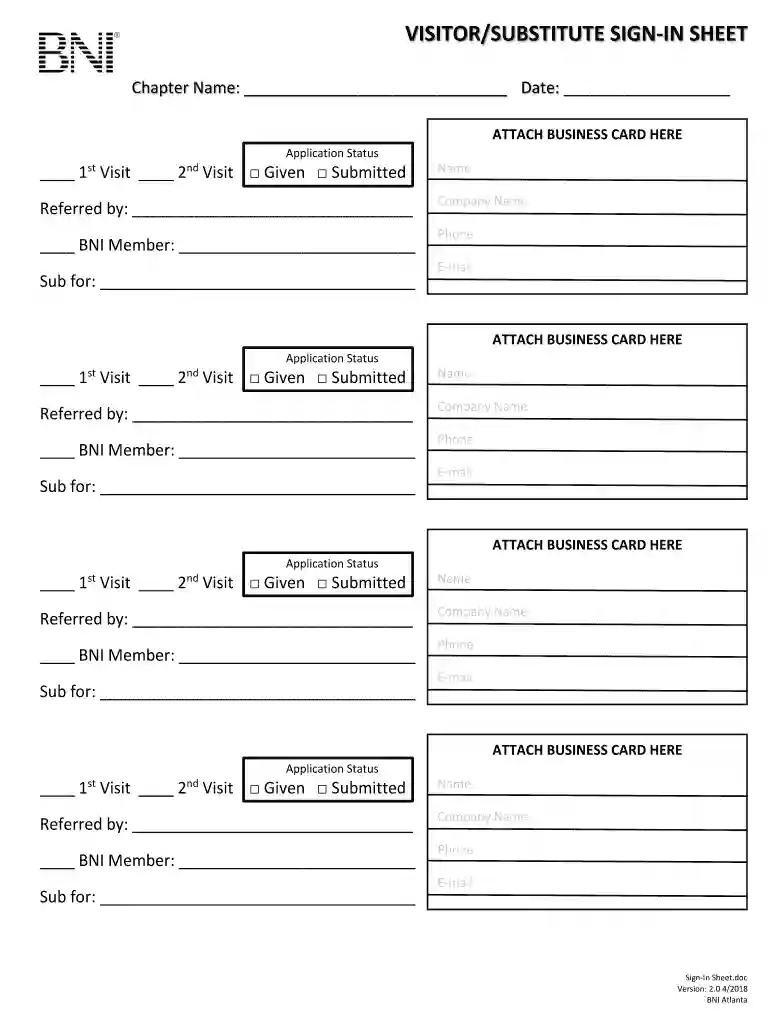
Type text, add images, blackout confidential details, add comments, highlights and more.

Draw your signature, type it, upload its image, or use your mobile device as a signature pad.

Send bni sign in sheet via email, link, or fax. You can also download it, export it or print it out.
The BNI visitor sign-in sheet is a crucial document used in Business Network International (BNI) chapters to record the details of visitors attending meetings. This form serves several purposes, including facilitating the registration process and tracking attendance for future correspondence. It captures visitor information such as name, contact details, and the date of their visit. This data is critical for building connections and fostering relationships within the BNI network.
In a broader context, the sign-in sheet plays an essential role in enhancing the visitor experience. It ensures that all attendees are acknowledged and that information is collected to follow up with visitors post-meeting. Utilizing a structured visitor sign-in sheet enables BNI chapters to streamline their operations, maintain organized records, and comply with networking standards.
Understanding its definition and purpose is vital for effective use. This form not only aids in the operational aspect of BNI meetings but also significantly contributes to the overall guest experience.
Utilizing the BNI visitor sign-in sheet is straightforward but requires attention to detail to ensure comprehensive data collection. Here are the steps:
Prepare the Form: Before the meeting, ensure that the sign-in sheet is printed or electronically available. Check that all necessary fields are included, such as visitor name, company details, email, and phone number.
Assign Responsibilities: Designate a member of the Visitor Host Team to oversee the sign-in process. This team member should greet visitors and guide them through the completion of the sheet.
Collect Information: As guests arrive, the assigned member should engage with each visitor, encouraging them to fill out all required fields accurately. This includes not only personal information but also areas for visitors to express their interests or business goals.
Follow Up: After the meeting, the Visitor Host Team should review the collected data for completeness. Use the contact information to follow up with visitors via email or phone, thanking them for attending and inviting them back to future meetings.
Maintain Records: Store the completed sign-in sheets securely, whether digitally or in hard copy, for future reference. This record-keeping practice ensures that all visitor data is available for any subsequent outreach or analytics.
By following these steps, BNI chapters can maximize the utility of their visitor sign-in sheet, fostering a welcoming environment that encourages ongoing interaction with new members.
Completing the BNI visitor sign-in sheet involves several key actions by both visitors and the host team to ensure that all necessary information is captured effectively. Here’s a detailed breakdown:
Visitor Preparation: Visitors should come prepared with an understanding of their interests or what they hope to achieve from BNI meetings. This foresight can guide how they fill out relevant sections of the sign-in sheet.
Filling Out Personal Information:
Expressing Interests: The form may include sections for visitors to indicate what topics they are interested in discussing or their networking goals. This information helps tailor future interactions and establish meaningful connections.
Acknowledgment of Attendance: Upon completing the form, visitors should receive a warm welcome and acknowledgment. This small gesture reinforces the importance of their presence.
Submission and Verification: After visitors complete their sign-in information, the host should review it for accuracy. Confirming details can prevent potential issues during follow-ups and ensures proper data integrity.
By comprehensively completing their sections on the BNI visitor sign-in sheet, visitors play an active role in fostering a strong networking community.
Understanding the essential components of the BNI visitor sign-in sheet is necessary for effective implementation. The key elements include:
Visitor Information:
Meeting Details:
Host Information:
Comments or Interests Section: This optional area allows visitors to express their goals or areas of interest. It's useful for customizing future communication efforts.
Having these elements structured clearly on the sign-in sheet enhances both the ease of use and the overall experience for visitors and members alike at BNI meetings.
The legal use of the BNI visitor sign-in sheet is important to ensure that data collected follows best practices and complies with relevant laws. Key considerations include:
Data Protection: Collecting personal information requires adherence to privacy regulations. BNI chapters should implement safeguards such as secure storage and limited access to ensure visitor information is protected.
Consent for Communication: When capturing contact information, it is imperative to inform visitors how their data will be used and obtain consent for follow-up communications. This practice aligns with regulations such as the CAN-SPAM Act and GDPR when applicable.
Record Retention Policies: Establish clear policies regarding how long visitor records are kept and the process for data deletion once it is no longer relevant. Maintaining transparency about data handling helps build trust within the network.
Ensuring compliance with legal standards not only protects the BNI chapter but also fosters a positive relationship with visitors by honoring their privacy and data rights.
We've got more versions of the bni visitor sign in sheet form. Select the right bni visitor sign in sheet version from the list and start editing it straight away!
You need to use only trusted software solutions with strong data protection compliance to approve your documents electronically. DocHub is just the type of software you need! It stores data on Amazon Web Servers and complies with all required security criteria and eSignature laws, so it’s a reliable way to electronically sign your bni visitor sign in sheet or other documents using this tool.
If you are searching for a state-specific bni visitor sign in sheet sample, you can find it in our DocHub Forms & Templates catalog. Use the search field, enter your form’s name, and search through the results for your state. You may also filter out irrelevant results while exploring our catalog by groups.
At DocHub, your data security is our priority. We follow HIPAA, SOC2, GDPR, and other standards, so you can work on your documents with confidence.


