Definition & Meaning
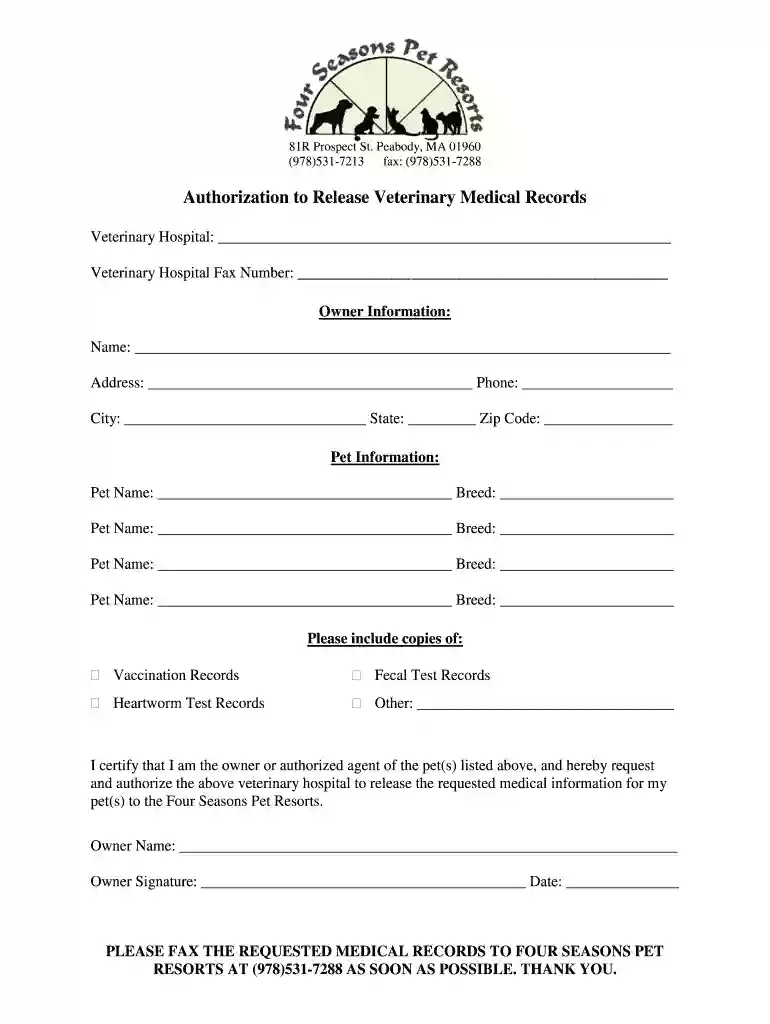
A release veterinary form is a legal document that allows pet owners to authorize a veterinary clinic to share their pet's medical records with a designated third party. This form is essential when pet owners wish to transfer veterinary care or enable a new veterinarian to access their pet's history. The release typically includes the owner's information, the pet's details, and the specifics about what records are being requested. Proper use of this form ensures compliance with Veterinary Client Patient Relationship (VCPR) regulations while safeguarding the pet's medical privacy.
Key Components of the Form
- Owner's Information: This section requires the pet owner's full name, address, phone number, and email to establish identity and contact points.
- Pet Details: Includes the pet's name, species, breed, age, and any identification numbers, such as microchip details.
- Records Requested: Clearly specifies the type of records being released, such as vaccination histories, treatment records, or diagnostic tests.
- Recipient Information: Involves the details of the entity or individual requesting the information, ensuring that records are sent to the correct place.
How to Use the Release Veterinary Form
To use the release veterinary form effectively, pet owners need to follow a series of straightforward steps. This will ensure that all necessary information is collected and submitted accurately.
- Obtain the Form: Start by acquiring a copy of the release veterinary form. This can often be obtained directly from the veterinary clinic or downloaded from their website.
- Fill Out the Form: Carefully complete all sections of the form, ensuring that all information is accurate and up-to-date. This reduces the risk of errors that could delay the release of medical records.
- Specify Records: Clearly indicate which medical records are to be released. Be as specific as possible about the timeframe and types of records needed.
- Sign and Date: The form must be signed by the pet owner, affirming their consent for the release of the information. Ensure that the date of signing is included.
- Submit the Form: Deliver the completed form to the veterinary clinic from which records are being requested. This can typically be done via email, fax, or in person, depending on the clinic’s procedures.
Steps to Complete the Release Veterinary Form
Completing the release veterinary form accurately is critical to ensure a smooth transfer of medical records. Here are the systematic steps to follow:
Download or Request the Form:
- Obtain the release veterinary form from the veterinarian’s office or their official website.
Provide Your Information:
- Fill in your full name, address, phone number, and email.
- Double-check for spelling errors or incorrect details.
Detail Your Pet's Information:
- Include your pet’s name, type (e.g., dog, cat), breed, age, and identification numbers.
- Ensure all information reflects what is on file with the veterinary clinic.
Select Information for Release:
- Specify particular documents or sections of your pet’s medical history to be shared.
- This may include details on vaccinations, treatments, and any recent tests.
Authorize the Release:
- Sign and date the form to confirm your authorization for the release.
- Remember, without your signature, the form is invalid.
Submit the Form:
- Send the form to the veterinary office as per their specified submission method.
- Retain a copy of the submitted form for your records.
Important Terms Related to the Release Veterinary Form
Understanding the terminology associated with the release veterinary form can provide clarity and enhance the proper use of the document. Some important terms include:
- Veterinary Client Patient Relationship (VCPR): A legal framework that defines the professional relationship between veterinarians and pet owners, integral for compliance.
- Authorization: The act of granting permission for the release of medical records, which must be explicitly stated in the form.
- Confidentiality: The principle that pet medical information is private and should only be shared with authorized parties.
- Consent: A crucial element of the form, affirming that the pet owner willingly permits the release of information.
- Records Release: The procedure by which a veterinary practice transfers medical records to another provider or individual upon request.
Legal Use of the Release Veterinary Form
The release veterinary form serves a specific legal function in protecting both the pet owner’s rights and the veterinarian’s responsibilities. The legal framework governing its use includes several critical aspects:
Compliance with HIPAA
- The Health Insurance Portability and Accountability Act (HIPAA) ensures that personal health information, including that of pets, is safeguarded. The release form must comply with these regulations, allowing for the sharing of medical records only with specified parties.
State Regulations
- Various states may have specific laws surrounding the release of veterinary records. It is essential for pet owners to familiarize themselves with these local regulations to ensure adherence and protect their rights.
Liability Protection for Veterinarians
- By using a proper release veterinary form, veterinarians mitigate the risk of potential legal claims related to unauthorized disclosures of medical records. The form acts as documented proof of the pet owner’s consent.
Enforceability
- Once signed, the release veterinary form is a legally binding document that can be relied upon in both clinical and legal contexts. It ensures that veterinary hospitals fulfill their obligations while allowing pet owners to access and share vital health information.
Key Elements of the Release Veterinary Form
The effectiveness of the release veterinary form hinges on several essential elements that must be included for it to be valid. Here are the key components:
- Pet Owner Identification: Clear identification information ensures that the veterinary clinic correctly verifies the requester.
- Detailed Veterinary Information: Accurate details regarding the veterinary practice are necessary for the timely transfer of records.
- Date of Authorization: The form must include the date when the pet owner signs it, establishing a timeline for record transfer.
- Recipient Information: Provide detailed information about the individual or organization receiving the pet's medical records, which allows for accurate delivery.
- Types of records being released must be itemized to provide clarity on what information is being shared.
These elements are vital for the form's acceptance by veterinary offices and institutions, ensuring that the process proceeds without delay.