
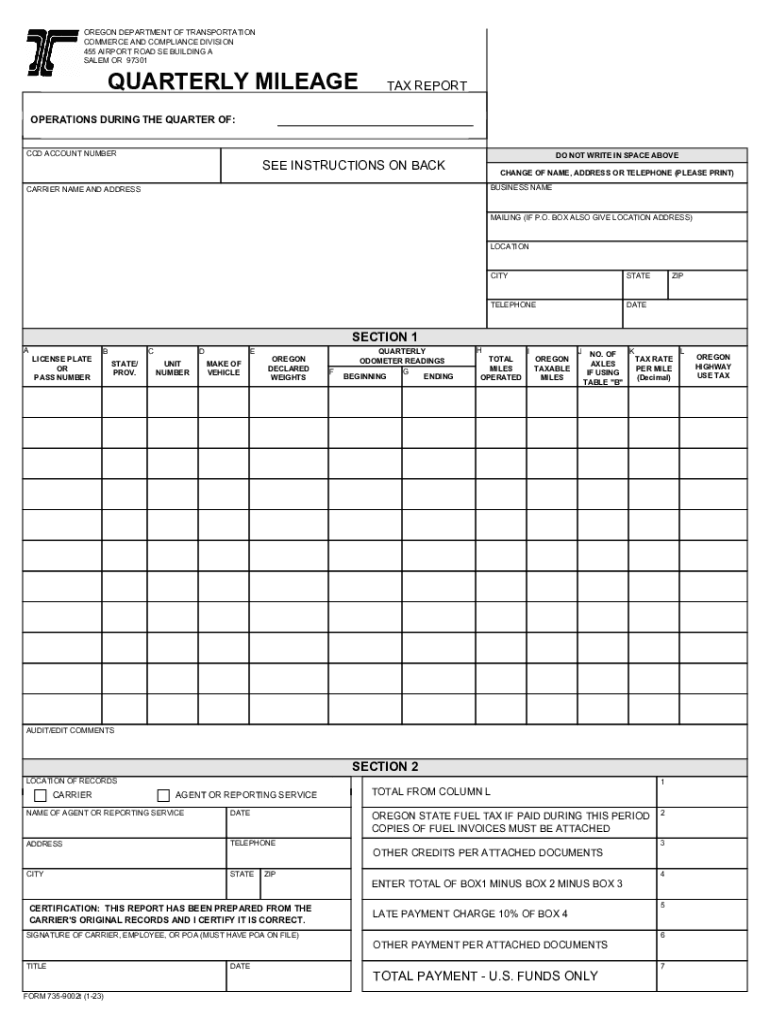







Definition and Purpose of Quarterly Weight-Mile Tax Reporting
The Quarterly Weight-Mile Tax Reporting is a crucial form required by the Oregon Department of Transportation. It mandates businesses operating commercial vehicles in Oregon to report the mileage traveled and the associated taxes owed for that quarter. This form serves not just as a record of compliance with tax liabilities but also aids in maintaining transparency in operations involving heavy vehicles. This tax specifically targets vehicles that exceed a certain weight threshold, making it essential for transport businesses to adhere to the reporting requirements.
How to Use the Quarterly Weight-Mile Tax Reporting
To effectively utilize the Quarterly Weight-Mile Tax Reporting, businesses must systematically gather and enter data on the mileage their fleets have covered within Oregon's jurisdiction. The process involves calculating the taxable miles for each vehicle and applying the appropriate tax rates to determine the total tax due. It's vital to ensure that the data entered is accurate to avoid any discrepancies, which could lead to penalties. Keeping consistent records through GPS tracking or mileage logs can simplify this process and improve accuracy.
Steps to Complete the Quarterly Weight-Mile Tax Reporting
- Accumulate Mileage Data: Compile detailed records of the miles each enrolled vehicle has traveled within the state.
- Calculate Taxable Miles: Use provided guidelines to determine which miles are taxable.
- Determine Tax Rates: Apply the specified weight-mile tax rates applicable for the reporting period.
- Complete the Form: Enter all required information accurately, ensuring each section reflects correct data.
- Review and Confirm: Double-check all entries for accuracy to prevent filing discrepancies.
- Submit the Form: Choose the appropriate submission method, either online through secure portals or by mailing the completed form to the provided address.
Why Quarterly Weight-Mile Tax Reporting is Essential
Quarterly Weight-Mile Tax Reporting is vital to monitor and manage the wear and tear on public infrastructure caused by heavy vehicles. The funds collected are reinvested into maintaining and improving the state’s roads, which benefits all users. For businesses, adherence to these reporting requirements ensures they remain compliant with state laws, avoiding penalties and contributing to societal welfare.
Penalties for Non-Compliance
Non-compliance with the Quarterly Weight-Mile Tax Reporting can result in significant penalties. Businesses that submit reports late or with inaccurate data can face financial penalties, which may increase with prolonged delays. In severe cases, persistent non-compliance can lead to additional scrutiny from state authorities or even suspension of vehicle operations within Oregon.
Filing Deadlines and Important Dates
Filing for the Quarterly Weight-Mile Tax Reporting is typically required at the end of each fiscal quarter. Approximately, the deadline for submissions falls 30 days after the completion of each quarter. It’s crucial for businesses to be aware of these deadlines to ensure timely submissions and to enable any necessary corrections prior to the due date.
State-Specific Rules for Oregon
While the Quarterly Weight-Mile Tax Reporting applies specifically to Oregon, other states may have different requirements or similar systems under different names. In Oregon, particular attention is paid to vehicles with a gross weight exceeding 26,000 pounds. Understanding these state-specific thresholds and regulations is essential for businesses that operate in multiple states.
Eligible Business Types for Quarterly Weight-Mile Tax Reporting
Primarily, this reporting requirement is mandatory for businesses that operate heavy commercial vehicles. This includes logistics companies, transportation services, and any entity that frequently uses heavy trucks for transporting goods across Oregon. Ensuring compliance among these business types aids in proper infrastructure planning and taxation to cover incurred expenses.
Examples of Using the Quarterly Weight-Mile Tax Reporting
Consider a large logistics company operating trans-state routes. By diligently using the Quarterly Weight-Mile Tax Reporting form, it keeps comprehensive records of in-state mileage to streamline its tax submissions. This not only aids in compliance but also supports financial planning, as the tax liabilities can be projected and managed better when accurate data is maintained on a quarterly basis.




