



01. Edit your form online
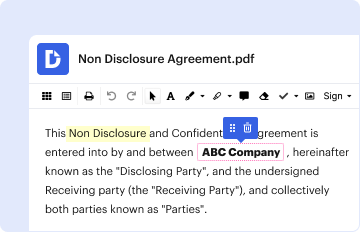
Type text, add images, blackout confidential details, add comments, highlights and more.

Type text, add images, blackout confidential details, add comments, highlights and more.
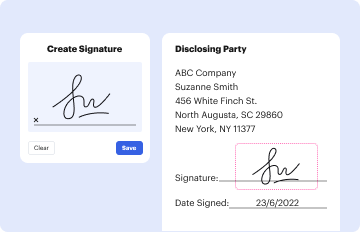
Draw your signature, type it, upload its image, or use your mobile device as a signature pad.

Send it via email, link, or fax. You can also download it, export it or print it out.
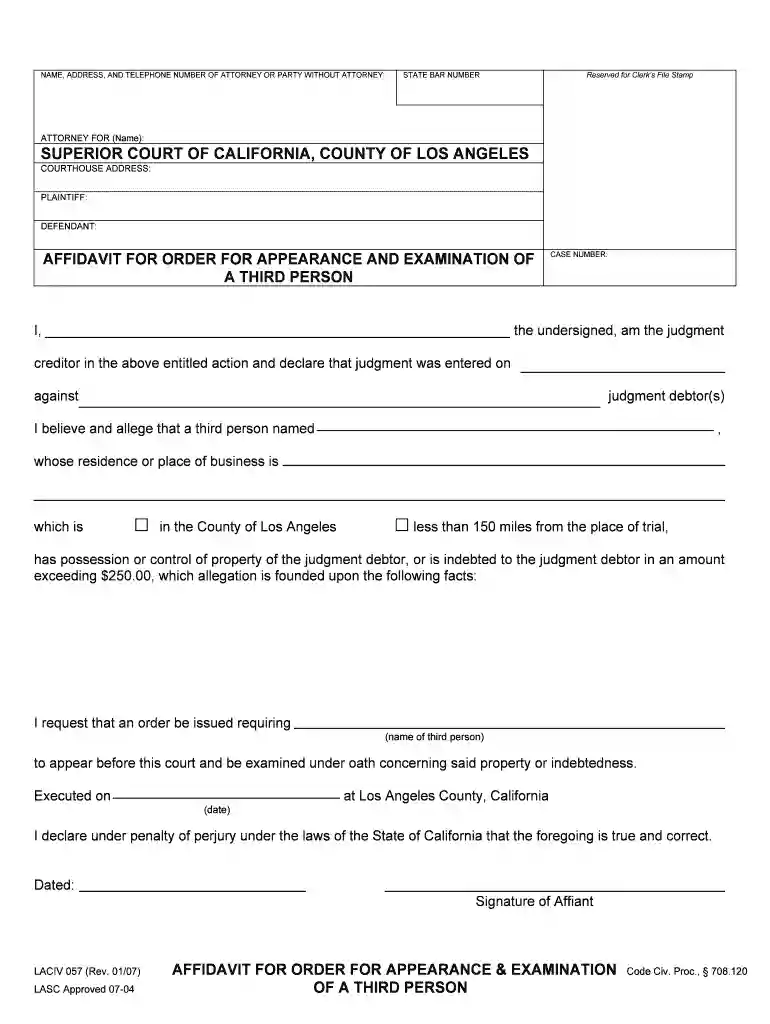
An affidavit appearance is a formal written statement submitted to a court, affirming the requirement for a third person to appear before the court to provide details about the property or debts of a judgment debtor. This legal document is typically sworn under oath and includes essential information such as the names of the involved parties, the case number, and a declaration by the affiant under penalty of perjury. These affidavits are vital in legal proceedings for enforcing judgments, as they compel individuals to testify about matters relevant to the debtor's assets or liabilities.
In the United States, affidavits of appearance are governed by state and federal laws that dictate their structure and function within judicial processes. They are essential components of discovery in cases where a party to a lawsuit needs to uncover information about a debtor’s financial status or asset holdings. These documents are integral to ensuring compliance and transparency in the legal system.
Using an affidavit appearance involves several critical steps to ensure accuracy and legal validity. First, the party requiring the affidavit must clearly identify and articulate their reasons for demanding a third party's appearance in court. This involves drafting a precise statement that outlines the necessity for the affidavit, ensuring all required information is included in the document.
The affidavit must be sworn or affirmed before a notary public or a court official authorized to administer oaths. This step is crucial to ensure the document's legal standing.
Completing an affidavit appearance involves a series of organized steps to ensure all legal requirements are met. These steps serve as a guide to navigate the process effectively, whether for legal professionals or individuals involved in a case.
After completing the affidavit, it must be notarized before submission to the court. This step involves presenting the document to a notary public who will witness the signature and affix an official seal. Once notarized, submit the affidavit to the court clerk or as directed by legal counsel.
Affidavits of appearance are primarily used by legal professionals, including attorneys and court officials. They are also relevant to individuals involved in legal proceedings who require further evidence or testimony to substantiate claims about a debtor’s financial obligations.



Understanding the key components of an affidavit appearance is crucial for ensuring its effectiveness and compliance with legal standards. A clear understanding and accurate execution of these elements are necessary for legal validity.
State-specific laws influence how an affidavit appearance is utilized and accepted in legal proceedings. While the fundamental purpose of these documents remains consistent across states, variations exist in terms of format, processing, and applicability.
Affidavits of appearance serve as a crucial legal tool in various contexts, providing valuable insights into their practical applications. Real-world scenarios highlight their utility in resolving financial disputes and enforcing court orders effectively.
Incorporating an affidavit appearance in legal proceedings ensures thoroughness and compliance with judicial mandates. Their legal use empowers the requesting party with the authority to demand truthful disclosures, supporting equitable legal outcomes.
Affidavit appearances play a vital role in maintaining integrity within the judicial system by obligating transparency and truthfulness through sworn testimonies. They streamline discovery processes, allowing for efficient resolution of cases involving financial complexities.
Understanding the terminology associated with affidavits of appearance is critical for navigating the legal landscape effectively. These terms offer clarity and precision, helping users accurately prepare and submit necessary legal documents.
Each of these sections encompasses essential insights needed to understand, draft, and utilize an affidavit appearance, aligning with the practical requirements and standards observed within the United States legal context.
We've got more versions of the affidavit appearance form. Select the right affidavit appearance version from the list and start editing it straight away!
At DocHub, your data security is our priority. We follow HIPAA, SOC2, GDPR, and other standards, so you can work on your documents with confidence.
The affidavits, if any, shall be served at least seven days before the hearing, shall be made on personal knowledge, shall set forth specific facts as would beRead more
Aug 7, 1998 Cones affidavit attempts to create the appearance that reverse engineering I REFUSED to do for the FBI was legal before July 27, 1992, the
UNSWORN DECLARATION OF APPEARANCE IN DIVORCE/ANNULMENT ACTION. AND NOTICE OF INJUNCTION. BE IT REMEMBERED, that on this day of , . Pursuant to SectionRead more


