




01. Edit your vendor list templates online
Type text, add images, blackout confidential details, add comments, highlights and more.

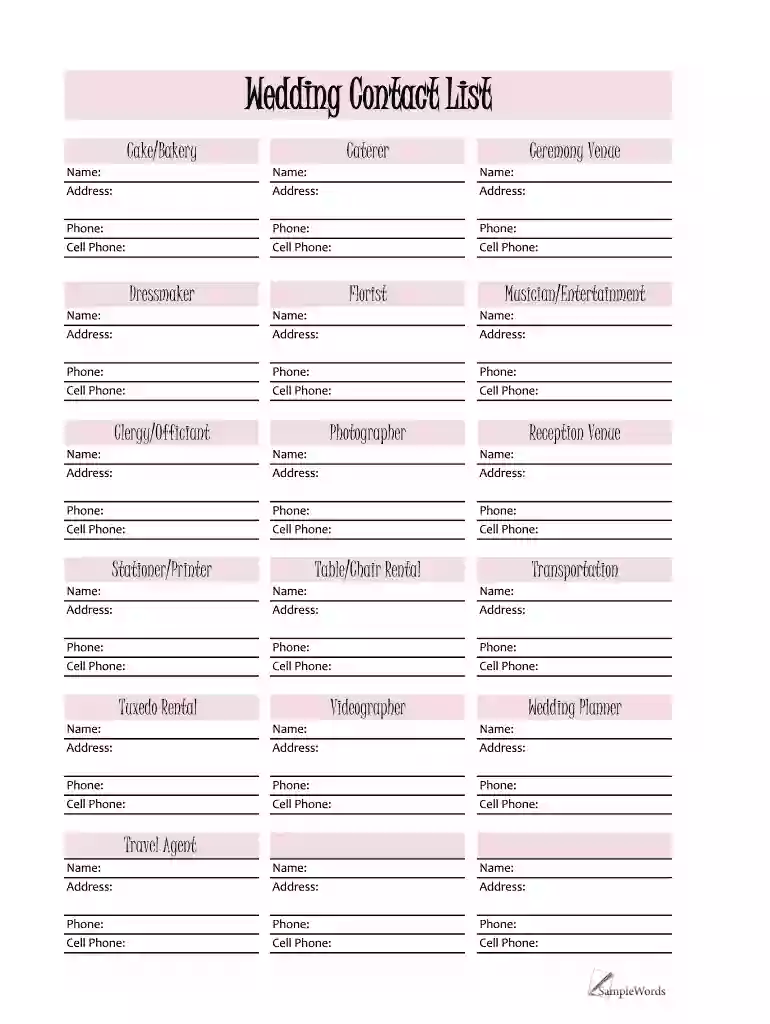
Type text, add images, blackout confidential details, add comments, highlights and more.

Draw your signature, type it, upload its image, or use your mobile device as a signature pad.

Send vendor list template via email, link, or fax. You can also download it, export it or print it out.
A wedding vendor list template is an organized document designed to help couples plan and coordinate their wedding by cataloging essential service providers. This template typically includes various vendor categories such as caterers, florists, photographers, and venues, facilitating effective management of all services related to the event. By utilizing a wedding vendor contact list template, couples can make informed choices, avoid missing important details, and maintain comprehensive oversight throughout the planning process.
Key components often found in a wedding vendor list template include:
This template serves as a practical and effective organizational tool, essential for any couple looking to streamline their wedding planning process.
Using a wedding vendor list template effectively requires organization and a strategic approach to gathering information. Follow these steps to ensure you maximize its utility in your planning:
By following these steps, couples can efficiently navigate their wedding planning, ensuring vital services are secured and nothing important is overlooked.
To maximize the utility of your wedding vendor list template, follow these comprehensive steps for completion:
Gather Vendor Categories: Identify and list all relevant vendor types needed for your wedding. Break these into categories to simplify the filling process:
Establish Contact Protocols: For each vendor type, collect details systematically:
Document Pricing and Packages: Record any relevant quotes received or package details offered:
Track Communication: Create sections within the template for tracking interactions:
Finalize Decisions: Mark vendors as "booked" or "pending" to keep track of your choices:
Each of these steps aims to ensure a comprehensive overview of all vendor-related decisions made during the wedding planning process.
Understanding the specific terminology associated with wedding vendor lists will enhance your experience in completing this template effectively. Important terms include:
Familiarity with these terms will enhance communication with vendors and ensure clarity throughout the planning phase.
Using a wedding vendor list template can significantly streamline the planning process by providing practical examples. Here are some scenarios showcasing its usefulness:
Scenario One: Booking a Photographer
A couple is interested in a specific photographer. They use the template to document the photographer’s portfolio link, contact number, and consultation date. Following the meeting, they add their thoughts about the photographer's style and pricing, enabling a structured decision-making process.
Scenario Two: Menu Selection with Caterers
During the selection process for caterers, the couple fills out the template with detailed notes on menu options, pricing per plate, and tasting dates. This organization allows them to compare various caterers side by side, making it easier to choose the best fit for their wedding vision.
Scenario Three: Managing Vendor Contracts
Once vendors begin to be booked, the template can be updated with contract details and payment due dates, ensuring the couple stays on top of their financial commitments. They can include reminders or alert systems within the document to ensure nothing is overlooked as the wedding date approaches.
These examples demonstrate how a wedding vendor list template can act as a central hub for data, feedback, and scheduling, simplifying the entire planning process.
We've got more versions of the vendor list templates form. Select the right vendor list templates version from the list and start editing it straight away!
| Versions | Form popularity | Fillable & printable |
|---|---|---|
| 2010 | 4 Satisfied (44 Votes) |
Managing your forms with DocHub this way is extremely easy once you have downloaded its extension for Google Chrome. Navigate to the Chrome Web Store and install DocHub - Sign PDF from Gmail to get it. Give our tool access to your Google account, and then open an email with the wedding vendor contact list template attached and point to the file with your cursor - the DocHub extension key will automatically show up there. Click on it to open your form in our editor. Make any required edits, complete the blanks, and click Sign to create your legally-binding electronic signature.
Document editing with DocHub is equally convenient on desktop and mobile devices. You just need an internet browser to edit your wedding vendor list template free on Android. Open our site and sign in to access the tools you require. Add your file and introduce your intended modifications. After that, you can keep your form in your file storage or send it out right away.
At DocHub, your data security is our priority. We follow HIPAA, SOC2, GDPR, and other standards, so you can work on your documents with confidence.
Apr 1, 2021 A wedding planner spreadsheet has sections for vendors, expenses, schedules, and more. Below is a list of free wedding planning spreadsheets.
Vendor List Template. Vendor Type Company. Name. Contact. Name - required Wedding. Planner. Day of. Coordinator. Photo booth. Rental. Company. Scheduled pickRead more


