




01. Edit your form online
Type text, add images, blackout confidential details, add comments, highlights and more.

Type text, add images, blackout confidential details, add comments, highlights and more.

Draw your signature, type it, upload its image, or use your mobile device as a signature pad.

Send it via email, link, or fax. You can also download it, export it or print it out.
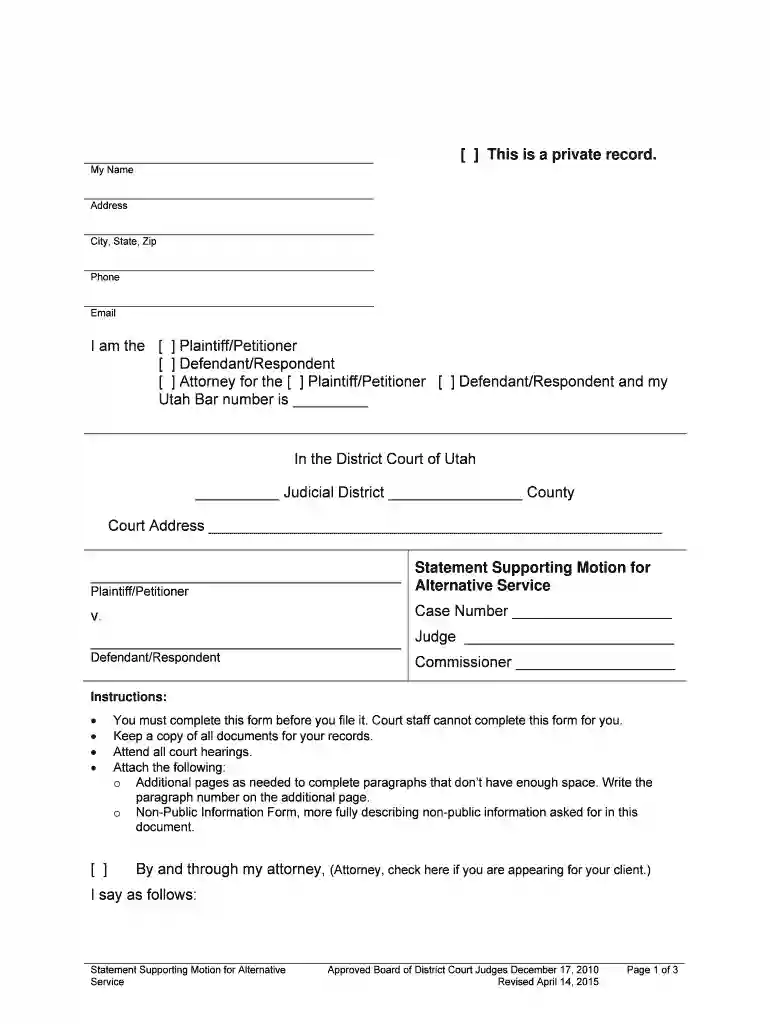
The "Statement Supporting Motion for" is a legal document typically used in court proceedings to justify a specific request or action from the court. This form is often submitted by a plaintiff or their attorney when seeking alternative methods for serving a defendant who cannot be located through traditional means. It provides a structured opportunity to present necessary details about why the motion is being filed, making the underlying request more understandable and persuasive to the reviewing judge or legal authority.
A comprehensive explanation of the essential elements within the "Statement Supporting Motion for" helps in understanding its purpose and the information it must contain:
Completing the "Statement Supporting Motion for" form involves several key steps:
Legally, a "Statement Supporting Motion for" provides the court with a clear and justified rationale for granting the request outlined in the motion. It aligns with legal standards and is used to illuminate the reasons behind seeking judicial intervention. By presenting documented attempts to locate and serve the defendant, it helps protect the due process rights of all involved parties under the law, ensuring that the court's directives are adhered to fairly.
The form is primarily utilized by plaintiffs or their legal representatives during legal proceedings when traditional methods of serving documents are unsuccessful. It can also be used by individuals representing themselves in court (pro se litigants), providing they understand the legal nuances involved. Attorneys leverage this document to demonstrate compliance with legal requirements and to move forward with a case when a defendant is evasive or unresponsive.


Rules and requirements for completing the "Statement Supporting Motion for" can vary significantly by state:
Consider scenarios where this form would be particularly applicable:
Understanding specific legal terminology is crucial for effectively filling out the form:
When filing a "Statement Supporting Motion for," various documents should accompany the submission to strengthen the motion:
We've got more versions of the Statement Supporting Motion for form. Select the right Statement Supporting Motion for version from the list and start editing it straight away!
At DocHub, your data security is our priority. We follow HIPAA, SOC2, GDPR, and other standards, so you can work on your documents with confidence.
I DocHub that I filed with the court and am serving a copy of this Statement Supporting Motion on the following people. Persons Name. Service Method. ServiceRead more
An affidavit or declaration used to support or oppose a motion must be made on personal knowledge, set out facts that would be admissible in evidence,


