
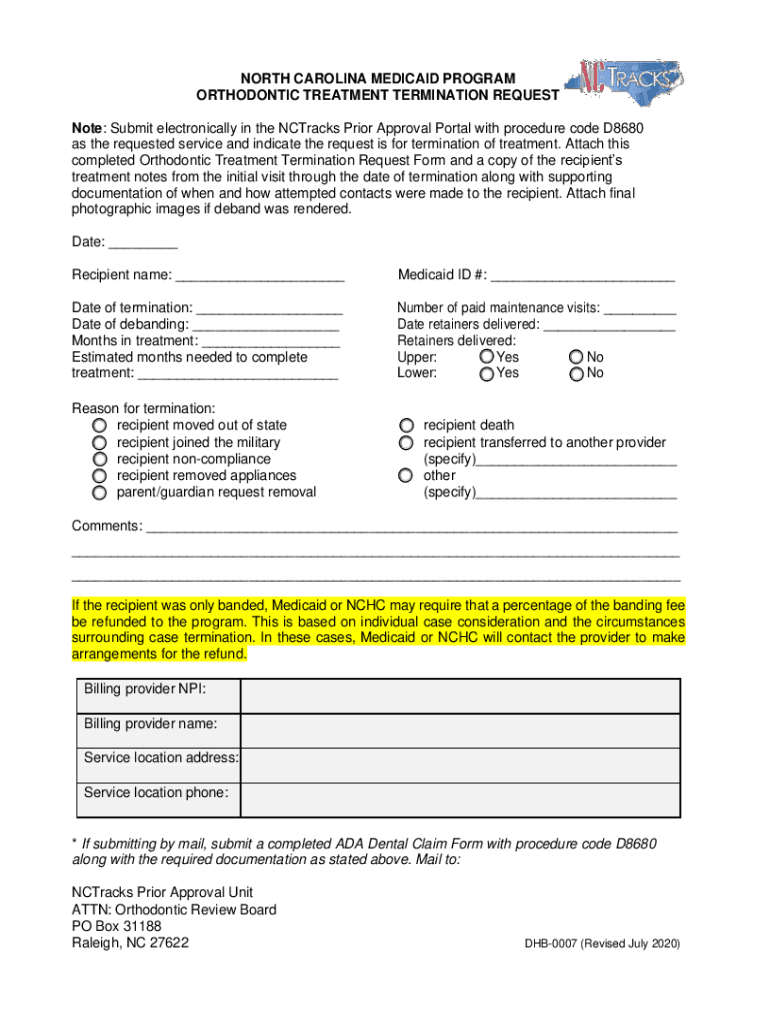







Definition and Meaning of "Claims and BillingNC Medicaid"
"Claims and BillingNC Medicaid" refers to the process and procedures involved in submitting claims for healthcare services and reimbursements under the North Carolina Medicaid program. This program assists healthcare providers in receiving payment for services rendered to Medicaid beneficiaries. Providers must adhere to specific guidelines and requirements when billing to ensure timely and accurate payments. This document is essential for understanding the reimbursement process, related terminology, and required compliance standards in North Carolina.
How to Use "Claims and BillingNC Medicaid"
Using the "Claims and BillingNC Medicaid" form involves a systematic process to ensure compliance with state regulations. Healthcare providers must familiarize themselves with the billing codes and procedures specific to North Carolina Medicaid. The following steps can guide users through the process:
- Verify Eligibility: Ensure the patient is eligible for Medicaid coverage at the time services are rendered.
- Identify Billing Codes: Utilize the appropriate ICD and CPT codes to reflect the services provided.
- Prepare Documentation: Gather necessary documentation, including treatment notes and prior authorizations.
- Submit Claims: Use the online portal for electronic claims submissions or the appropriate form for paper submissions.
- Track Submissions: Monitor the status of claims through the Medicaid Management Information System (MMIS).
Healthcare providers must ensure accuracy in all entries to avoid claim denials or delays.
Obtaining "Claims and BillingNC Medicaid" Forms
The forms needed for the "Claims and BillingNC Medicaid" process can be accessed in several ways:
- Through North Carolina Medicaid Website: Providers can download necessary forms and guidelines directly from the official state Medicaid site.
- Provider Enrollment: Upon enrollment with North Carolina Medicaid, providers are usually supplied with essential documentation and access credentials for electronic resources.
- Provider Support: Local Medicaid offices offer support and guidance in acquiring and completing necessary paperwork.
These resources enable healthcare providers to initiate the billing process swiftly and efficiently.
Steps to Complete "Claims and BillingNC Medicaid"
To complete the "Claims and BillingNC Medicaid" process accurately, follow these detailed steps:
- Collect All Required Information: Patient details, service dates, and specific treatment documentation.
- Fill Out the Form: Ensure all sections of the form are completed correctly with no omissions.
- Review and Verify: Double-check all entries for accuracy and completeness.
- Submit the Form: Use the preferred submission method, electronic or paper, as per guidelines.
- Follow Up: Regularly check claim status and respond to any queries or requests for additional information.
- Correct Denials: If a claim is denied, investigate the reason, correct any issues, and resubmit promptly.
These steps ensure thoroughness and precision in claim submission, minimizing errors or rejections.
Key Elements of "Claims and BillingNC Medicaid"
Understanding the vital components of "Claims and BillingNC Medicaid" is crucial for accurate claims processing. Key elements include:
- Patient Information: Complete and accurate identification details for the patient.
- Service Provider Details: Information about the healthcare provider or facility.
- Date of Service(s): Specific dates when services were provided.
- Billing Codes: Appropriate medical codes that specify the services rendered.
- Charges and Expenses: Detailed listing of costs associated with the provided services.
These elements are critical in ensuring claims are processed without discrepancies.
Legal Use of "Claims and BillingNC Medicaid"
The legal use of the "Claims and BillingNC Medicaid" form is governed by state and federal regulations. Healthcare providers must:
- Comply with HIPAA: Adhere to privacy and security rules when handling patient information.
- Follow Medicaid Guidelines: Ensure all claims conform to state-specific Medicaid billing procedures.
- Maintain Accurate Records: Keep detailed records of services and related documentation for auditing purposes.
Non-compliance can result in legal penalties, including fines or exclusion from the Medicaid program.
State-Specific Rules for "Claims and BillingNC Medicaid"
North Carolina has specific rules and guidelines for Medicaid billing, which must be strictly followed:
- Coding Requirements: Use North Carolina's approved coding standards for claims.
- Timely Filing: Submit claims within the state-mandated deadlines to avoid denials.
- Authorization Protocols: Obtain prior authorization for certain services as required by state regulations.
Understanding these state-specific rules is vital for successful claims processing under North Carolina Medicaid.
Examples of Using "Claims and BillingNC Medicaid"
Practical examples illuminate how "Claims and BillingNC Medicaid" is used in real-world settings:
- Orthodontic Treatment Termination: A provider may need to submit a request for terminating orthodontic treatment under Medicaid, requiring detailed records and justifications.
- Emergency Services Billing: Filing claims for emergency medical services provided to Medicaid beneficiaries, which might have different requirements and expedited processing.
- Chronic Care Services: Billing for ongoing treatment of chronic conditions, involving coordination between providers for accurate coding and claim submission.
These examples underscore the diversity of scenarios covered under "Claims and BillingNC Medicaid," each with unique requirements and documentation needs.




