







Definition and Purpose of Fillable OCFA Forms
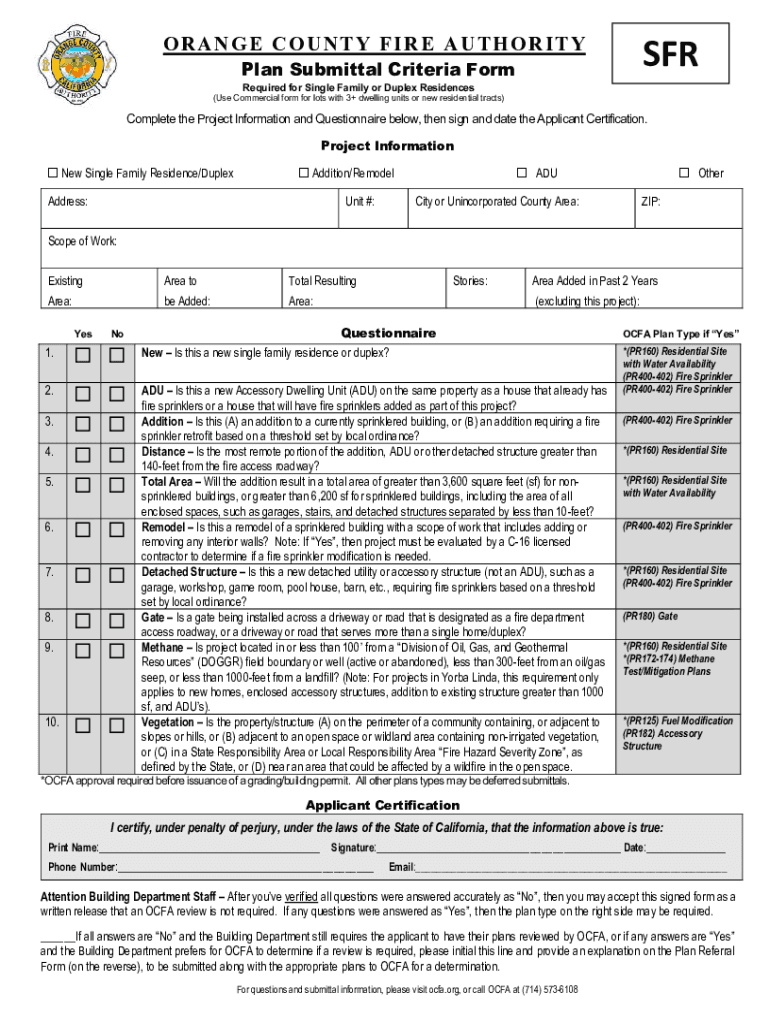
The Fillable OCFA Submittal Criteria Form Residential is designed to streamline the submission process for single-family or duplex residences under review by the Orange County Fire Authority. This form is critical in gathering project-specific information, assessing fire safety requisites, and certifying applications. It includes detailed fields for project data, fire safety questionnaires, and applicant attestations. By adhering to these criteria, applicants ensure compliance with OCFA's standards, minimizing potential review delays.
Steps to Complete the Fillable OCFA Form
-
Gather Required Information: Before starting, ensure you have all necessary project data, including construction details, fire safety measures, and site-specific hazards.
-
Fill Out Project Information: Enter details such as the project address, applicant contact information, and a brief description of the work.
-
Complete the Fire Safety Questionnaire: Address aspects like fire sprinkler requirements, setback standards, and proximity to wildland areas or hazardous materials.
-
Certify the Application: The applicant must sign and date the form, confirming the accuracy of the provided information.
-
Submit the Form: Depending on OCFA's requirements, submit the completed form either online, via mail, or in person.
Who Typically Uses the Fillable OCFA Form
This form is primarily used by architects, builders, and contractors involved in residential projects within Orange County that require fire authority oversight. City officials also engage with this document to ensure projects meet local fire safety standards. Property owners who are actively involved in the planning or renovation of their residences may also utilize this form to verify compliance with OCFA requirements.


Key Elements of the Fillable OCFA Form
-
Project Information Section: Captures essential details about the site, including location and client contact information.
-
Fire Safety Questionnaire: Evaluates the necessity for fire safety installations and checks compliance with local safety codes and standards.
-
Applicant Certification: A declaration that all form entries are accurate and complete.
Legal Use and Compliance
Completing this form correctly is essential for legal compliance with Orange County's fire safety regulations. It ensures that all residential projects adhere to prescribed safety measures, mitigating risks associated with fire hazards. Ethical completion and submission of this form protect both applicants and jurisdictions involved in the project's approval process.
Submission Methods: Online vs. In-Person
The OCFA form can be submitted through multiple channels:
-
Online Submission: Convenient for those with digital access and allows quick processing and response.
-
In-Person Submission: May be necessary if additional documentation or verification is required on-site.
-
Mail Submission: Suitable for applicants who prefer physical documentation or face geographical constraints.
Important Terms Related to the Fillable OCFA Form
-
Setback Requirements: Distances that must be maintained between structures and property lines for fire safety.
-
Hazard Proximity: Assessments related to the project's nearness to areas such as wildland or methane zones.
-
Fire Sprinkler Systems: A requirement for certain structures to ensure adequate fire mitigation measures are in place.
Examples of Using the Fillable OCFA Form
-
A construction company submits the form to certify the fire safety compliance of a newly built duplex.
-
An independent architect uses the form to gain approval for a renovation project that changes the layout of a residential home.
-
City officials request a review of the OCFA form to ensure community fire safety standards are consistently applied across new developments.
Penalties for Non-Compliance
Failure to accurately complete and submit the Fillable OCFA Form can lead to significant project delays, fines, and even legal action. Non-compliance risks undermine public safety and can result in halted construction until the project meets specified safety criteria. Should discrepancies be found, revision submissions will be mandated, potentially impacting project timelines and costs.




