




01. Edit your form online
Type text, add images, blackout confidential details, add comments, highlights and more.

Type text, add images, blackout confidential details, add comments, highlights and more.

Draw your signature, type it, upload its image, or use your mobile device as a signature pad.

Send it via email, link, or fax. You can also download it, export it or print it out.
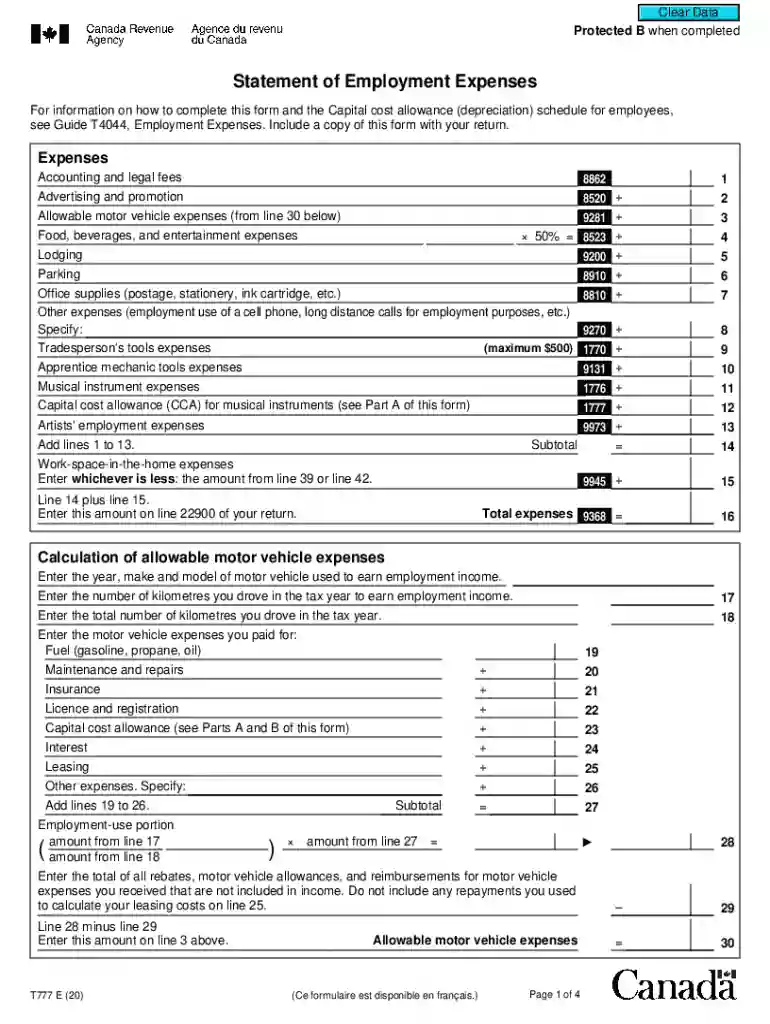
The Statement of Employment Expenses is a tax-related document used by employees in the United States to report various work-related expenses. These expenses can include items such as accounting fees, parking, office supplies, and motor vehicle expenses. This form provides a detailed overview of how to calculate allowable expenses for tax purposes, ensuring that employees can accurately claim their eligible deductions. The form is designed to assist both employees and employers in understanding what constitutes an employment expense and how it should be reported.
When completing the Statement of Employment Expenses, several critical elements need attention:
Each of these elements plays a vital role in determining the overall tax deductions an employee can claim.
By following these steps, employees can ensure they report expenses correctly and maximize their potential deductions.
The IRS provides specific guidelines on what constitutes an allowable employment expense. Some of the key IRS conditions include:
Familiarizing oneself with these guidelines ensures compliance and helps avoid potential issues with tax submissions.
Completing the Statement of Employment Expenses accurately requires various supporting documents:
These documents not only justify claims but also act as evidence in case of an IRS audit.
Several software options can assist in filing the Statement of Employment Expenses:
Using these software solutions simplifies form completion and ensures data accuracy.
Failure to properly complete the Statement of Employment Expenses can lead to significant consequences:
To mitigate such risks, it is critical to adhere strictly to IRS guidelines and ensure full and accurate reporting.
Various taxpayer profiles benefit significantly from using the Statement of Employment Expenses:
Recognizing these scenarios helps employees identify when they should consider utilizing this form.
We've got more versions of the Statement of Employment Expenses form. Select the right Statement of Employment Expenses version from the list and start editing it straight away!
At DocHub, your data security is our priority. We follow HIPAA, SOC2, GDPR, and other standards, so you can work on your documents with confidence.
Documentation: Employees must submit any necessary expenditure with appropriate supporting documentation within 30 calendar days after incurring the expense.Read more
Mar 31, 2026 Employees file this form to deduct ordinary and necessary expenses for their job. An ordinary expense is one that is common and accepted inRead more
May 2, 2017 A new box 12 Code FF has been added to report the total amount of permitted benefits under a qualified small employer health reimbursement.Read more


