
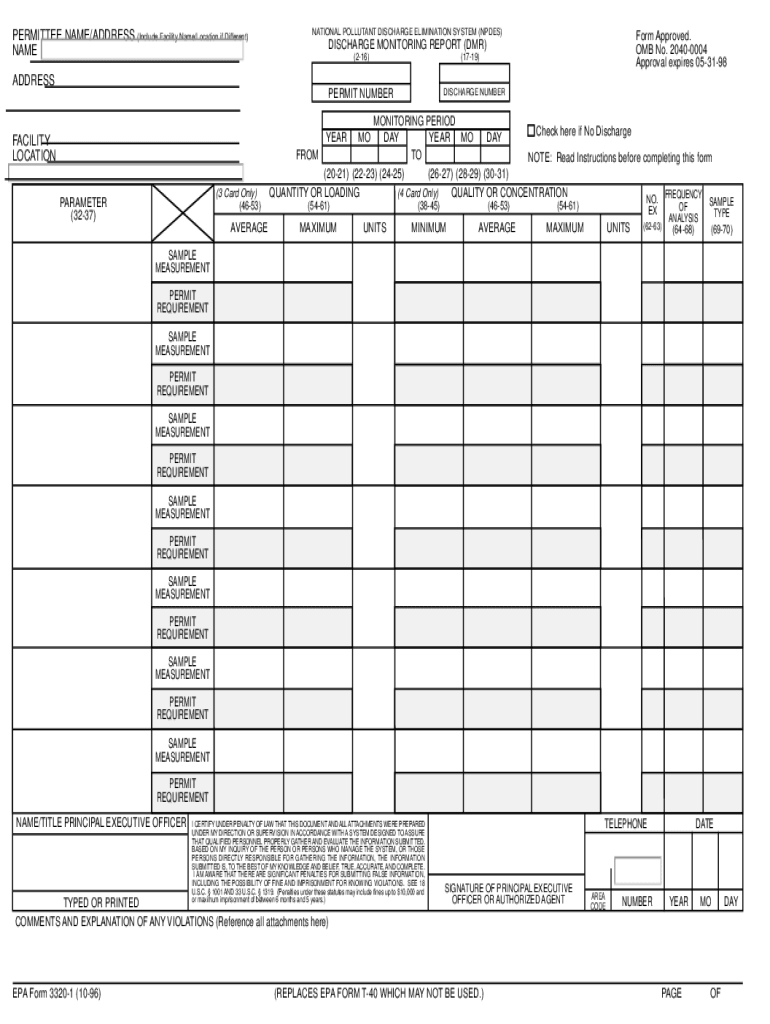







Definition and Purpose of the Blank DMR Form
The blank Discharge Monitoring Report (DMR) form is an essential environmental compliance document mandated by the National Pollutant Discharge Elimination System (NPDES). It serves as a standardized tool for facilities that discharge pollutants into U.S. waters, allowing them to report their monitoring data. This form is crucial for ensuring that discharges adhere to environmental regulations, helping to protect the nation's water resources. Through this form, permit holders must provide details on facility and discharge characteristics, sample measurements, and compliance status, thus maintaining transparency and accountability in environmental practices.
How to Use the Blank DMR Form
Using the blank DMR form involves several critical steps to ensure complete and accurate reporting. First, users must verify they have the most current version of the form, as regulations can change. They begin by filling out the facility information section, noting the location, permit number, and reporting period. The core of the form requires input of monitoring data, including types of pollutants, concentration levels, and monitoring methodology. Precision is vital here to avoid penalties. The form typically ends with a certification section where an authorized individual must sign, confirming the accuracy of all provided information.
Steps to Complete the Blank DMR Form
- Gather Required Information: Start by collecting all relevant data, including facility details, previous compliance reports, and monitoring results.
- Fill Out Facility Information: Enter the facility's name, address, and permit number at the top of the form.
- Detail Monitoring Data: Precisely input pollutant levels, sample methods, and collection dates. Ensure all data corresponds with recorded samples.
- Review Compliance Status: Assess whether the data align with permit conditions and note any discrepancies.
- Certify the Document: A responsible party must sign the form to certify its accuracy, marking completion.
- Submit the Form: Choose a submission method, ensuring timely delivery to the appropriate environmental agency.
Important Terms Related to the Blank DMR Form
- NPDES: National Pollutant Discharge Elimination System, which oversees the regulatory framework for discharges into U.S. waters.
- Permit Holder: The entity legally responsible for adhering to discharge regulations.
- Sample Measurement: Quantitative analysis of pollutants in discharge samples.
- Compliance Status: Indicates whether discharge levels meet permit conditions.
- Certification Statement: A formal attestation by an authorized individual on the form's accuracy.
Legal Use of the Blank DMR Form
The legal use of the blank DMR form is governed by environmental laws designed to protect water quality in the United States. The Clean Water Act requires facilities to obtain permits if they discharge pollutants into surface waters. Filling out the DMR accurately and honestly is legally binding. Falsifying information can result in severe penalties, including fines and possible imprisonment. Compliance with DMR submission is not only a regulatory requirement but also a legal obligation that helps industries contribute to environmental sustainability.
Penalties for Non-Compliance
Failure to accurately complete and submit the blank DMR form can result in significant legal and financial penalties. Non-compliance may lead to fines, which can accumulate daily for ongoing violations. In addition to financial repercussions, entities may face legal actions, including injunctions or suspension of operations. Severe cases of negligence or intentional deception may even result in criminal charges. Facilities are strongly advised to adhere strictly to submission guidelines to avoid these penalties and contribute positively to environmental protection efforts.
Who Typically Uses the Blank DMR Form
The blank DMR form is primarily used by industries and facilities that discharge wastewater or other pollutants directly into natural water bodies. Common users include manufacturing plants, wastewater treatment facilities, and agricultural enterprises. These entities are typically required to monitor their discharges closely and report their findings to ensure they remain within the allowed environmental limits. Additionally, environmental consulting firms and compliance officers often assist in preparing these reports to ensure precision and conformity with legal standards.


Submission Methods for the Blank DMR Form
Facilities can submit the completed DMR form through various methods, tailored to suit convenience and technological capabilities:
- Online Submission: Utilizes electronic reporting systems provided by environmental agencies, offering a streamlined and efficient process.
- Mail Submission: Involves printing and mailing a physical copy to the designated agency, often chosen by facilities with limited online access.
- In-Person Submission: Direct delivery to the agency's office might be preferred for those seeking immediate confirmation of receipt.
Each method has its guidelines, and it's imperative to follow the specific instructions to ensure successful submission and compliance.


