
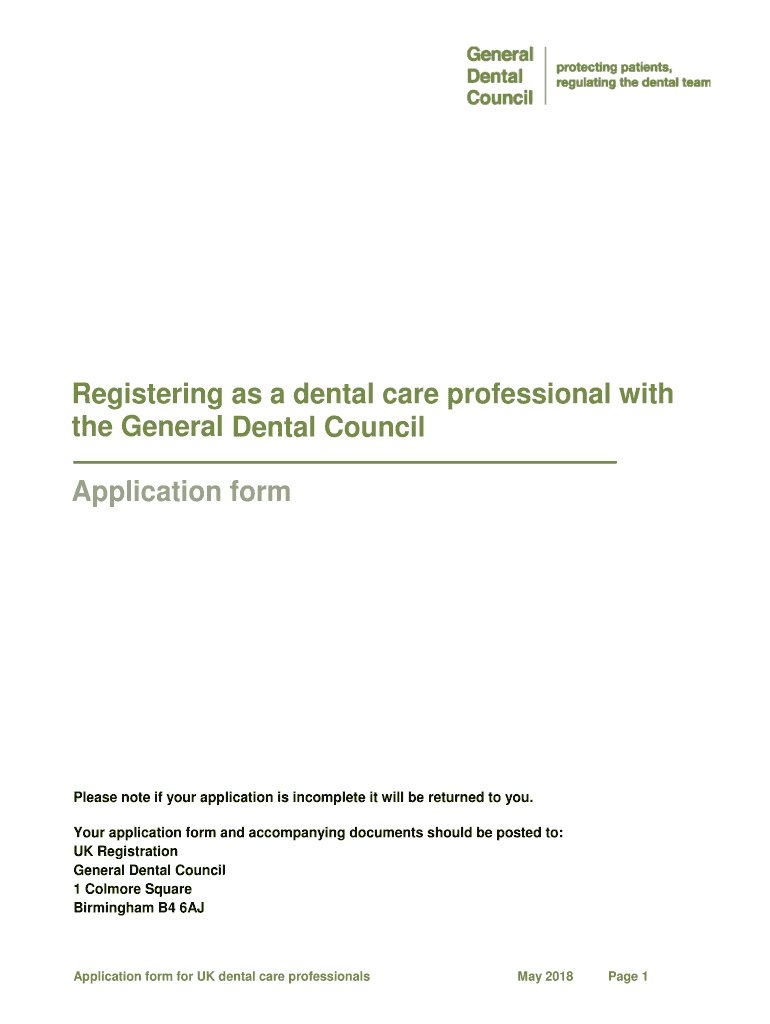







Definition and Purpose of Registering as a Dental Care Professional
The process of registering as a dental care professional involves applying for certification with the appropriate regulatory body to legally practice dental care in a given jurisdiction. In the United States, this may involve national or state-specific requirements, depending on where the professional intends to work. This registration ensures that all practicing dental care professionals meet certain educational and professional standards.
Steps to Complete the Registration Process
- Educational Requirements: Provide transcripts or proof of education from an accredited dental program. This may include degree certificates and course outlines.
- Examinations: Successfully complete any required exams, such as the National Board Dental Examination (NBDE) or a state-specific licensing exam.
- Application Form: Fill out the registration application form accurately, including all relevant personal and professional information.
- Proof of Identity: Submit certified copies of official ID documents, such as a passport or driver’s license.
- Background Check: Complete any necessary background checks, which might include fingerprinting or providing character references.
- Fee Payment: Pay the applicable fees for processing the registration application.
Required Documents for Registration
- Transcripts and proof of dental qualifications
- Completed application form
- Government-issued ID copy
- Results of the required examinations
- Background check documentation
- Payment receipt for application fees
Why Registering is Essential for Dental Care Professionals
Registering as a dental care professional is crucial for ensuring patient safety and upholding the integrity of the dental profession. Registration confirms that the professional has achieved the necessary education and practical experience to provide competent and ethical care. Without registration, a professional may not legally practice, risking penalties or legal action.
Eligibility Criteria for Prospective Registrants
Eligibility typically requires the completion of an accredited dental program and passing scores on required examinations. Applicants must also meet age and legal residency requirements of the state in which they are applying. Certain jurisdictions may have additional criteria, such as proof of health insurance or malpractice coverage.


Submission Methods for the Application
- Online: Many boards offer online submission portals for digital applications, which streamline the process and might include options for paying fees electronically.
- Mail: Some applicants may opt to send physical copies of their documents and application via mail. This method typically requires additional time for processing.
- In-Person: Certain jurisdictions may allow or require in-person submission of applications, providing a direct opportunity to address any issues with documentation.
Who Issues the Registration for Dental Care Professionals
In the United States, individual state dental boards or corresponding regulatory agencies are responsible for issuing registrations. These bodies set the criteria for licensing and maintain a registry of all licensed professionals within their states. They ensure compliance with state and federal laws regarding dental practice.
Penalties for Non-Compliance
Failure to register correctly can lead to significant penalties, including fines, suspension from practice, or even revocation of the right to practice. Practicing without registration is considered illegal and can have severe professional repercussions, including damage to one's professional reputation and legal challenges.
Legal Use and Protection of the Registration
Once registered, dental professionals must comply with ongoing legal obligations, such as adhering to standard practice regulations and renewing their licenses regularly. Non-compliance can lead to disciplinary actions or revocation of their registration. Professionals should also be acquainted with legal protections regarding patient data privacy and malpractice insurance.
Digital vs. Paper Version of Applications
The trend is moving towards digital applications due to convenience and efficiency. Digital submissions can streamline the application process and lower chances of errors. However, some states may still support or require paper applications, particularly for areas with limited digital infrastructure. Paper versions require careful handling to ensure all documents are legible and complete upon submission.




