







Definition & Meaning
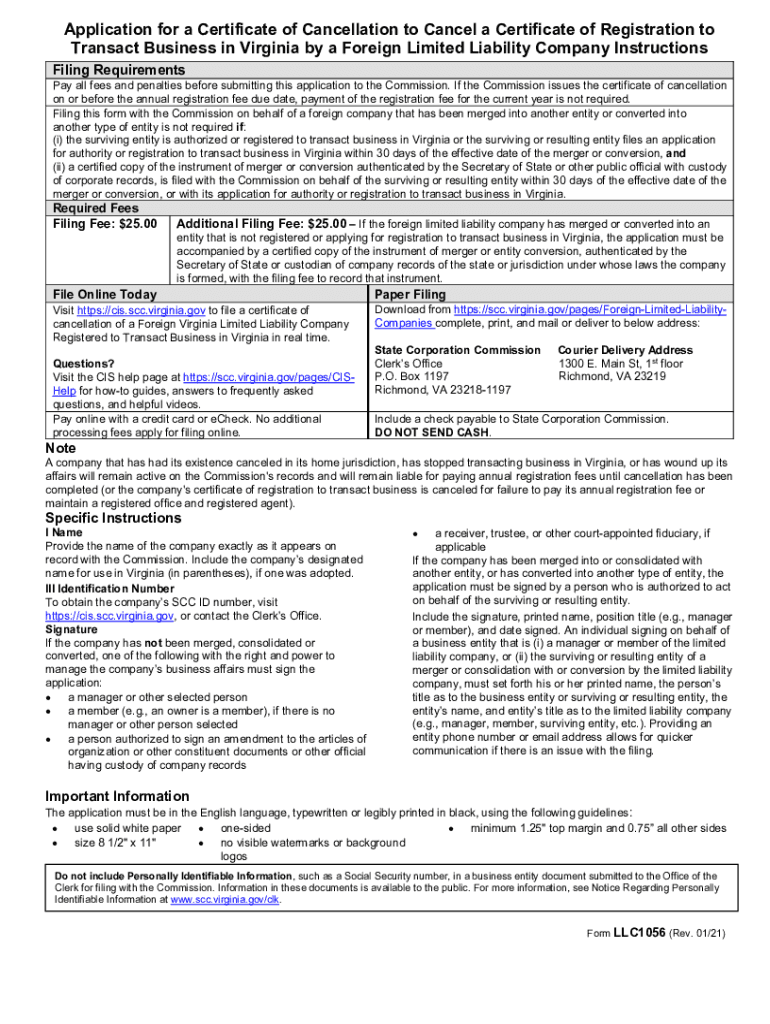
The "Application for a Certificate of Cancellation to Cancel" is a formal process by which a business entity, such as a foreign limited liability company (LLC), officially terminates its registration to conduct business in a specific U.S. state. This application is crucial when a business decides to dissolve its operations within that state, ensuring that it is no longer liable for state business taxes and regulatory requirements. The cancellation reflects that the business will cease operations and nullifies its privileges within the jurisdiction.
Key Considerations
- The process is essential for avoiding unnecessary fees and legal obligations.
- It's applicable primarily to foreign entities registered in states outside their incorporation.
- Ensures the company's obligations, such as taxes and debts, are settled prior to cancellation.
How to Use the Application for a Certificate of Cancellation to Cancel
Proper use of this application involves accurately completing the required sections to facilitate the cancellation of a company's operating authority in the state. Businesses must obtain the form, fill in all necessary details, and ensure adherence to state-specific instructions for submitting the completed application.
Step-by-Step Usage
- Collect Required Information: Gather all relevant company details such as the legal name, registration number, and state of origin.
- Complete the Application: Carefully fill out each section of the form, ensuring accuracy and completeness.
- File the Application: Submit through the preferred method (online, mail, or in-person) based on state requirements.
- Confirm State-Specific Requirements: Some states may require additional documentation or certifications to accompany the application.
Steps to Complete the Application for a Certificate of Cancellation to Cancel
Completing the application involves multiple steps, ensuring that each is executed correctly will simplify the process and prevent delays or legal complications.
Detailed Process
- Download the Form: Obtain the application from the state's business regulation or Secretary of State website.
- Read Instructions Carefully: Review any state-provided guidelines to comprehend specific requisites.
- Fill Out Form Sections:
- Business Name: Enter the legal business name as registered.
- Registration Number: Include the state-issued registration ID.
- Reason for Cancellation: Provide a brief reason for ceasing operations.
- Pay Required Fees: Submit associated cancellation fees as per state regulations.
- Sign Document: Ensure an authorized representative signs the application, complying with signature requirements.
Who Typically Uses the Application for a Certificate of Cancellation to Cancel
This application is primarily utilized by businesses that wish to terminate their operations in a specific state. It is predominantly relevant for foreign entities operating outside their incorporation state, ensuring compliance with local laws and tax regulations by officially withdrawing their registration.


Typical Users
- Foreign Limited Liability Companies (LLCs): Those registered in non-incorporation states.
- Corporations: Companies looking to dissolve specific state operations.
- Partnerships: Ending state-specific partnerships that no longer require state registration.
Application Process & Approval Time
Understanding the application process and expected timelines helps businesses plan better and ensure compliance with the local authorities.
Process & Timeline
- Application Review: Once submitted, applications are reviewed by the state authorities to verify compliance and accuracy.
- Approval Notification: Businesses receive confirmation that their cancellation has been processed. The timeframe varies by state, typically ranging from one to four weeks.
- Issuance of Certificate: Upon approval, a Certificate of Cancellation is issued, confirming the termination of the business entity’s authority within the state.
State-Specific Rules for the Application for a Certificate of Cancellation to Cancel
Regulations governing the cancellation process can vary significantly between states. It's important for businesses to familiarize themselves with these variations to ensure compliance and avoid unnecessary complications.
Examples of State Variations
- Virginia: Requires all outstanding fees and penalties to be paid before application submission.
- California: May require tax clearances or additional documentation.
- Texas: Offers both online and paper filing but has specific requirements for in-person submissions.
Required Documents
Submitting the application involves providing specific documents that verify the business's eligibility and its intent to cancel its registration.
Commonly Required Documents
- Certificate of Good Standing: Some states require proof the business was in good standing prior to cancellation.
- Final Tax Returns: Ensuring all business taxes have been filed and paid.
- Company Resolutions: Documentation proving that the company's management agreed to the cancellation.
Business Entity Types Impacted
Understanding the types of entities that most frequently engage in this process helps outline its utility and relevance in a broader business context.
Relevant Business Types
- Corporations: Those choosing to cease operations in certain jurisdictions.
- Limited Liability Companies (LLCs): Frequently engage in cross-state business modifications, often needing to adjust for financial or operational tactics.
- Partnerships: Opting for state-specific dissolution to streamline or focus operations in other regions.




