
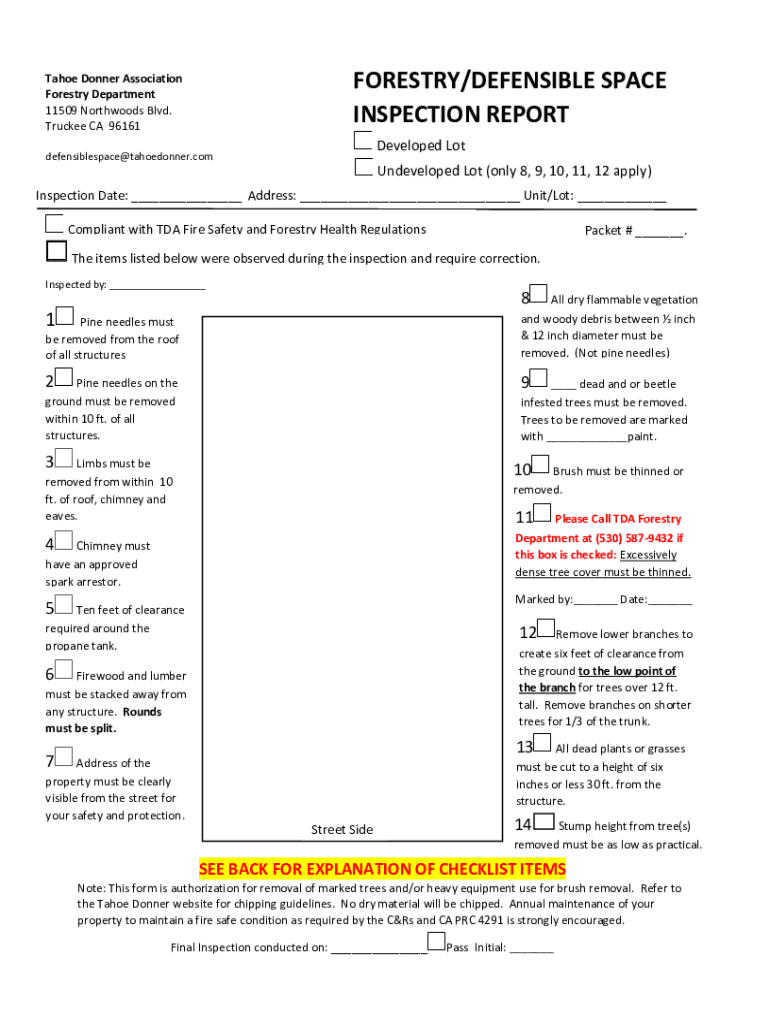







Definition and Meaning
A Forestry/Defensible Space Inspection Report is a document prepared by organizations such as the Tahoe Donner Association to ensure properties comply with fire safety and forestry health regulations. It serves as a comprehensive record that outlines fire prevention measures and addresses the management of vegetation around developed and undeveloped lots. By maintaining a defensible space, property owners can significantly reduce the risk of wildfire damage. The report typically includes assessments of flammable vegetation removal, chimney maintenance, and guidelines for tree and brush management to maintain safety and prevent fire spread.
How to Use the Forestry/Defensible Space Inspection Report
Property owners and managers use the Forestry/Defensible Space Inspection Report to guide them in aligning with local fire safety regulations. This involves:
- Conducting Property Assessments: Utilize the report's criteria to inspect property surroundings for potential fire hazards.
- Implementing Recommended Actions: Remove flammable materials and maintain vegetation according to the detailed guidelines.
- Periodic Compliance Checks: Regularly revisit the report to ensure ongoing compliance and make necessary adjustments as conditions change.
The report serves as both a guideline and a compliance tool to promote safety and minimize fire risks.
Steps to Complete the Forestry/Defensible Space Inspection Report
Completing the Forestry/Defensible Space Inspection Report involves several critical steps:
- Initial Property Survey: Examine the property for any immediate fire hazards or non-compliant areas.
- Documentation of Findings: Record observations and compare them against the report's recommendations.
- Implementation of Corrections: Address identified issues, such as trimming overgrown vegetation or installing chimney caps.
- Final Review and Submission: Perform a last review of the corrections made and submit the document to the relevant authority, ensuring all recommendations have been met.
Key Elements of the Forestry/Defensible Space Inspection Report
The report generally includes several crucial components:
- Vegetation Management: Detailed guidance on removing dead plants, thinning trees, and maintaining proper lawn care.
- Firebreak Maintenance: Instructions on creating effective barriers to slow or prevent the spread of fires.
- Structural Safety Measures: Recommendations for securing structures against fire, such as using fire-resistant materials and maintaining chimneys.
- Compliance Checklist: A comprehensive list to ensure all requirements are met before submission.
Each of these elements is vital in crafting a defensible space and ensuring property safety.
Who Typically Uses the Forestry/Defensible Space Inspection Report
Primarily, the report is utilized by the following groups:
- Property Owners: Those responsible for the maintenance and safety of their residential or commercial properties use the report to guide safety measures.
- Homeowners Associations (HOAs): Organizations such as the Tahoe Donner Association leverage the report to enforce community-wide safety protocols and compliance.
- Fire Safety Officials: Employed by local governments to monitor adherence to regulations and provide assistance or guidance where necessary.
These stakeholders all play pivotal roles in implementing and upholding fire safety standards.


Legal Use and Compliance of the Forestry/Defensible Space Inspection Report
The legal framework surrounding the report requires adherence to local, state, and federal fire safety standards. Compliance involves:
- Understanding of Regulations: Familiarity with local ordinances and requirements that dictate defensible space parameters.
- Certification Requirements: Completion of necessary certifications or approvals post-inspection to confirm legal compliance.
- Penalties for Non-Compliance: Awareness of possible fines or other legal consequences for failing to meet specified standards.
Property owners must ensure their use of space aligns with all enacted safety guidelines.
Obtaining the Forestry/Defensible Space Inspection Report
There are several ways to secure the inspection report:
- Local Government Offices: Visit municipal or county offices, which may provide the report directly or through an online platform.
- HOAs: For communities like Tahoe Donner, the association may distribute the report to residents.
- Online Resources: Public or authorized websites may offer downloads of the applicable forms.
Access to these reports facilitates smoother compliance processes.
Examples of Using the Forestry/Defensible Space Inspection Report
Practical applications of the report include:
- Wildland-Urban Interface Areas: Properties bordering forested or wildland regions often employ these reports to reduce fire risks effectively.
- Community Safety Initiatives: Neighborhoods partake in coordinated clean-up and maintenance efforts based on the report’s guidelines.
- Post-Fire Analysis: After a wildfire event, communities assess what measures were successful and use the report to refine current practices.
These examples underscore the report’s practicality and importance in safeguarding communities and properties.




