
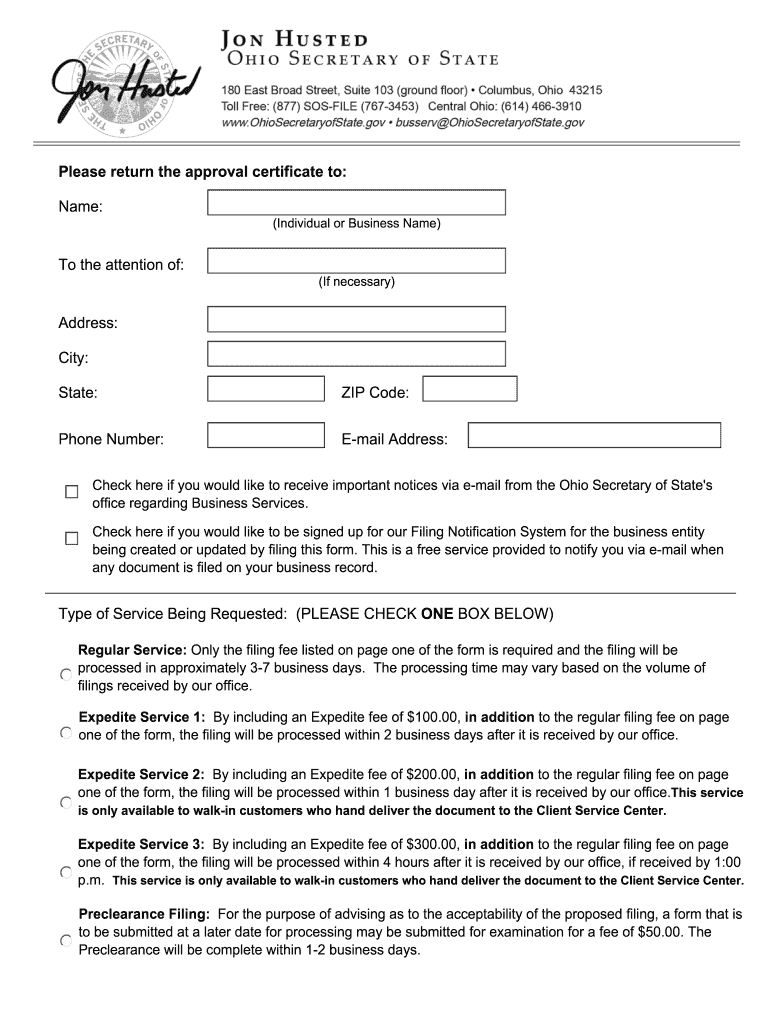







Definition and Purpose of Form 521 in Ohio
Form 521 in Ohio is a crucial document for businesses looking to update or change the statutory agent information associated with their business entities. This form serves various purposes, such as appointing a new statutory agent, changing an existing agent's address, or facilitating the resignation of a current agent. The statutory agent acts as the point of contact for legal documents and official state correspondences. It is important for businesses to keep this information current to ensure they fulfill legal obligations and maintain compliance with state regulations.
Steps to Complete Form 521
Completing Form 521 involves several detailed steps to ensure accuracy and compliance. Here's a breakdown of the process:
-
Gather Required Information: Before beginning, collect all necessary details about the current statutory agent, including their name, address, and contact information. If appointing a new agent, have their information ready as well.
-
Choose the Appropriate Section: Identify which section of the form applies to your current need—whether it is appointing a new agent, changing an existing address, or an agent's resignation.
-
Fill Out the Form Accurately: Enter all required details accurately into the form. Double-check for any areas that require specific attention, such as mandatory fields marked for the agent’s and business's names.
-
Select Service Type: Decide between regular or expedited service based on your processing timeline needs. Expedited services typically incur additional fees but offer quicker processing times.
-
Submit the Form: Depending on your preference, you can submit the form via mail, online, or in-person at the designated state office. Ensure it is sent to the correct address or electronic portal.
-
Keep Copies: Retain copies of the completed form and any correspondence for your records, as these will be crucial if any queries arise in the future.
Who Typically Uses Form 521
Form 521 is primarily used by business entities such as Limited Liability Companies (LLCs), corporations, partnerships, and other organizations registered in Ohio. These entities are required to maintain an updated statutory agent as part of their compliance with state regulations. Typically, business owners, administrators, or legal professionals acting on behalf of these entities handle the filing of this form. Ensuring that the correct individual is responsible for updating this information is key to maintaining seamless operations and legal compliance.
Legal Requirements for Using Form 521
Adhering to legal requirements when using Form 521 is essential for businesses operating within Ohio. The form is mandated by the state to maintain up-to-date statutory agent information, which is critical for the receipt of legal and tax documents. Ohio law requires that every business entity must have a registered statutory agent at all times. Failure to comply with this requirement could result in penalties or potential legal challenges. Businesses are strongly encouraged to review and adhere to all detailed instructions provided with the form to ensure compliance.
Key Elements Included in Form 521
Form 521 is composed of several key sections that require complete and accurate information:
-
Business Details: Information about the business entity, including its name and registration number.
-
Current Statutory Agent Information: The full name and address details of the existing statutory agent as currently registered.
-
New Statutory Agent Information: If applicable, details for a newly appointed agent, including their consent to serve in this capacity.
-
Service Type Selection: Options for regular versus expedited processing, impacting turn-around time and associated fees.
-
Signature Section: An authorized signature from the business or agent to validate the changes or resignations being filed.
Statutory Agent Requirements
A statutory agent must meet certain criteria to qualify as a representative, including:
-
Residency: The agent must be a resident of Ohio or a business entity authorized to conduct business in the state.
-
Availability: The agent must maintain a physical address (not a PO box) in Ohio and be available during regular business hours to receive documents.
-
Consent: The agent must consent to accept responsibility and documents on behalf of the business entity.
State-Specific Filing Rules
Compliance with Ohio's specific filing rules is crucial for a smooth process:
-
Timelines: Businesses must submit Form 521 promptly following any changes to ensure compliance.
-
Fees: Different fees are associated with regular versus expedited service. Ensure that payments are correctly processed alongside form submission to avoid delays.
-
Updates: Follow Ohio's business regulations to stay informed of any updates to filing procedures or state requirements related to statutory agent changes.
Penalties for Non-Compliance
Non-compliance with statutory agent requirements can lead to significant penalties for businesses:
-
Legal Consequences: A lack of a valid statutory agent might result in a business not receiving necessary legal documents, opening it to potential default judgments.
-
Monetary Fines: The state may impose fines on businesses that neglect to maintain accurate statutory agent records.
-
Administrative Dissolution: Prolonged non-compliance could eventually lead the state to dissolve the business entity administratively for failing to meet statutory obligations.
In summary, Form 521 is essential for Ohio business entities to maintain compliance with state laws regarding statutory agents. Accurate and timely completion of this form, along with understanding legal responsibilities and utilizing correct filing procedures, is the best strategy for avoiding legal and operational pitfalls.




