
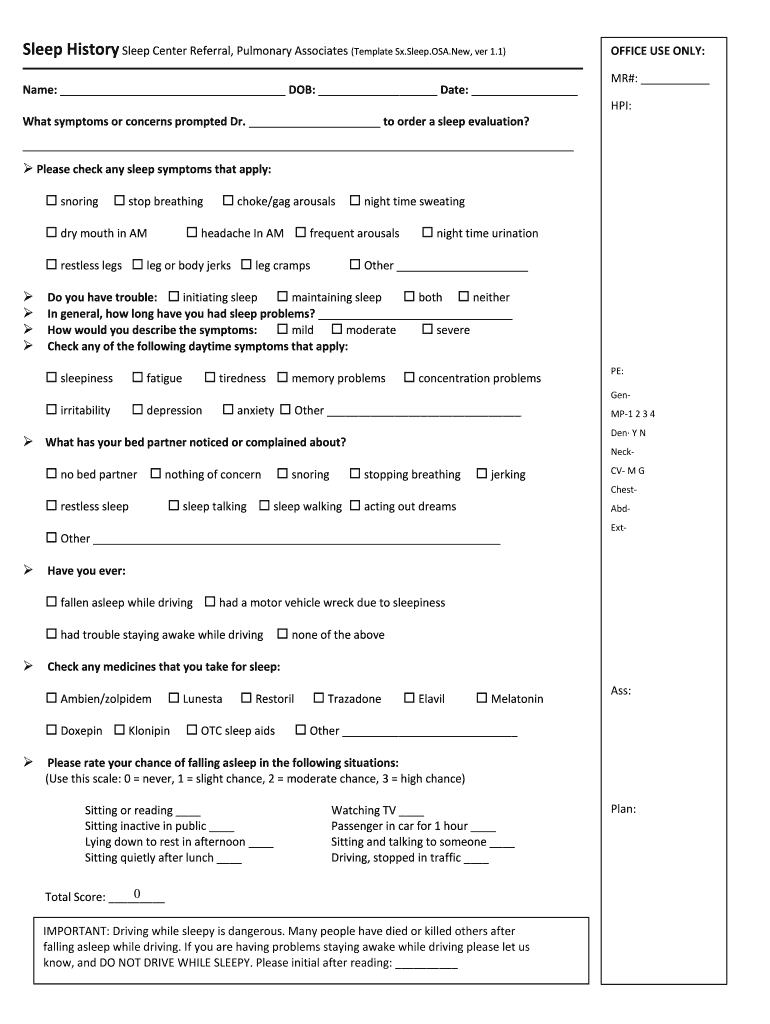







Definition and Purpose of Sleep Apnea Referral Form
The sleep apnea referral form is a comprehensive template utilized to gather critical information about a patient's sleep patterns and associated symptoms. This form serves as both a communication tool and evaluation resource between general practitioners and specialized healthcare providers, such as those at Pulmonary Associates. It details relevant patient history, which is essential for diagnosing sleep disorders like sleep apnea. This document aids in systematically recording patient experiences to provide a structured pathway for diagnosis and treatment recommendations. It outlines the necessary data fields required to accurately assess the potential severity and consequences of sleep-related issues.
Step-by-Step Process for Completing the Form
When filling out the sleep apnea referral form, it is crucial to be thorough and precise. Here are the steps you should follow:
-
Patient Information and History:
- Start with basic patient identification details, including full name, contact information, and demographic data such as age and gender.
- Proceed to document the patient's sleep history. This includes typical bedtime routines, sleep duration, and any recurring issues like snoring or interruptions during sleep.
-
Daytime Symptoms:
- Capture any symptoms experienced during waking hours that could be indicative of sleep apnea, such as excessive daytime sleepiness, fatigue, or difficulty concentrating.
- Note occurrences of microsleeps or unintended sleep episodes.
-
Medication and Treatment History:
- Detail current medications, supplements, or treatments the patient is undergoing. It’s important to note any treatments specifically targeting sleep issues.
-
Specific Sleep-Related Behaviors:
- Document behaviors such as sleepwalking, waking up with difficulty breathing, or gasping for air. Include any partner-observed behaviors that might indicate nocturnal disturbances.
-
Assessment Sections:
- Complete sections that involve scoring systems. These are used to rate the severity of symptoms based on tables or scales provided within the form, which often require professional interpretation.
Practical Examples
- For instance, a patient may report snoring loudly and frequently dozing off in quiet activities. These details are crucial as they align with sleep apnea signs.
- An athlete who complains of poor performance and morning headaches should ensure these are noted, as they may relate to sleep quality impacting daytime function.
Key Elements of the Referral Form
The sleep apnea referral form includes several critical elements designed to ensure a comprehensive overview:
- Review of Systems: This section inspects each body system to spot potential health connections to sleep issues.
- Symptoms Severity: Provides scales or scorecards to evaluate the severity, such as the Epworth Sleepiness Scale or STOP-BANG questionnaire, which aids in assessing risk levels.
- Sleepiness While Driving: This field is crucial for identifying high-risk behavior and ensuring public safety.
Utilizing Scoring Systems
- These systems are essential for quantifying symptoms. For example, if a patient’s score on the Epworth Sleepiness Scale is unusually high, it offers a quantitative benchmark for further investigation.
Legal Use of the Form
Legally, the use of the sleep apnea referral form must adhere to patient confidentiality norms, particularly concerning HIPAA regulations. This means all personal and health-related information on the form must be protected, shared only with authorized parties, and stored securely. Practitioners must also ensure that informed consent is obtained from patients before any data collection or use of the referral form.
Eligibility Criteria for Form Completion
Often, individuals eligible for completing this referral form include patients exhibiting symptoms of potential sleep disorders or those referred by healthcare professionals due to reported symptoms. It can also be used by individuals with notable lifestyle disturbances potentially linked to poor sleep quality, such as chronic fatigue or daytime dysfunction.


Practical Examples of Use
Healthcare professionals have used this form to diagnose various sleep disorders by capturing the patient's detailed sleep patterns and symptoms. A practical case involves a bus driver whose excessive sleepiness on the job prompted a referral and subsequent treatment plan.
Electronic Version and Compatibility
For a more efficient process, many providers use digital versions of the referral form, compatible with systems like DocHub. These electronic forms allow seamless integration with electronic health records and analytics software, enabling the easy sharing of patient information within secure networks.
State-Specific Considerations
While the form is standardized, certain states may have specific regulatory requirements impacting data storage, patient consents, and referral processes. It's vital for healthcare providers to be aware of and comply with any state-specific nuances.
These structured blocks ensure that all aspects of the sleep apnea referral form are addressed thoroughly, providing practitioners with the insights and data necessary for accurate assessment and treatment planning.




