







Definition and Purpose of the "Hi Expense Statement"
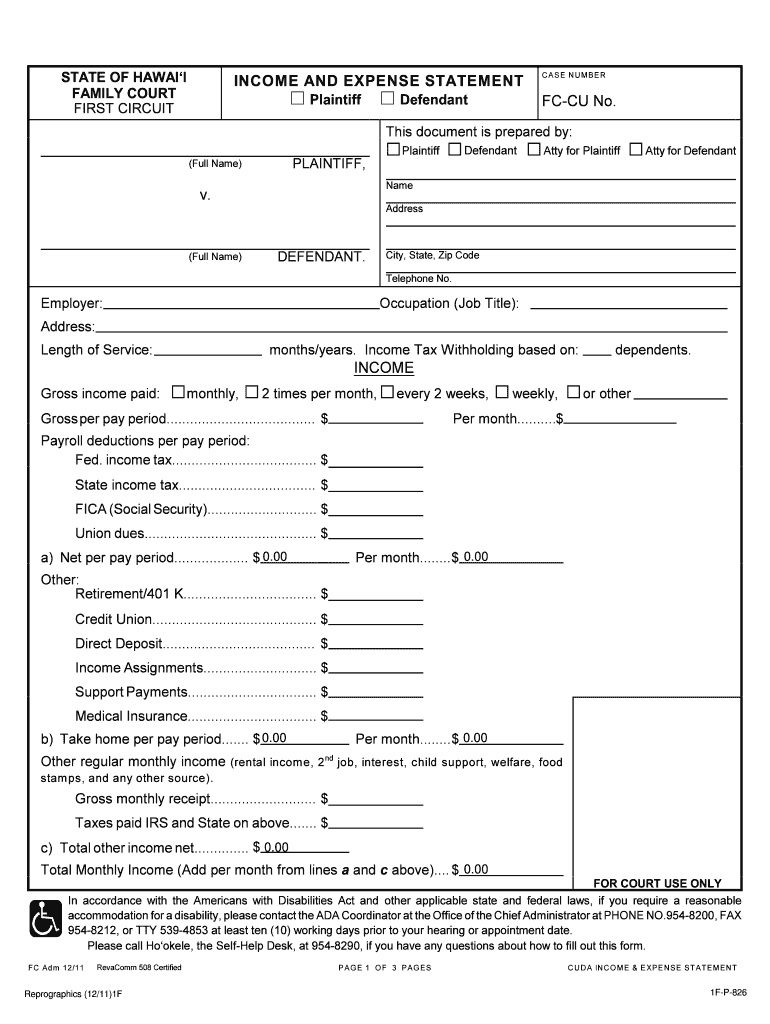
The "Hi Expense Statement" is a specialized financial document primarily used in legal cases within the Family Court of the State of Hawai‘i. It serves as an essential tool for plaintiffs and defendants to disclose their financial status comprehensively. The form is designed to capture a detailed snapshot of an individual's financial situation, highlighting gross income, payroll deductions, additional income sources, and a wide array of expenses. This document ensures transparency and accuracy in financial reporting, which is critical in legal proceedings related to family law.
Key Features of the Hi Expense Statement
- Comprehensive Income Reporting: Includes sections for gross income and payroll deductions, ensuring all sources of income are documented.
- Expense Categorization: Details various expenses such as housing, transportation, personal expenses, and other financial obligations.
- Legal Certification: Requires parties to certify the accuracy of the information provided, which is crucial for maintaining the integrity of legal processes.
How to Use the "Hi Expense Statement" Effectively
Understanding and properly completing the "Hi Expense Statement" is vital for its successful application in legal scenarios. Here are the steps to effectively utilize this form:
-
Collect Financial Documents: Gather all necessary paperwork, including pay stubs, bank statements, and receipts to substantiate your income and expenses.
-
Accurate Income Entry: Enter gross income as well as any payroll deductions accurately. This might include wages, bonuses, and other income streams.
-
List All Monthly Expenses: Carefully document all monthly expenses ranging from housing costs to transportation, ensuring no category is overlooked.
-
Review and Certify: Check all inputs for accuracy before signing the certification of accuracy section. This attestation is a legal requirement affirming truthful disclosure.
Common Pitfalls in Completing the Statement
- Omitting Minor Income Sources: Ensure all income, even from small or irregular sources, is included.
- Underestimating Expenses: Accurately calculating expenses prevents misconceptions regarding financial capacity.
- Incomplete Documentation: Not having supporting documentation can lead to disputes or legal challenges.
Legal Use and Compliance of the "Hi Expense Statement"
The "Hi Expense Statement" carries significant legal implications. Proper submission ensures compliance with state requirements and supports fair legal outcomes.
Importance in Legal Proceedings
- Financial Transparency: Essential for equitable decisions in family law cases involving alimony or child support.
- Court Requirements: Meets specific legal standards for financial disclosure within the Hawai‘i judiciary system.
- Evidence of Financial Standing: Serves as a major evidence piece, reflecting an individual's financial status accurately.
Obtaining the "Hi Expense Statement"
Securing the necessary forms is the first step in fulfilling your financial disclosure obligations in legal matters.
Steps to Access the Form
-
Court Offices: Visit local family court offices in Hawai‘i to obtain the physical form directly.
-
Online Resources: Many jurisdictions offer downloadable versions of the document online, accessible through official court websites.
-
Legal Assistance: Attorneys or legal advisors can provide guidance and ensure the correct forms are obtained and completed properly.
Steps to Complete the "Hi Expense Statement"
Filling out the form correctly ensures it reflects the true financial picture required by legal standards.
Detailed Step-by-Step Process
-
Read Instructions Carefully: Start by thoroughly understanding the guidelines provided with the form.
-
Fill Income Details: Accurately capture all sources of income in the specified sections.
-
Document All Expenses: Include every major and minor expense to avoid legal discrepancies.
-
Cross-Check Entries: Verify each section for accuracy and completeness before proceeding.
-
Sign and Submit: Once completed, certify and submit the form according to court instructions, ensuring compliance with any deadlines.
Who Typically Uses the "Hi Expense Statement"?
Identifying who needs this form helps target the document to appropriate users.


Primary Users
- Plaintiffs and Defendants: Primarily used by individuals involved in legal disputes in family court.
- Legal Practitioners: Attorneys use it to support their clients' cases effectively.
- Court Officials: Utilize the form to assess financial disclosures in legal proceedings.
Required Documents to Accompany the Statement
Supporting documentation is critical for substantiating claims made within the statement.
Necessary Documentation
- Proof of Income: Include recent pay stubs, tax returns, or other verifiable income evidence.
- Expense Receipts: Keep a record of all expenses with corresponding receipts wherever possible.
- Bank Statements: Provide a clear view of financial transactions and available funds.
Digital vs. Paper Version of the "Hi Expense Statement"
Knowing the benefits and drawbacks of each format helps users choose the most suitable option.
Advantages and Disadvantages
-
Digital Version:
- Pros: Easier to modify, submit, and store digitally for future reference.
- Cons: Requires access to digital platforms and proficiency with electronic formats.
-
Paper Version:
- Pros: Tangible copy for personal records and traditional submission channels.
- Cons: Can be cumbersome to update or correct manually.
Key Elements of the "Hi Expense Statement"
Understanding the form's key components ensures complete and accurate submissions.
Critical Sections
- Income Details: Covers all sources and amounts of income.
- Expense Categories: Structured sections to organize various expenses logically.
- Declaration of Certainty: Legal declaration confirming the truthfulness of the information provided.
With these guidelines, users can adeptly navigate the complexities of the "Hi Expense Statement," ensuring accurate financial disclosure in legal settings.




