






Key Elements of a Telephone Triage Form Template
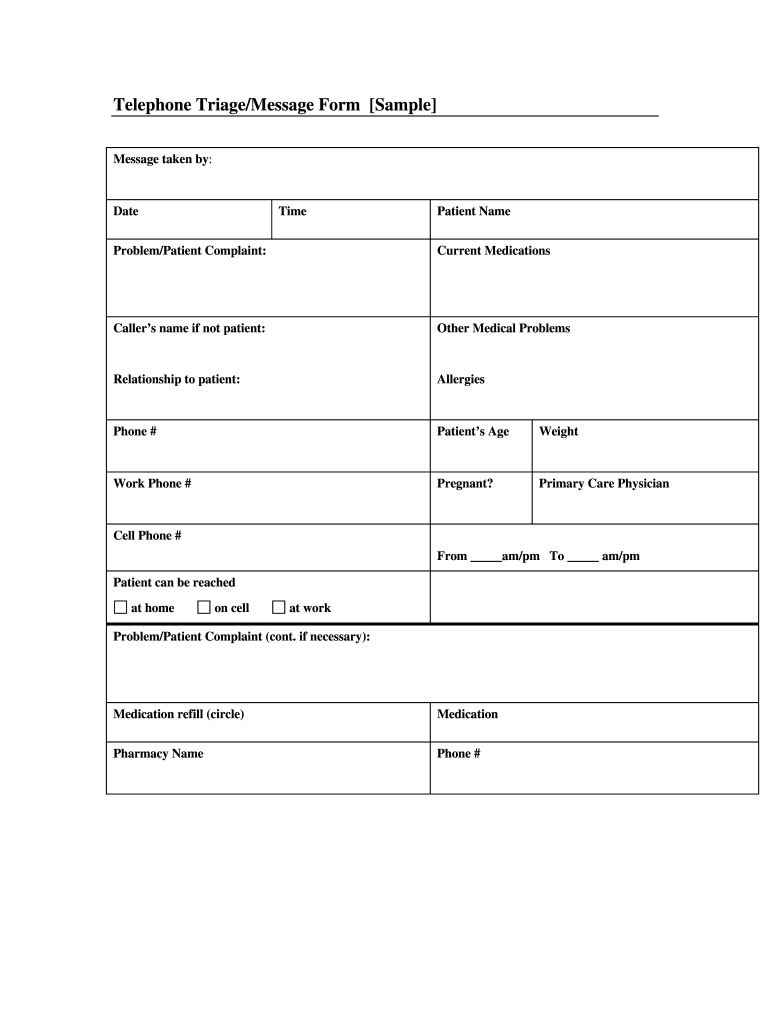
A telephone triage form template is a crucial tool used to effectively gather and record patient information during phone consultations. The form is structured to capture various key details which assist healthcare professionals in assessing a patient's needs and determining the appropriate course of action.
Patient Identification and Basic Information
This section includes essential details that help identify the patient and their medical history. It typically comprises:
- Full Name: To accurately log the patient's identity.
- Date of Birth: Important for determining age-related health issues.
- Contact Information: Phone number and address for follow-up communication.
- Insurance Information: Necessary for billing and verifying coverage.
Chief Complaint and Symptom Assessment
A significant portion of the triage form is dedicated to the reason for the call. This area allows healthcare providers to document:
- Description of Symptoms: Patients describe their current health issues, which can include pain level, duration, and type of discomfort.
- Onset and Duration: Understanding when symptoms began helps prioritize urgency.
- Associated Symptoms: Additional details that might indicate underlying issues, such as fever or nausea.
Medical History and Current Medications
Collecting relevant medical history is vital for accurate assessment. Key aspects include:
- Past Medical History: Previous illnesses, surgeries, and chronic conditions that may influence the treatment plan.
- Current Medications: A list of medications, including dosages, supports safe prescribing practices and alerts providers to potential drug interactions.
- Allergies: Documenting allergies helps avoid prescribing harmful substances.
Triage Recommendations and Follow-Up Actions
This section is where the healthcare provider documents their professional recommendations based on the information gathered. It generally includes:
- Immediate Actions: Directions for the patient on what to do next, whether it be visit a clinic, go to the emergency room, or manage symptoms at home.
- Follow-Up Appointments: Recommendations for scheduling future visits to monitor the patient's condition.
- Patient Education: Information provided to the patient regarding signs of worsening symptoms which would necessitate more immediate medical attention.
Communication with the Patient
Effective communication is vital to ensure the patient understands their condition and subsequent steps. This part of the form may contain:
- Treatment Plan Overview: Summarizing the agreed-upon action plan to empower the patient and provide clarity.
- Instructions for Further Action: Clear guidance on steps the patient must take, such as how to handle medication refills or when to seek urgent care.
Documentation and Legal Considerations
Accurate and thorough documentation is critical for legal and compliance reasons. This includes:
- Date and Time of Call: Essential for record-keeping and potential audits.
- Provider’s Name and Credentials: Ensures accountability and provides a point of contact for future inquiries.
- Patient Signature (if required): Acknowledges the patient’s understanding of the treatment plan and consents to proceed as advised.
Emergency Protocols and Triage Escalation
In cases where immediate care is required, telephone triage forms must include:
- Criteria for Urgent Care Referral: Clear guidelines indicating which symptoms necessitate escalation to emergency services.
- Emergency Contact Protocols: Steps to follow in case the patient requires urgent referral or intervention.
Triage Documentation Examples
Providing examples of how to fill out the form can increase understanding and accuracy. Examples may illustrate various scenarios such as:
- A young adult calling with severe chest pain versus a child with a fever.
- Variations in responses based on different primary complaints, including possible follow-up actions.
Variants of the Triage Form Template
Recognizing different contexts in which a triage form template may be utilized can help tailor it to specific healthcare settings. Examples include:
- Urgent Care Triage Form: More focused on immediate care needs.
- Primary Care Triage Template: Includes ongoing health management considerations.
- Emergency Triage Form: Designed for fast-paced environments with a focus on critical conditions.
Utilizing a well-structured telephone triage form template enhances communication, ensures accurate information gathering, and supports healthcare providers in making informed decisions that facilitate patient care.